Constellations as a map of meaning
The 57 primary constellations have individual pages that keep the astronomical object, the authorial theological reading and Scripture references distinct while connecting them in one knowledge system.
- 57
- primary constellations
- 17
- theological themes
- 88
- official IAU constellations in the interactive atlas
Choose a constellation
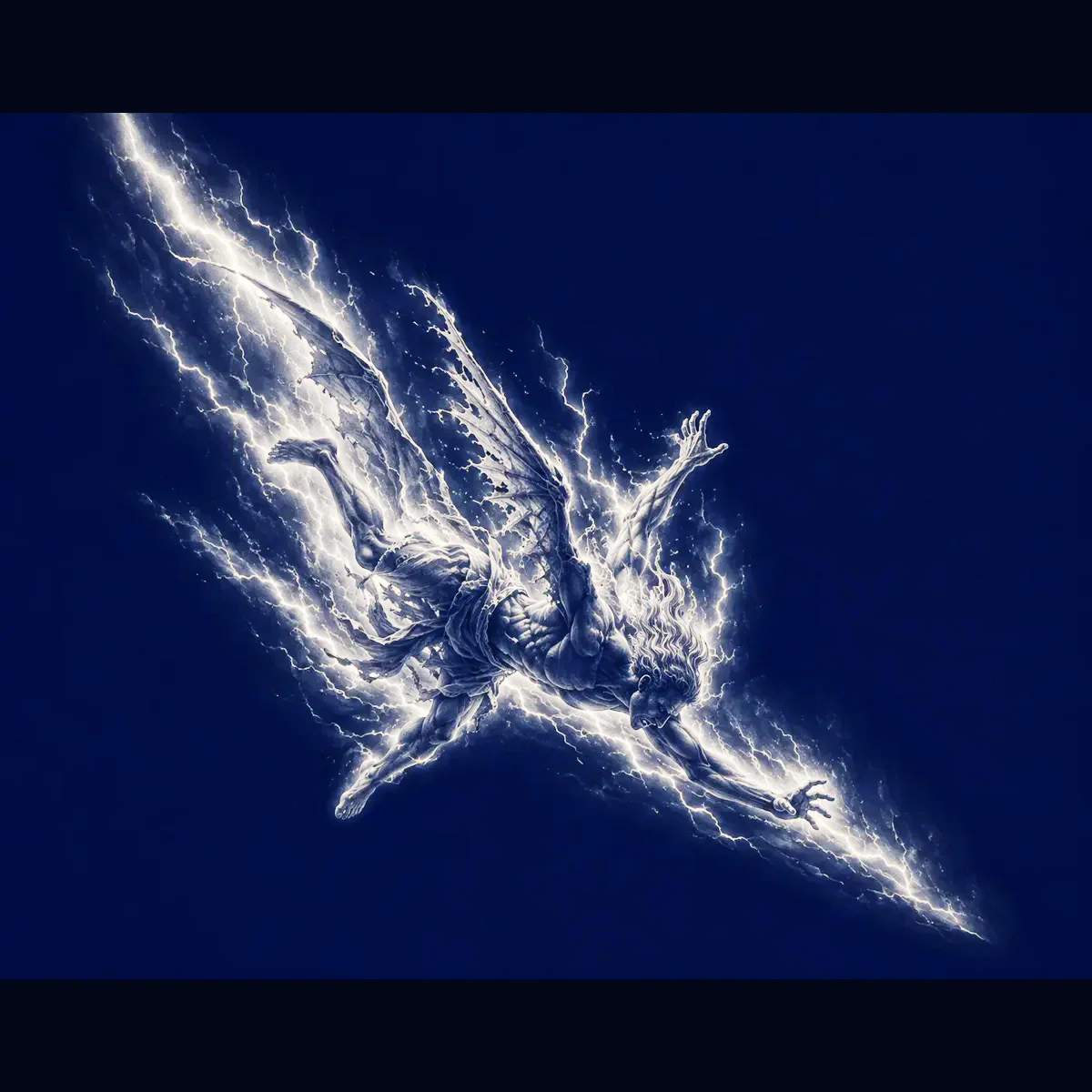
Eagle
Cast down like lightningThe Eagle, together with Lyra, participates in the heavenly scene of the fall of the rebellious angels. The names of its stars form an image of the one who struck the balance established by God and was cast down from heaven like lightning.
Read interpretation →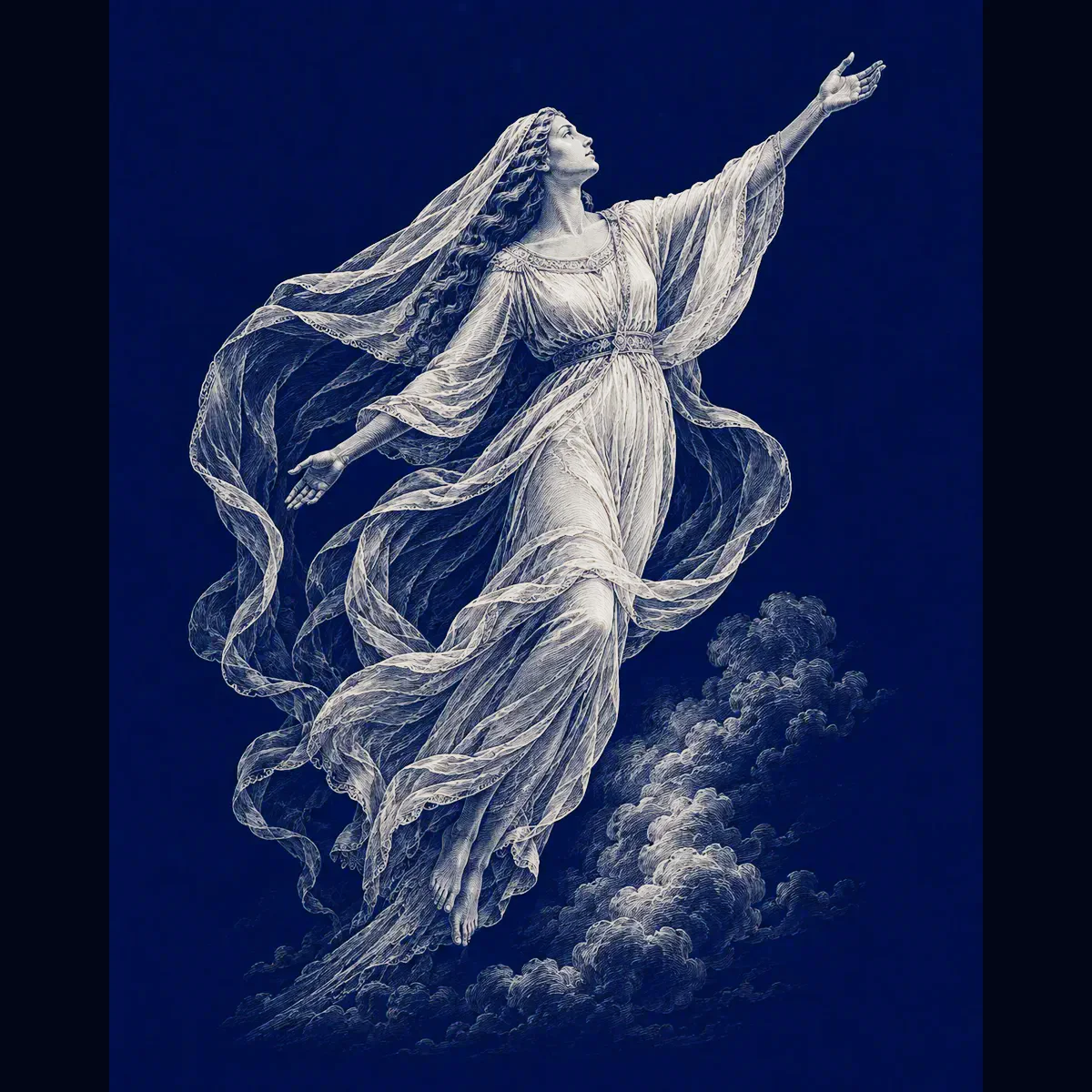
Andromeda
The Church-Bride, raptured to the BridegroomAndromeda is located between Pisces—the image of God's people—and Cassiopeia, which depicts the Church as the enthroned Wife of the Lamb. It shows the transition of the Church from Bride to Wife after the rapture and the marriage feast.
Read interpretation →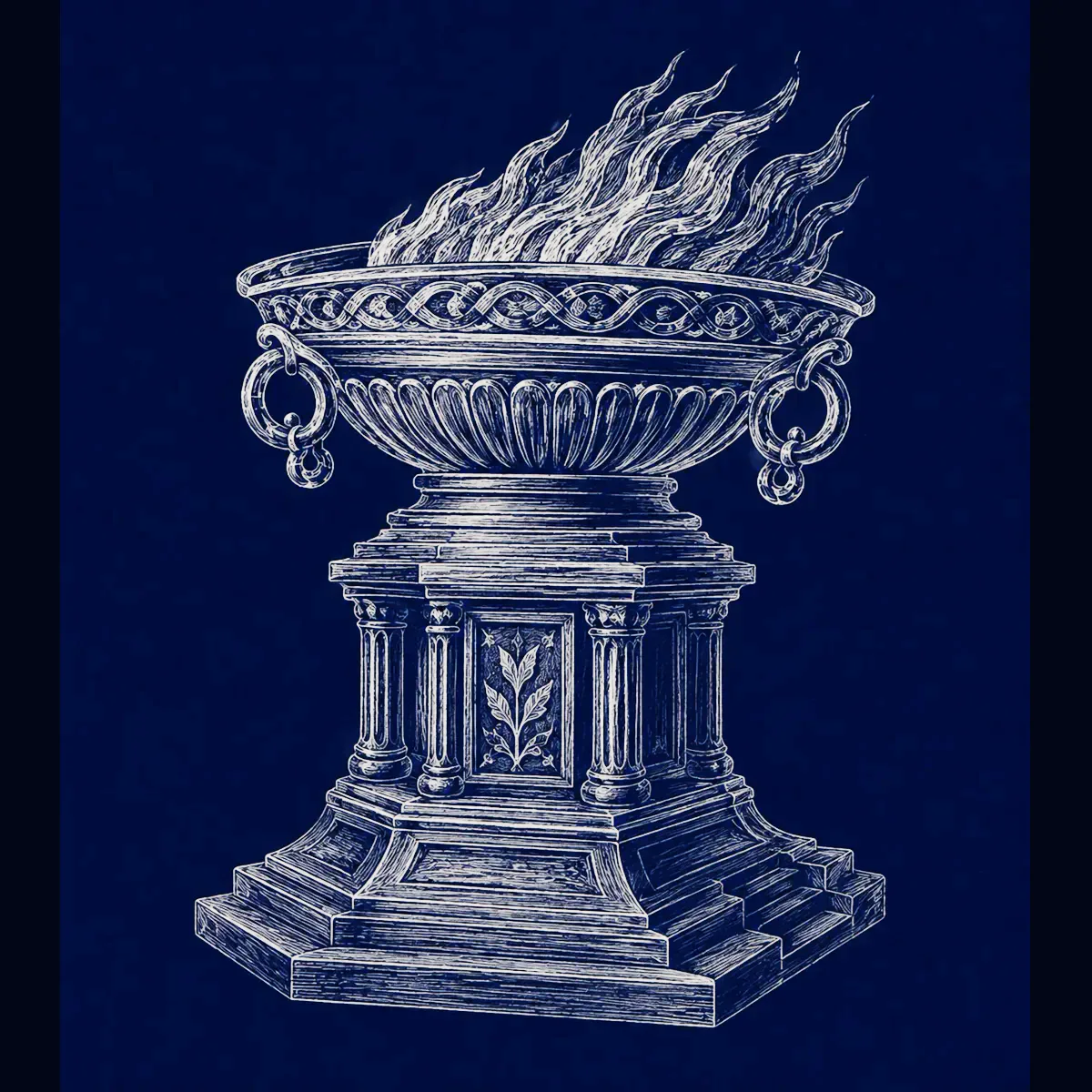
Altar
The perfect sacrifice of ChristThe names of the stars of the Altar speak of an altar, the Righteous One, and sacrifice. The constellation points to Jesus Christ—the Righteous One, who voluntarily offered Himself as a sacrifice for the sins of the world.
Read interpretation →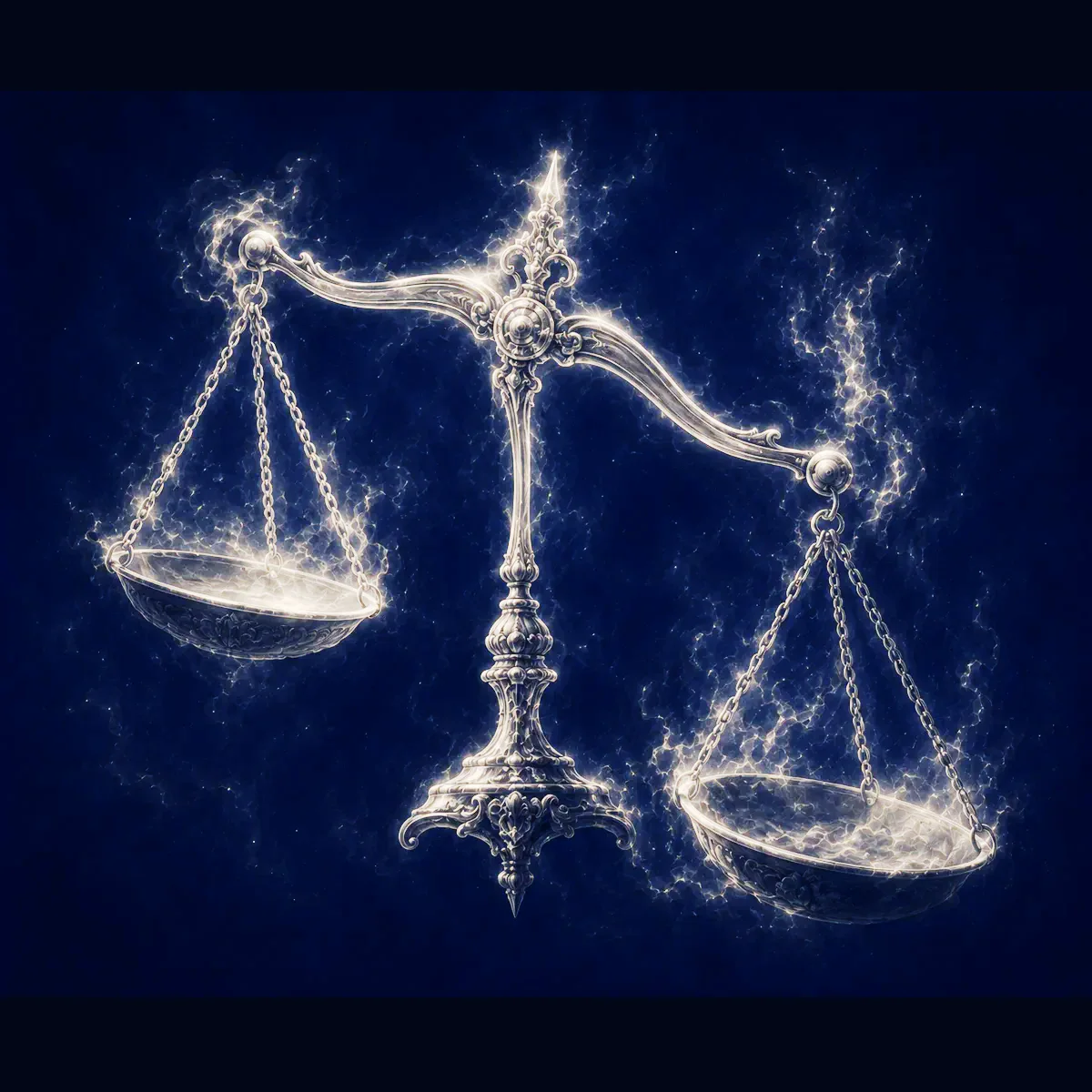
Scales
Broken orderThe Scales show God's measure and righteous order, which fallen man no longer meets. Nearby is Scorpius—the image of sin and rebellion that broke this order. Moreover, the main stars of the Scales were anciently also called the claws of Scorpius. Therefore the Scales and Scorpius together show: God's measure exists, but sin has disrupted the order established by God.
Read interpretation →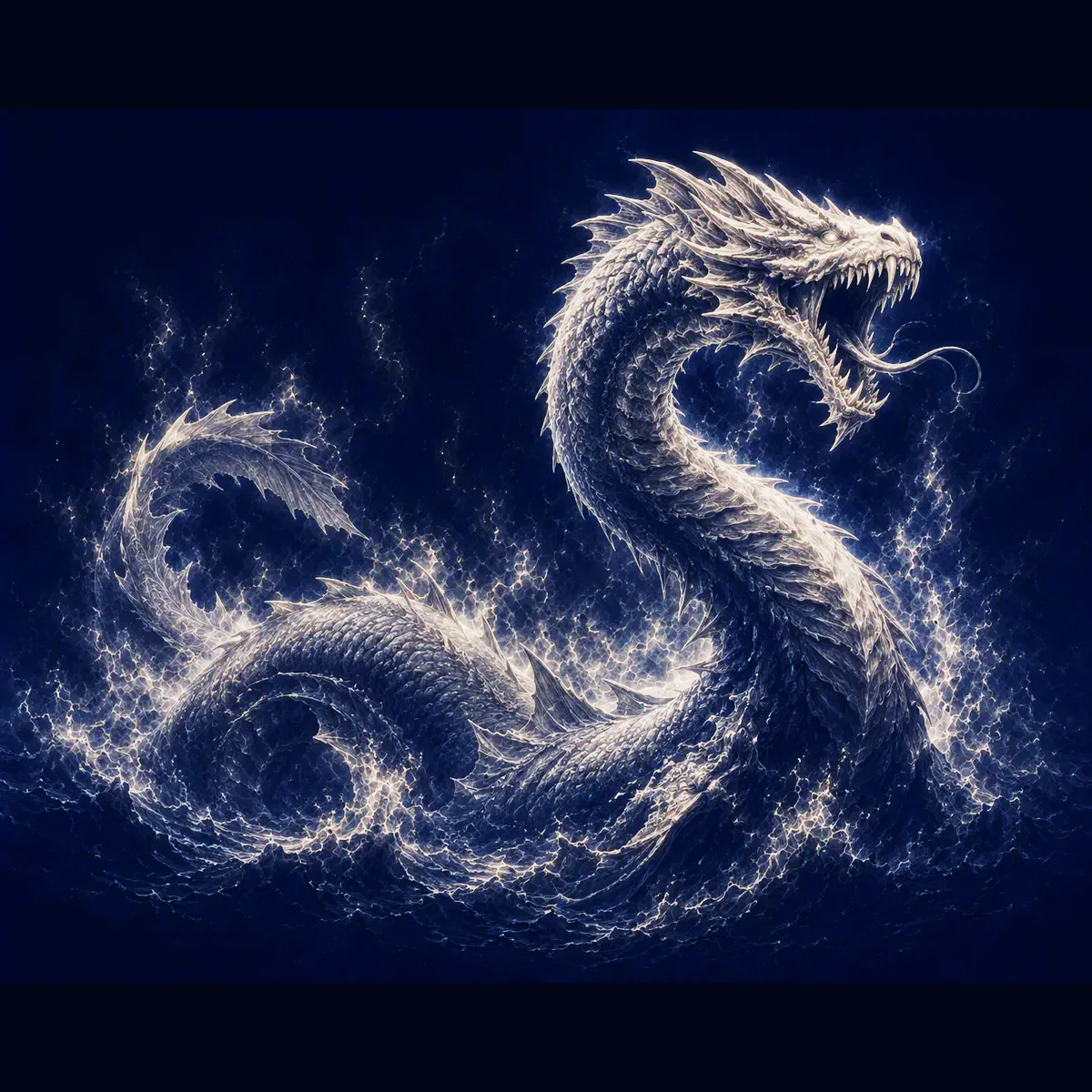
Whale
LeviathanThe Whale depicts the ancient sea monster—the image of chaos, death, and forces hostile to God. On the celestial map it seems to hold two Fishes, representing God's people, yet the Lamb stands between them and the monster, liberating those who belong to Him.
Read interpretation →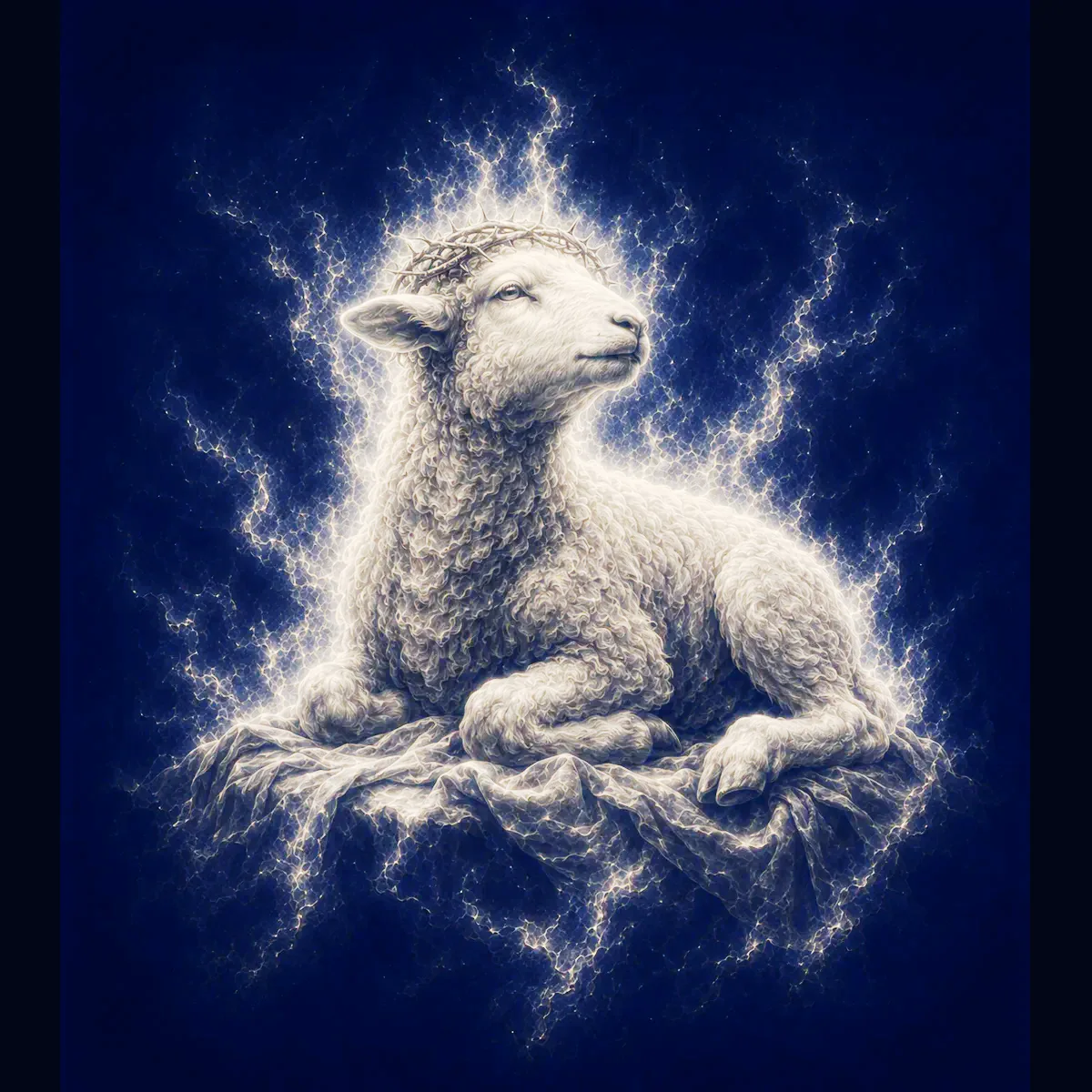
Ram
God's Lamb, liberating His peopleThe Lamb depicts the first coming of Jesus Christ. It is located between the Fishes — God's people — and the Whale, the image of death and hostile power. Therefore the Lamb shows Christ, who by His sacrifice liberates those who belong to Him from the power of sin, death, and the devil. Nearby is the Bull: the Lamb is Christ come to save; the Bull is Christ returning to judge.
Read interpretation →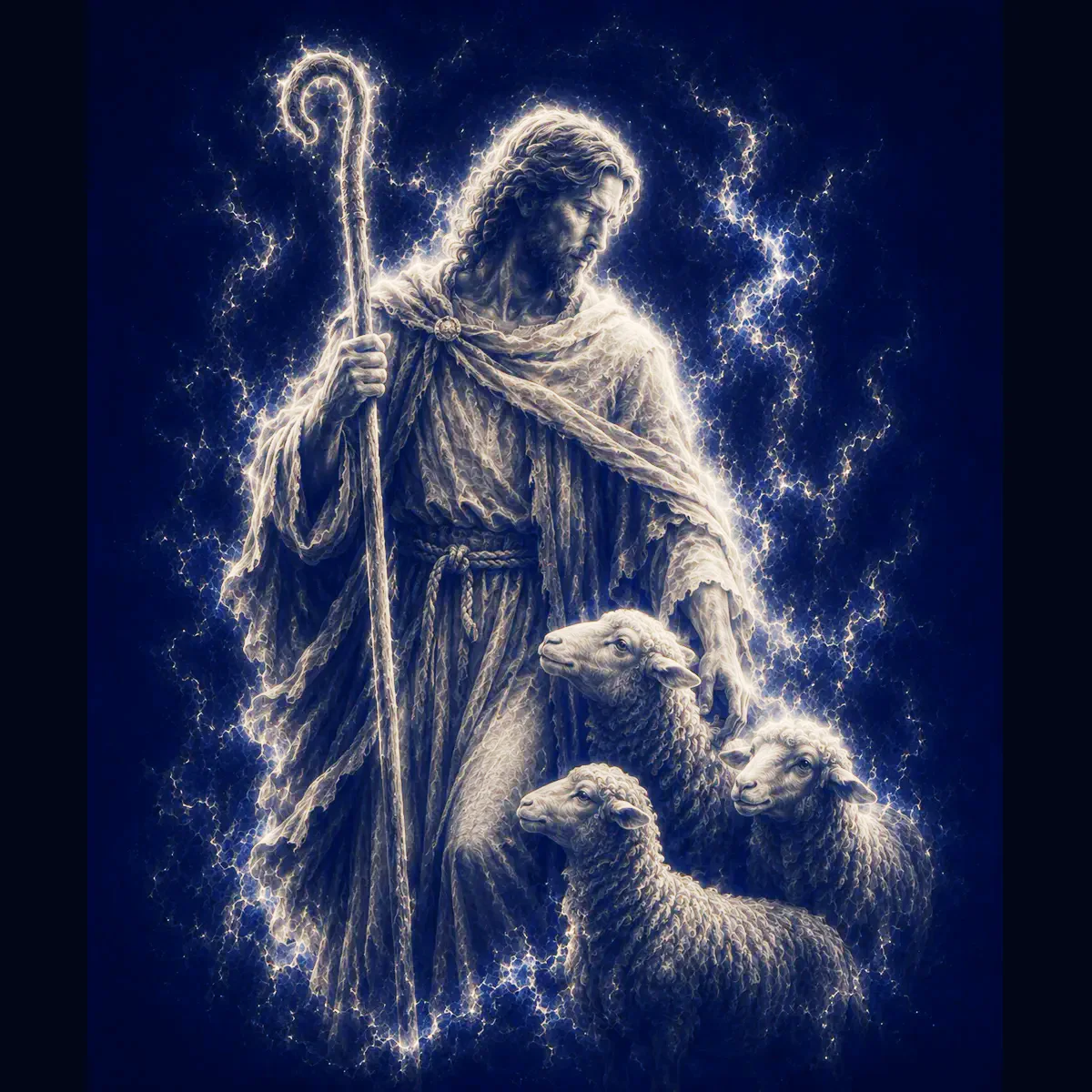
Boötes
Shepherd and Guardian of God's FlockBoötes is located next to the Great Bear—the image of God's Church—and depicts the One who shepherds, keeps, and leads God's flock. The names of its stars speak of the Guardian of the heavens, a worker in the vineyard, a belt of strength, and a shepherd's staff. This is an image of the Holy Spirit, who builds the Church, guards it, and reminds it of Jesus Christ.
Read interpretation →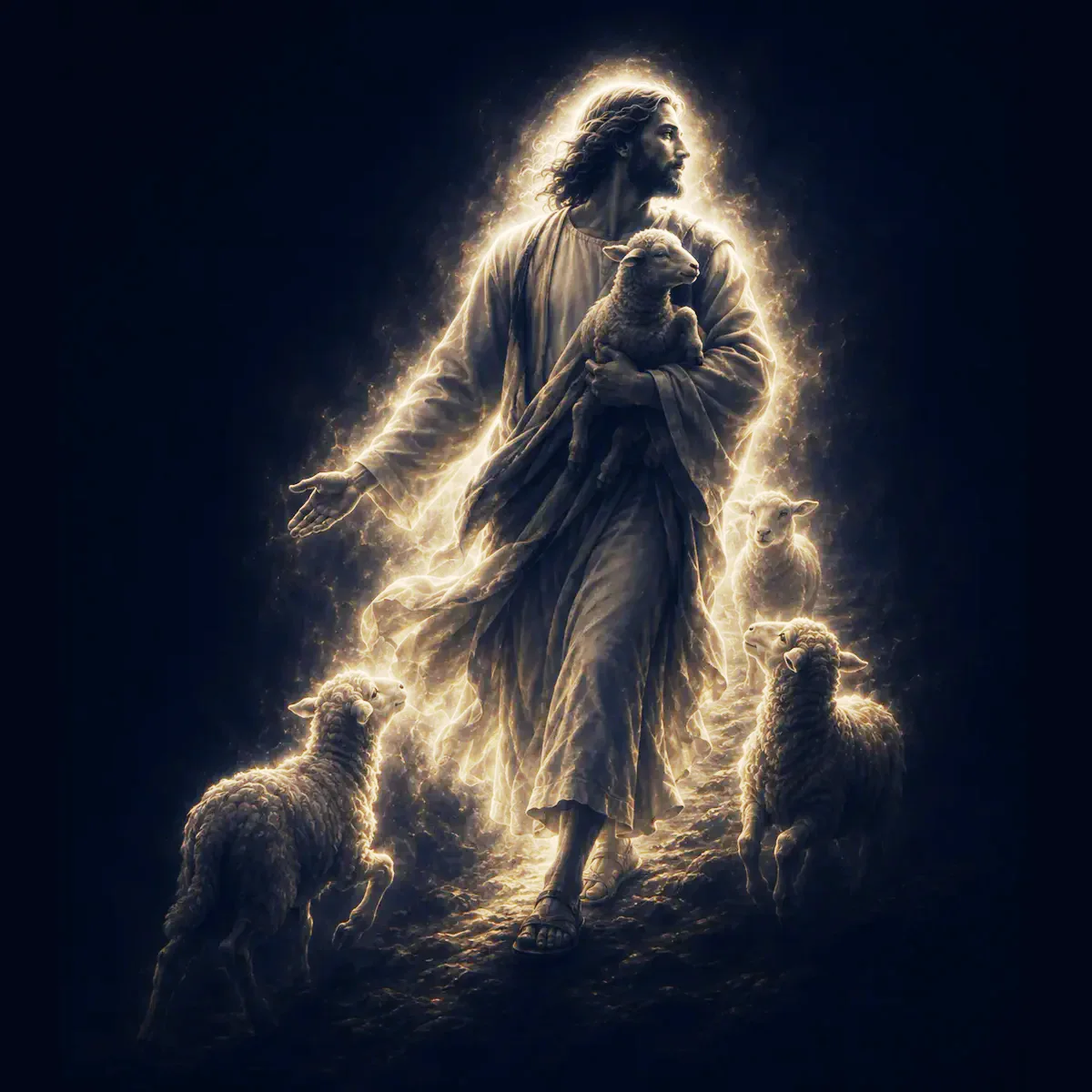
Crab
The Shepherd safely leading His people homeCancer depicts the One who gathers God's people, holds them, and safely leads them into eternity. The names of the constellation and its stars speak of many gathered, of children and lambs, of secure holding, and of a refuge.
Read interpretation →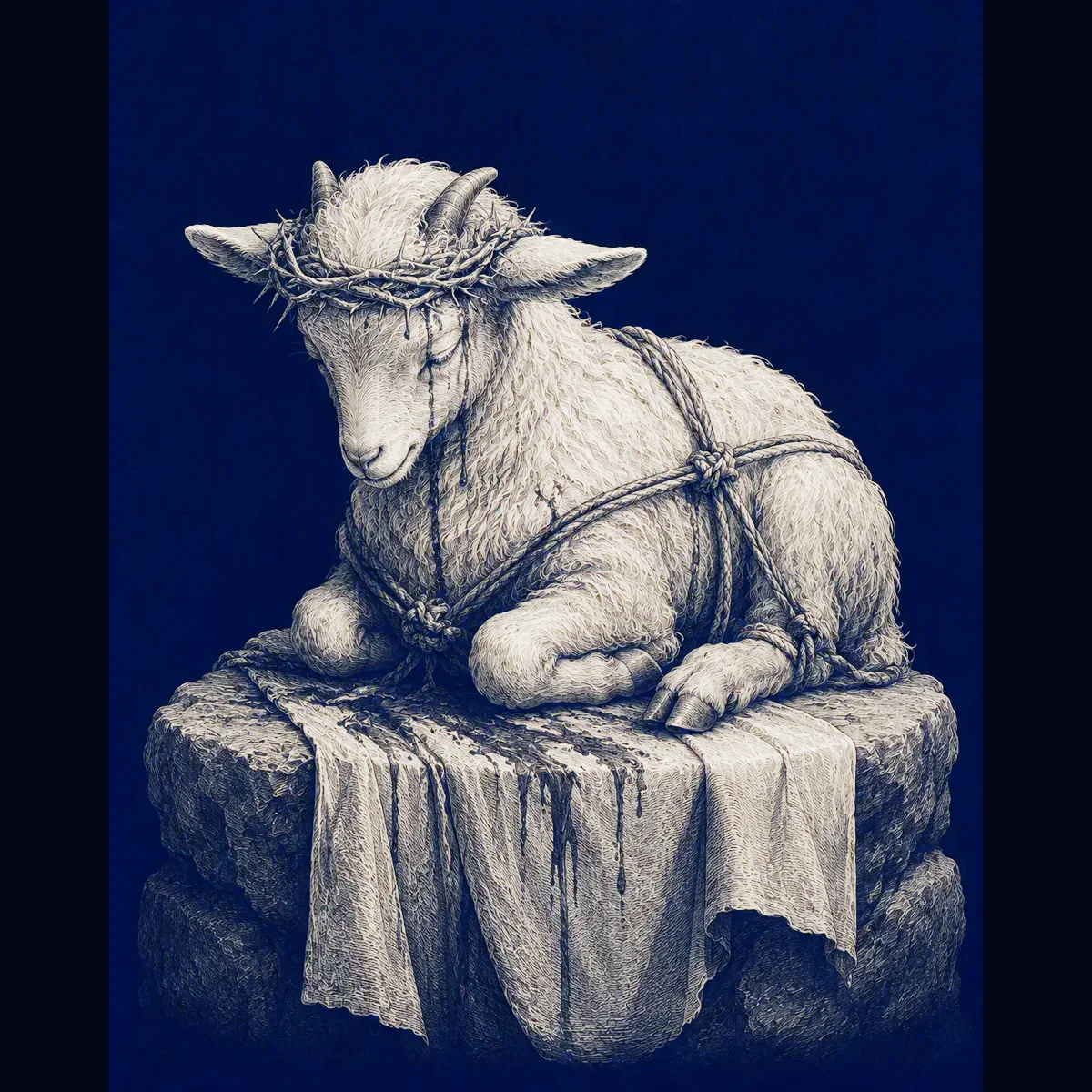
Capricornus
Prince of Heaven comes as SacrificeCapricornus stands between Sagittarius and Aquarius and explains how Christ defeated the power of sin. Sagittarius strikes Scorpius, but the victory is accomplished through sacrifice: Algedi means 'kid/goat', and Dabih comes from an Arabic name associated with slaughter. The ancient Capricorn was a Goat-Fish, so its figure simultaneously leads further—to Aquarius and the water of life.
Read interpretation →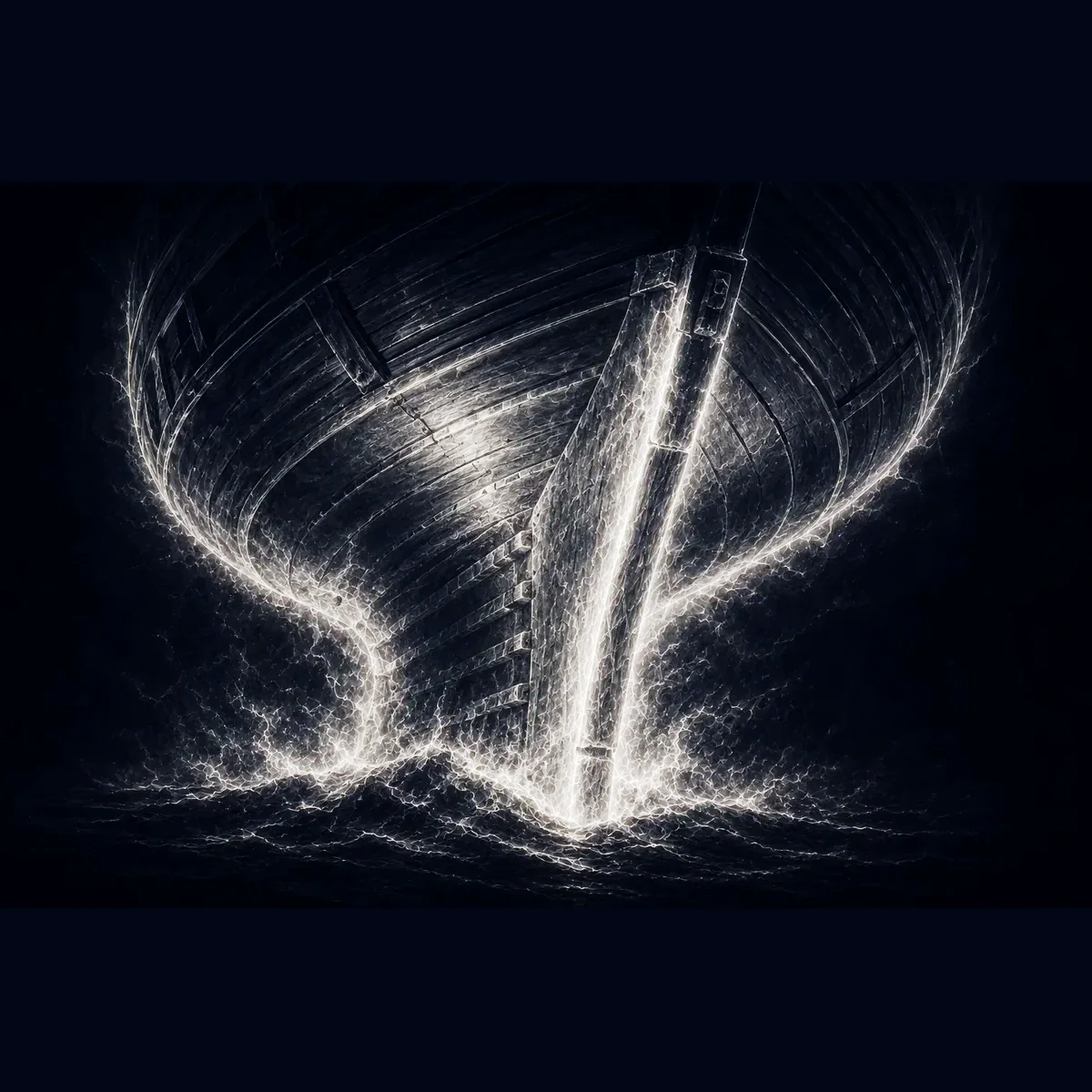
Keel
Foundation of salvationKeel — Christ as the foundation of salvation, on which the entire Ship of God's people rests. In antiquity, the Keel, Sails, and Stern constituted one huge Heavenly Ship; modern Carina represents its hull and lower load-bearing part. If the Sails show God's people led by the wind of the Spirit, then the Keel shows that on which this people rests: 'For no one can lay a foundation other than that which is laid, which is Jesus Christ.' The ship passes through the waters of judgment and reaches the harbor because its foundation is Christ.
Read interpretation →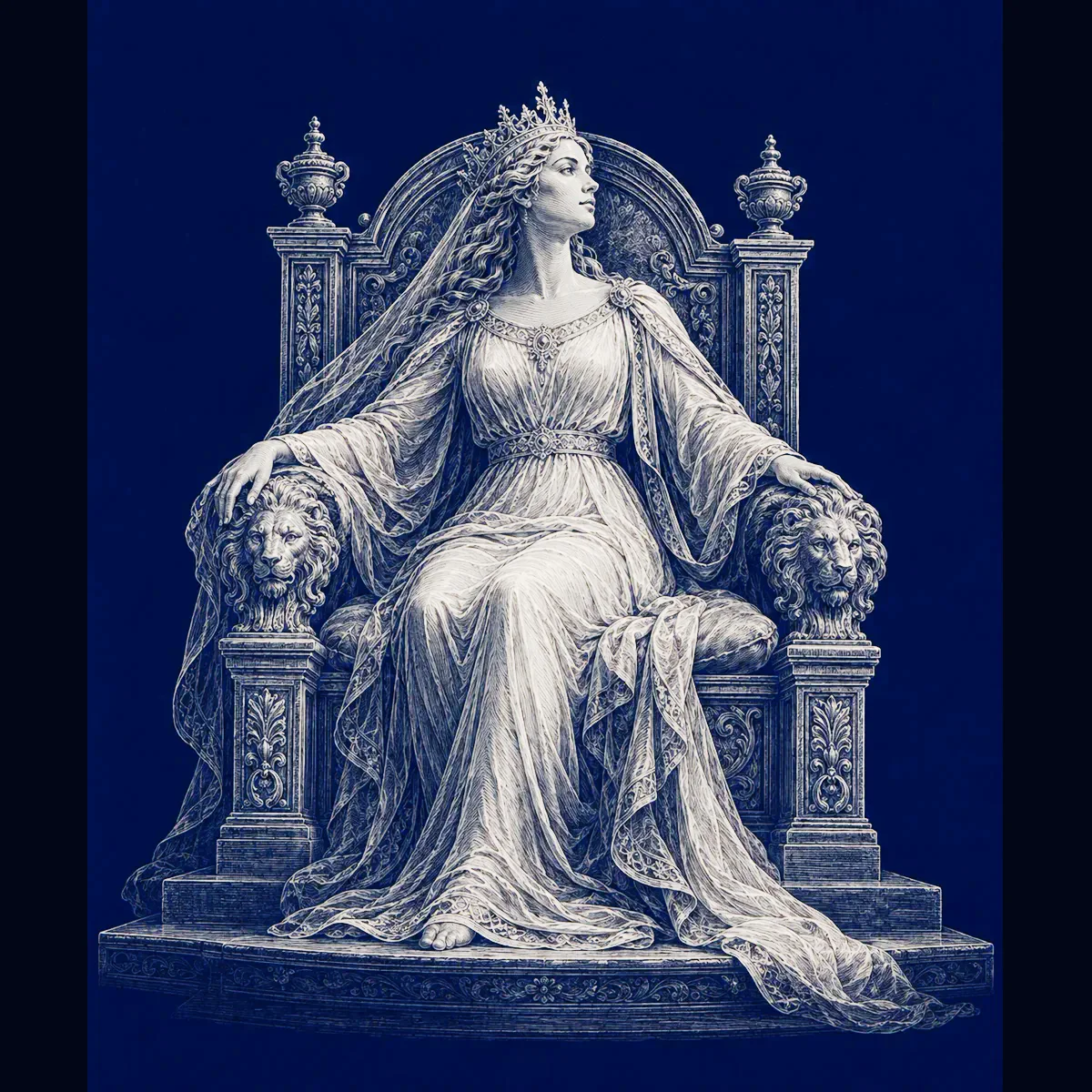
Cassiopeia
Church — Wife of the LambCassiopeia depicts the Church of God after the marriage feast. If the Pleiades are an image of the Church-Bride on earth, then Cassiopeia shows her future — the Wife of the Lamb, sharing in Christ's reign.
Read interpretation →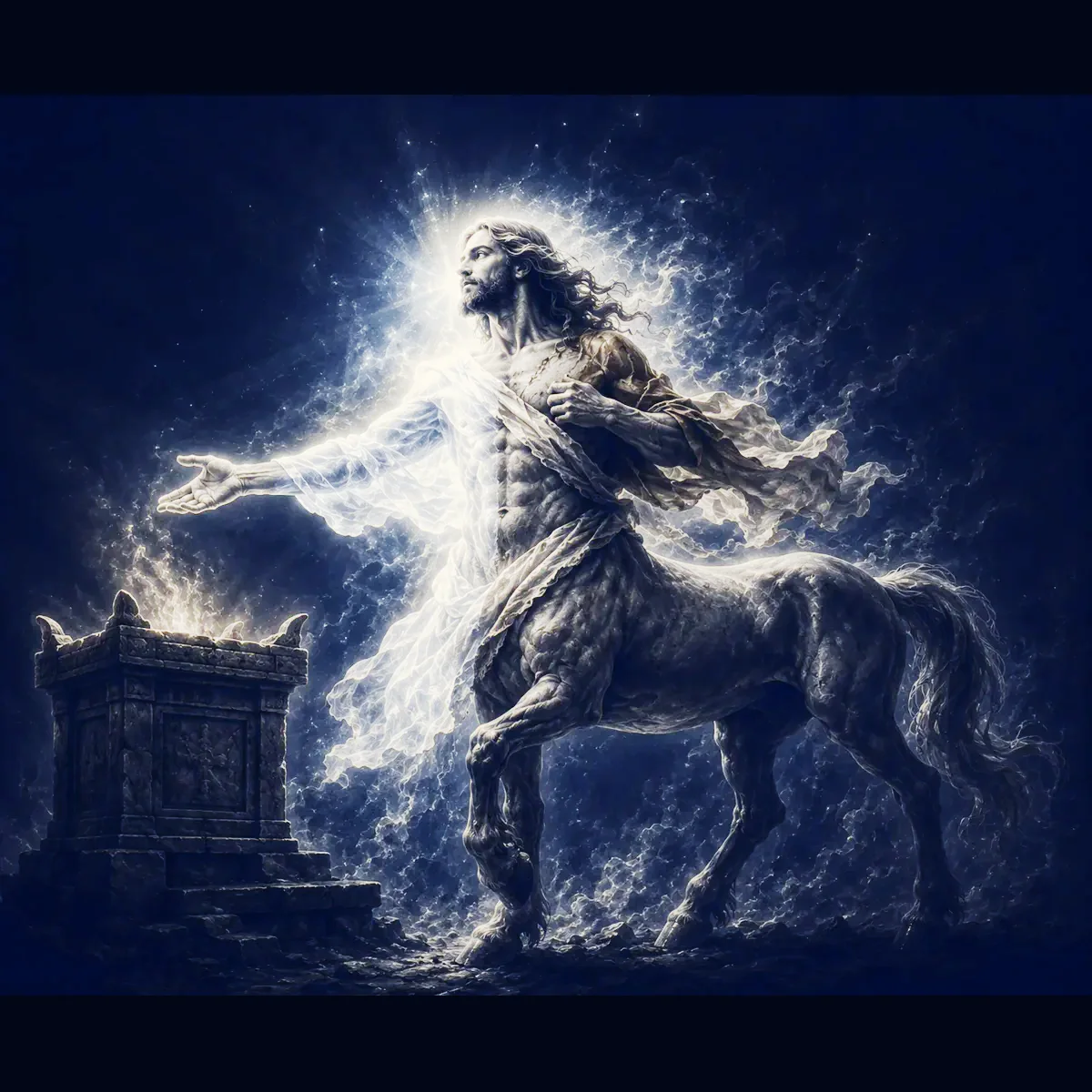
Centaur
Wise and Great, Who Bore the World's BurdenCentaurus reveals the image of Christ, who came to earth as the true Vine and bore the weight of the sin of the whole world. The names of its stars speak of wisdom, greatness, earth, burden, and readiness to do God's will.
Read interpretation →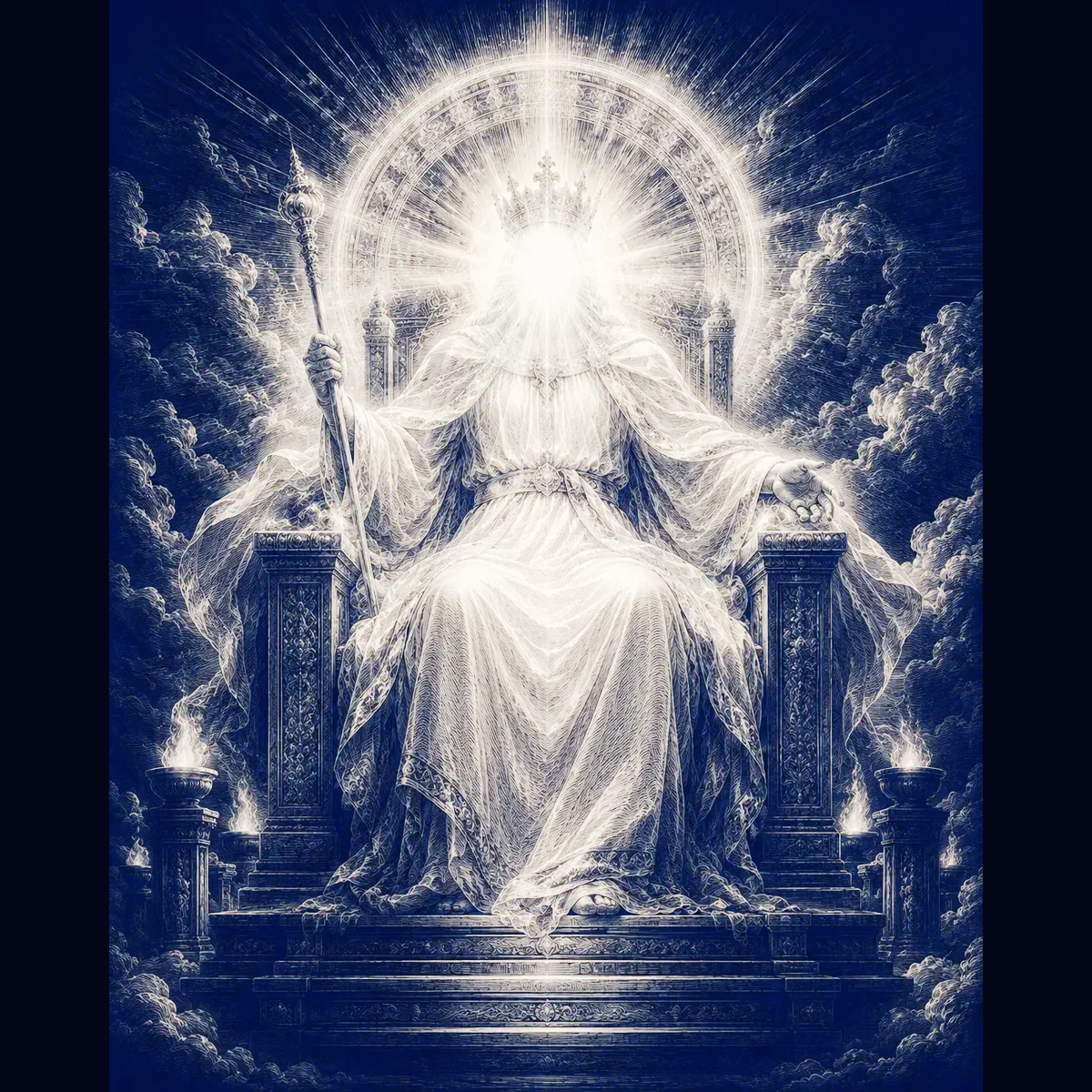
Cepheus
Enthroned Christ — King and ShepherdCepheus depicts the Lord Jesus Christ as the enthroned King. He is crowned with a crown, holds a royal scepter, and is placed next to the Little Flock. The names of his stars speak of the Shepherd, the flock of sheep, and the right hand — the place of authority and royal power.
Read interpretation →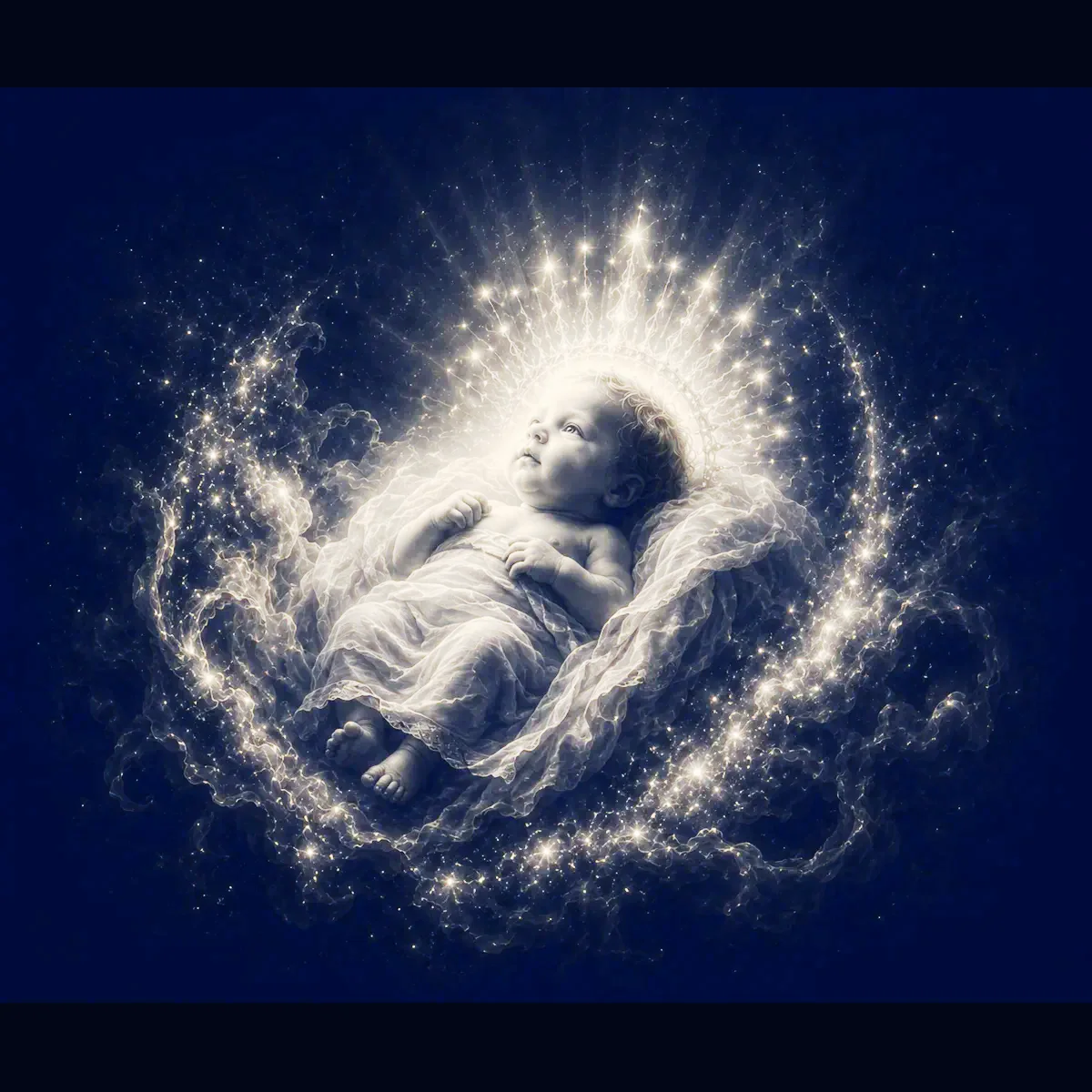
Bernice's Hair
Desired Son — Crown of GloryNext to the Virgin is the region of Coma, which in Eastern tradition was associated with the meaning 'Desired, Long-awaited' and with the image of a woman with a child. In our map, this continues the image of the Virgin: the Virgin is Israel, through whom the promised Seed comes; Coma is the Desired Son Himself.
Read interpretation →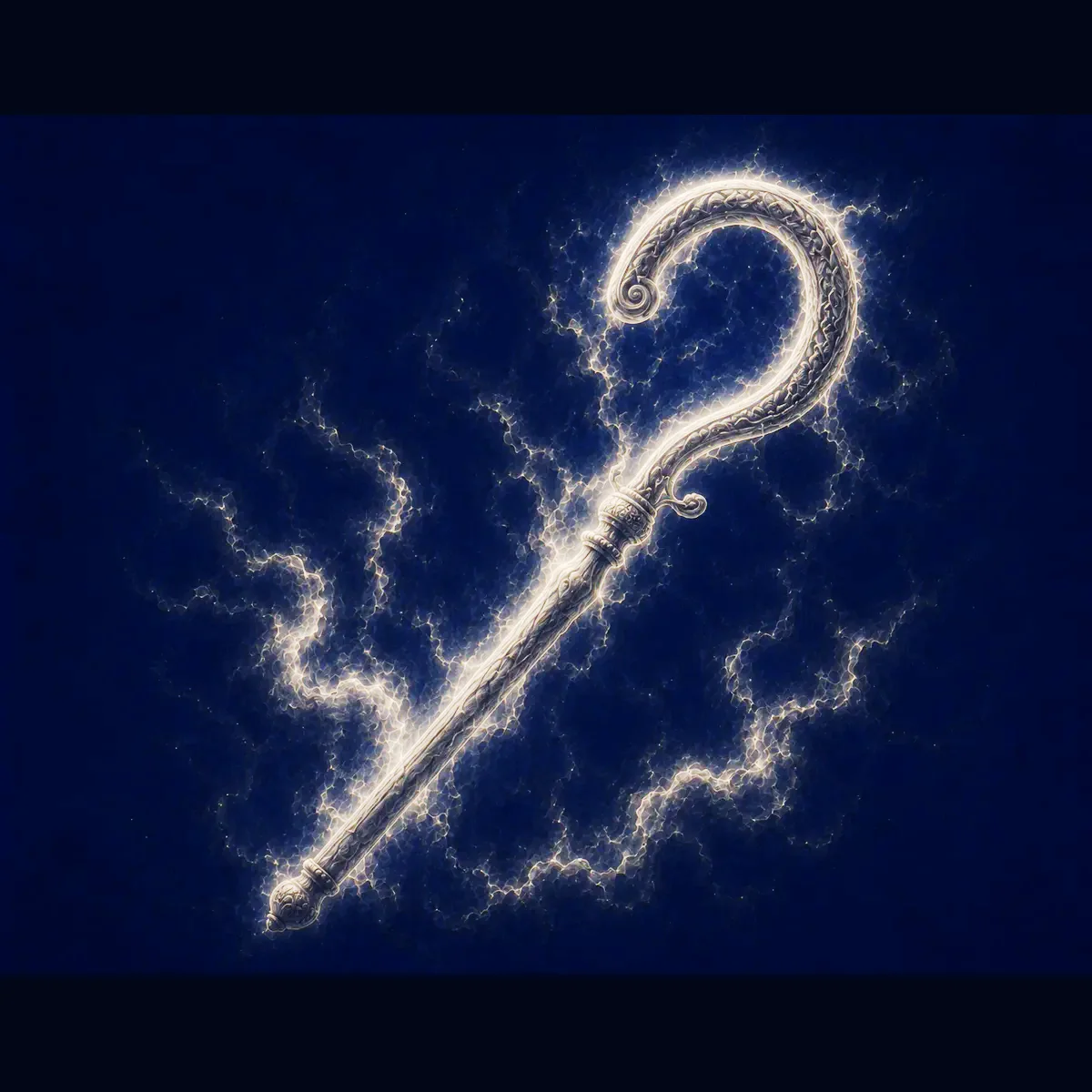
Hunting Dogs
Shepherd's RodThe modern Hunting Dogs are a late constellation; these stars originally did not form two dogs. They lie between Boötes — the Shepherd — and the Great Bear — God's flock, so their natural meaning in the overall heavenly picture is the Shepherd's Rod, the instrument of authority by which the Shepherd leads, gathers, and protects his flock. The Hunting Dogs appeared on European charts only in modern times, whereas the earlier tradition linked this area with the staff or crook of Boötes. The biblical image is entirely apt: Christ is the Shepherd, the Church is His flock, and His rod and staff signify His authority, guidance, and protection.
Read interpretation →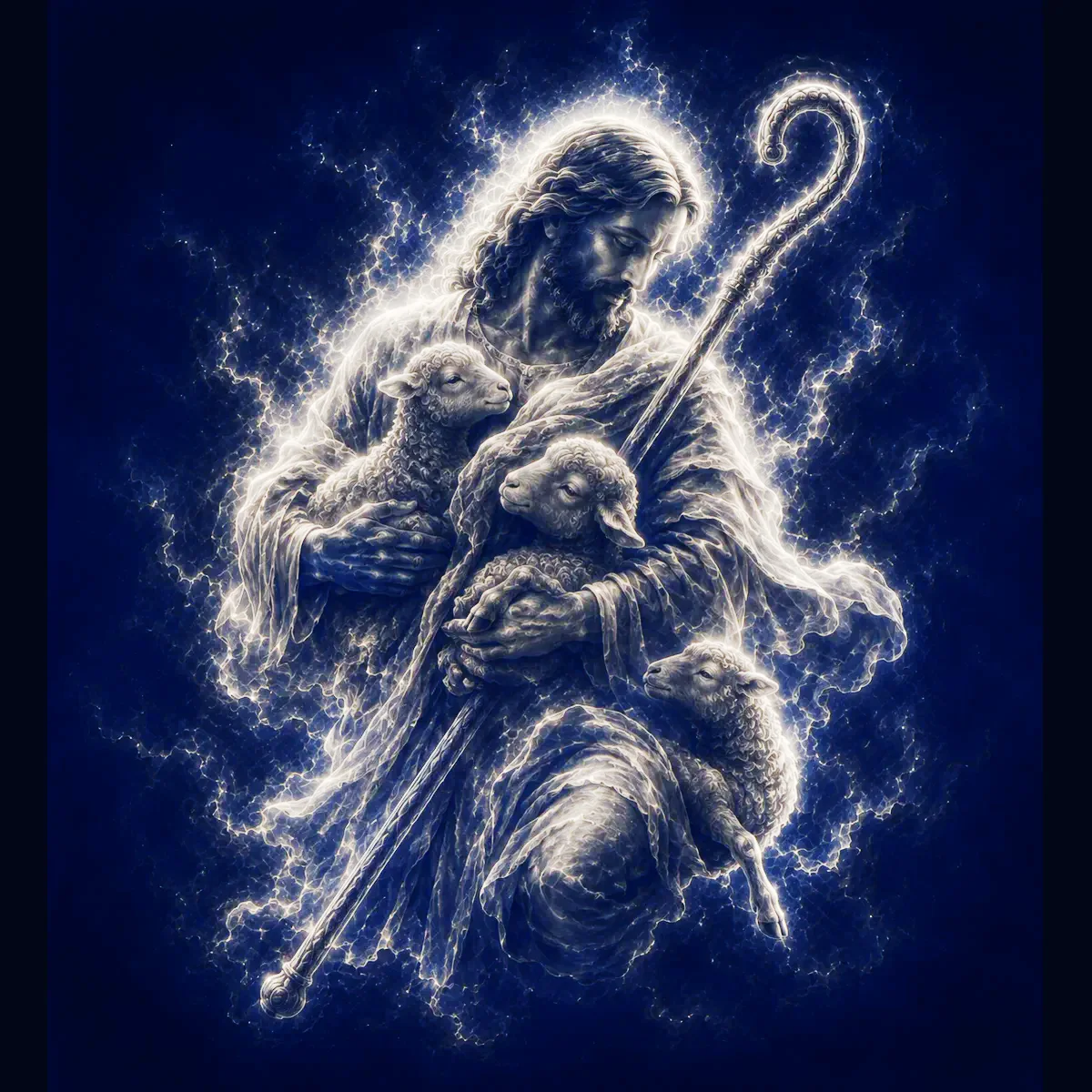
Charioteer
Lord of Creation — Good ShepherdThe Charioteer depicts Jesus Christ as the Creator and Good Shepherd. The ancient figure GAM meant a shepherd's staff, and the star El Nath, shared with Taurus, connects the image of the Shepherd with the image of the coming King and Judge.
Read interpretation →
Cup
Cup of God's JudgmentThe constellation of the Cup depicts a filled cup of God's judgment. It is located above Hydra — the image of the ancient serpent — and reminds us that God's long-suffering has a limit. When the measure of iniquity is filled, righteous judgment comes.
Read interpretation →
Southern Crown
Victor's CrownThe Southern Crown is the southern counterpart of the Northern Crown. If the Northern Crown shows the promised crown of life, then the Southern Crown depicts the crown already belonging to the Victor. It is located next to Sagittarius and reveals the glory of Christ after His victory over the forces of evil.
Read interpretation →
Northern Crown
Crown of life, promised by the VictorThe Northern Crown depicts the crown of life and righteousness prepared for those who remain faithful to Christ. It is located next to the Kneeler — the image of the Savior who strikes the serpent and through suffering comes to victory. The Victor Himself is crowned with glory and promises to share His crown with those who follow Him.
Read interpretation →
Crow
Final JudgmentThe constellation of the Crow depicts the execution of God's sentence upon the ancient serpent. The Crow is on the back of Hydra and tears at it next to the Cup of God's wrath. Together, the Lion, Hydra, Cup, and Crow form a picture of God's ultimate victory over evil.
Read interpretation →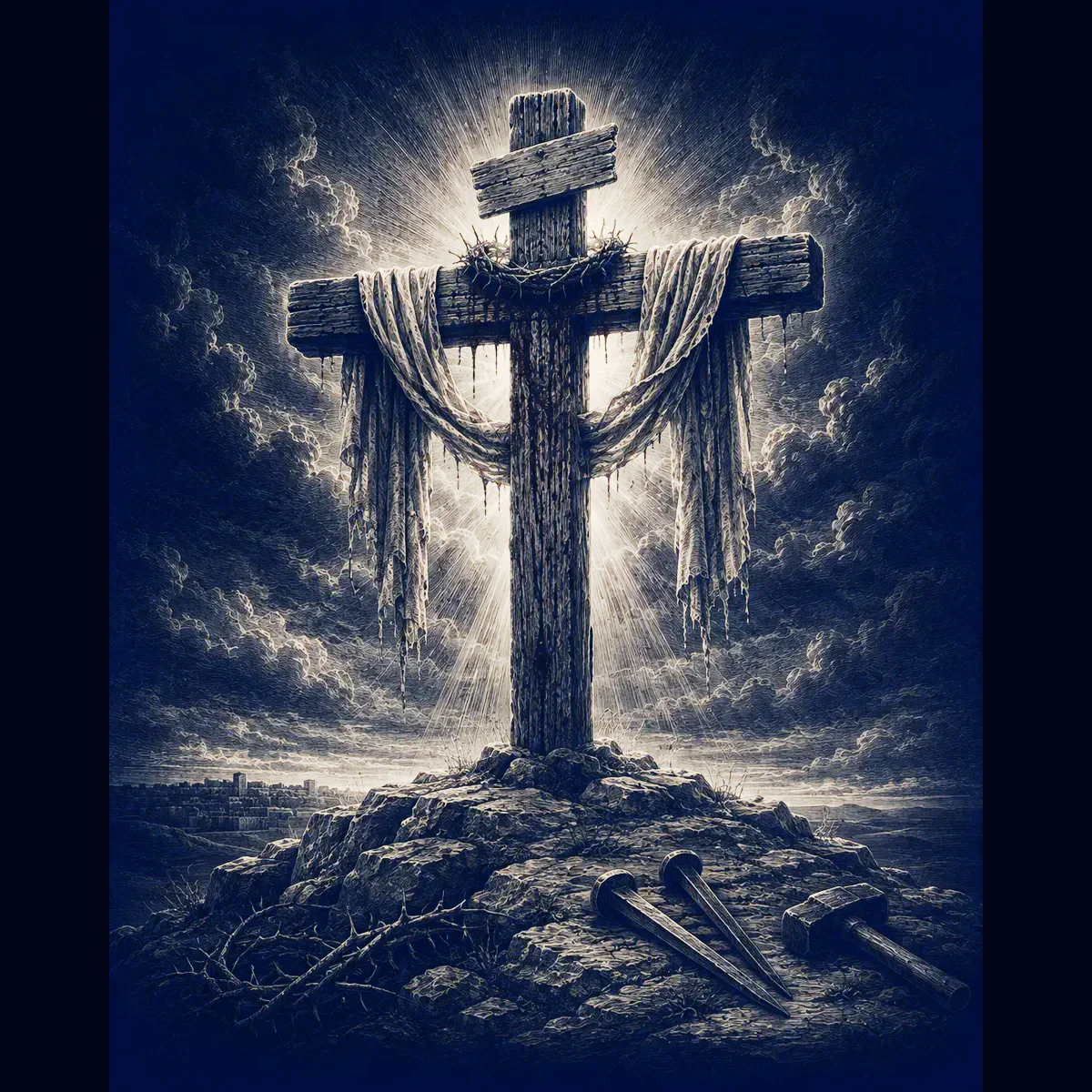
Southern Cross
Cross of RedemptionThe Southern Cross is the southern counterpart of the Northern Cross, which is read in the constellation Cygnus. If Cygnus shows the Cross in the northern book of the sky, then the Southern Cross repeats the same revelation for the peoples of the Southern Hemisphere. The entire sky testifies that the path of salvation passes through the Cross of Christ.
Read interpretation →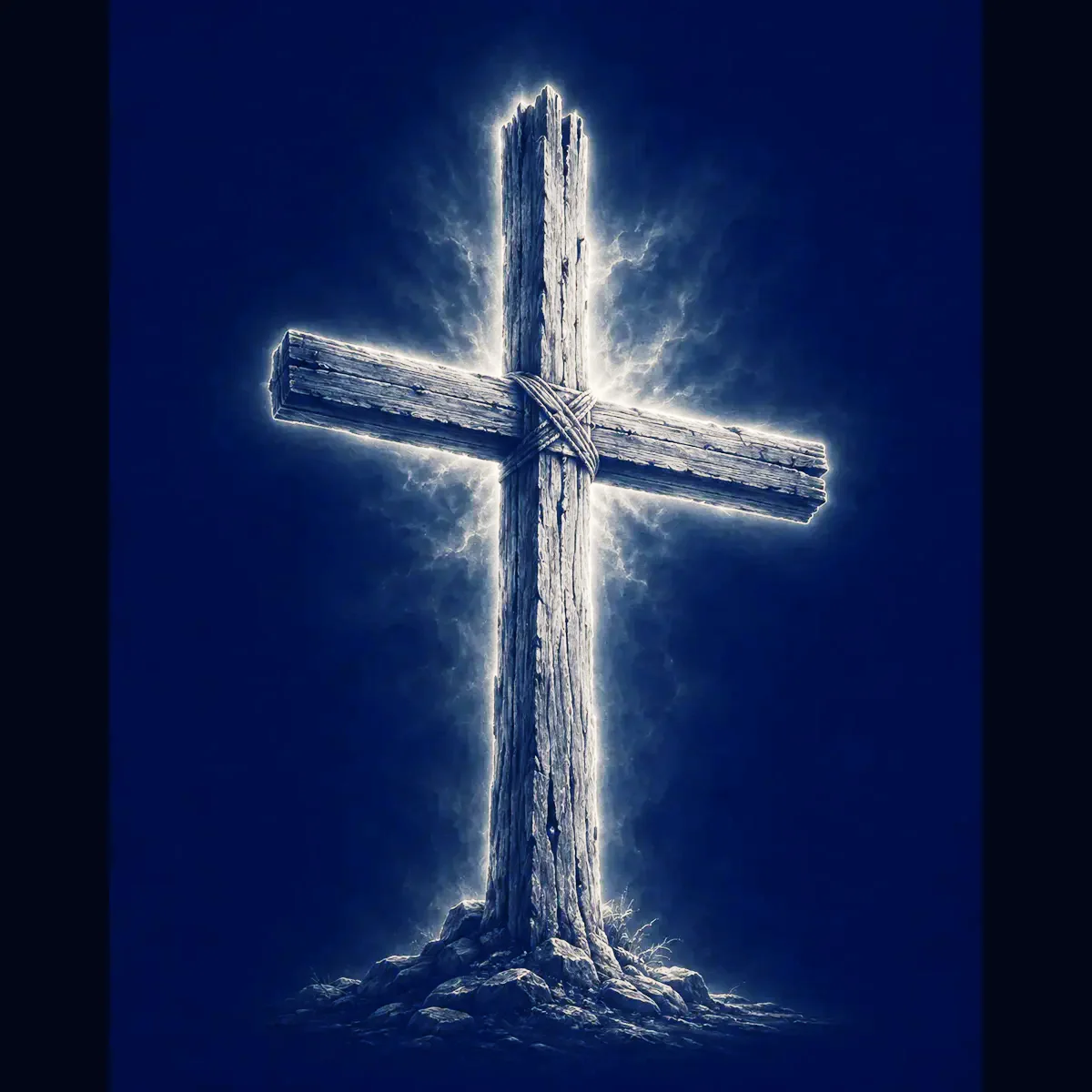
Swan
Saving CrossCygnus is read as the Northern Cross. It is located next to the Kneeler — the image of the suffering Christ, who strikes the ancient serpent in the head. Between the Kneeler and the Cross lies Lyra with the star Vega — the image of fallen angels. The Son of God went to the Cross to destroy the works of the devil, redeem mankind, and open to them the way to eternity.
Read interpretation →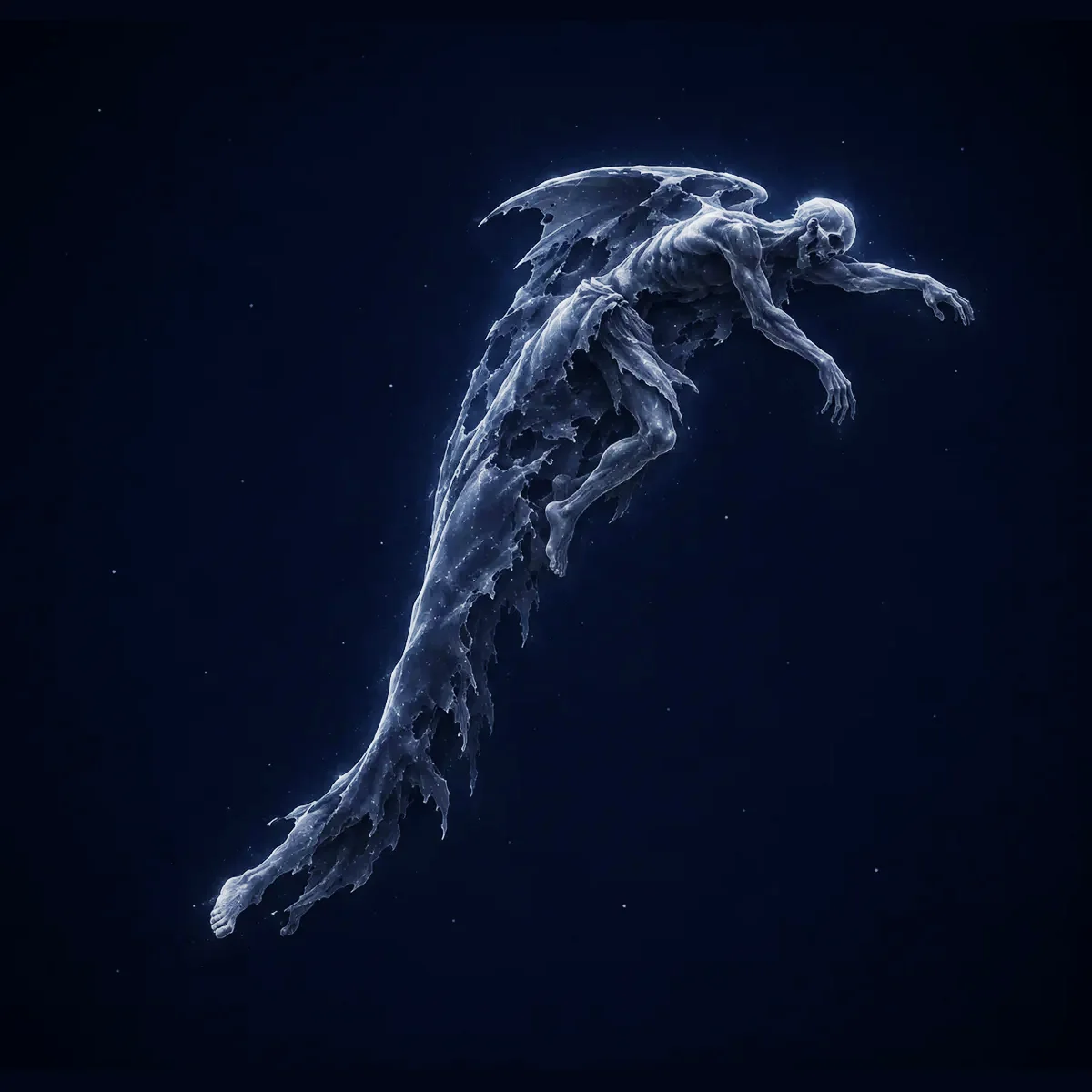
Dolphin
Dead ManOn the pre-Greek Mesopotamian map, next to the Eagle stood the figure of the Dead Man — AD₆ / pagru, “corpse, dead body” — which researchers associate with the region of modern Delphinus. In ancient texts this Dead Man could be understood as the corpse of a hostile demonic being. On our map nearby stand the Eagle — fallen angels — and God’s Arrow: rebellious powers → God’s judgment → the overthrown enemy.
Read interpretation →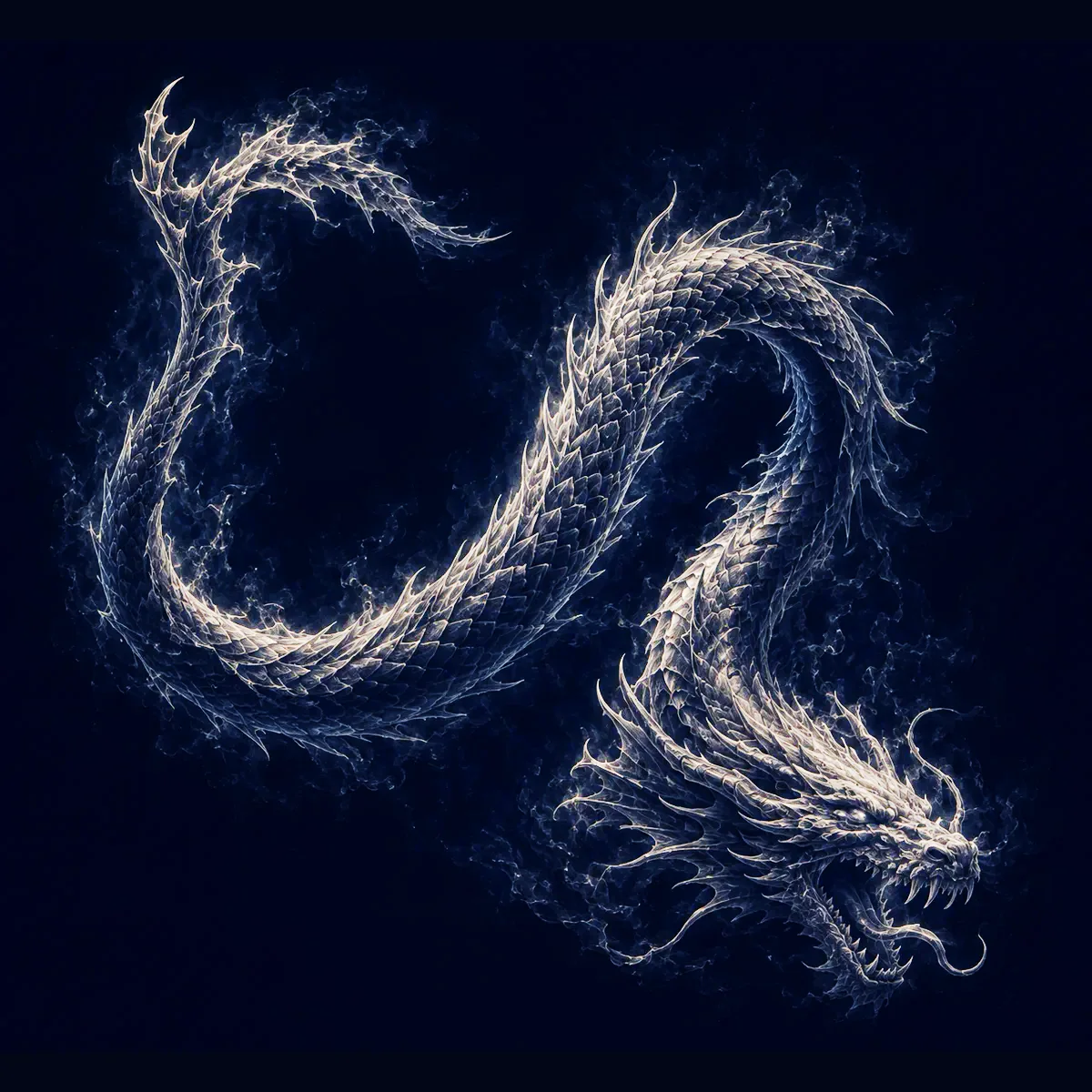
Dragon
Ancient serpent — Satan, devilThe Dragon occupies a vast region of the northern sky and coils around the Little Flock. In the accepted chronology of the atlas, its stars became polar during the era when fallen angels usurped the authority given to Adam. However, nearby stands the Kneeler, striking the Dragon's head and fulfilling the promise of Christ's victory over the ancient serpent.
Read interpretation →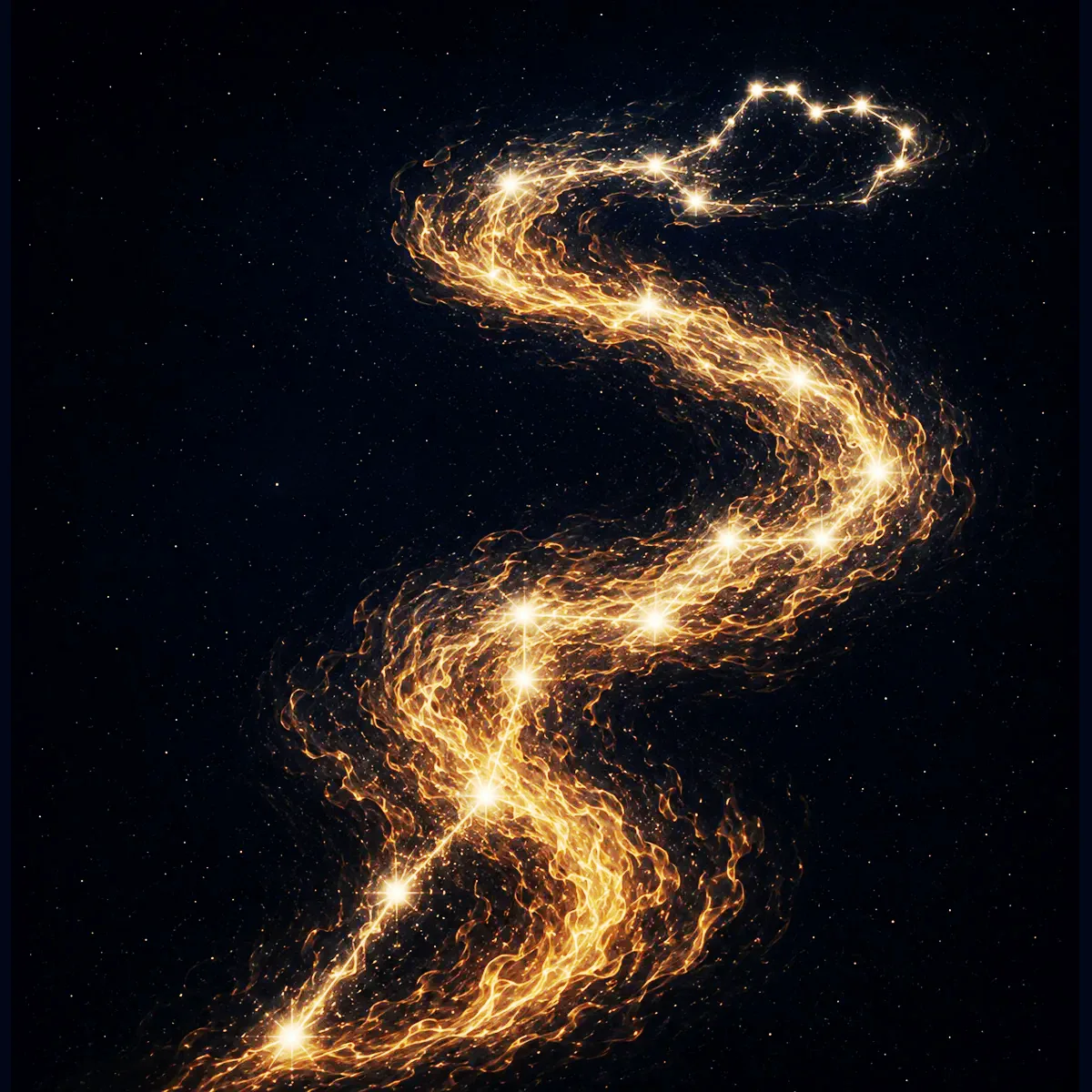
Eridanus
Fiery river of God's judgmentThe constellation Eridanus depicts the river of God's judgment directed against the rebellious spiritual powers and the kingdom of death. The image itself is very ancient: in Greco-Roman astronomy it is simply the River, winding in a long line across the southern sky. Its beginning lies directly near the foot of Orion-Kesil — the image of the bound Watchers awaiting judgment. Ptolemy literally describes the first star of the River as being after the star in Orion's foot, 'at the beginning of the river'. Nearby, above Eridanus, lies Cetus — the sea monster representing the power of death and forces hostile to God. Thus in the biblical picture, the celestial River becomes an image of the fiery stream of God's judgment, like the one Daniel saw issuing from God's throne.
Read interpretation →
Arrow
God's arrow of judgmentThe Arrow is God's weapon directed against fallen angels. It lies directly next to Aquila — the image of fallen spirits, the 'falling eagle', to which also belongs the ancient name of Vega, an-nasr al-wāqi‘ — 'the falling eagle'. Therefore the meaning of the Arrow is extremely clear: God will not leave the rebellious spirits unjudged — His weapon is already aimed against them, and their defeat is inevitable.
Read interpretation →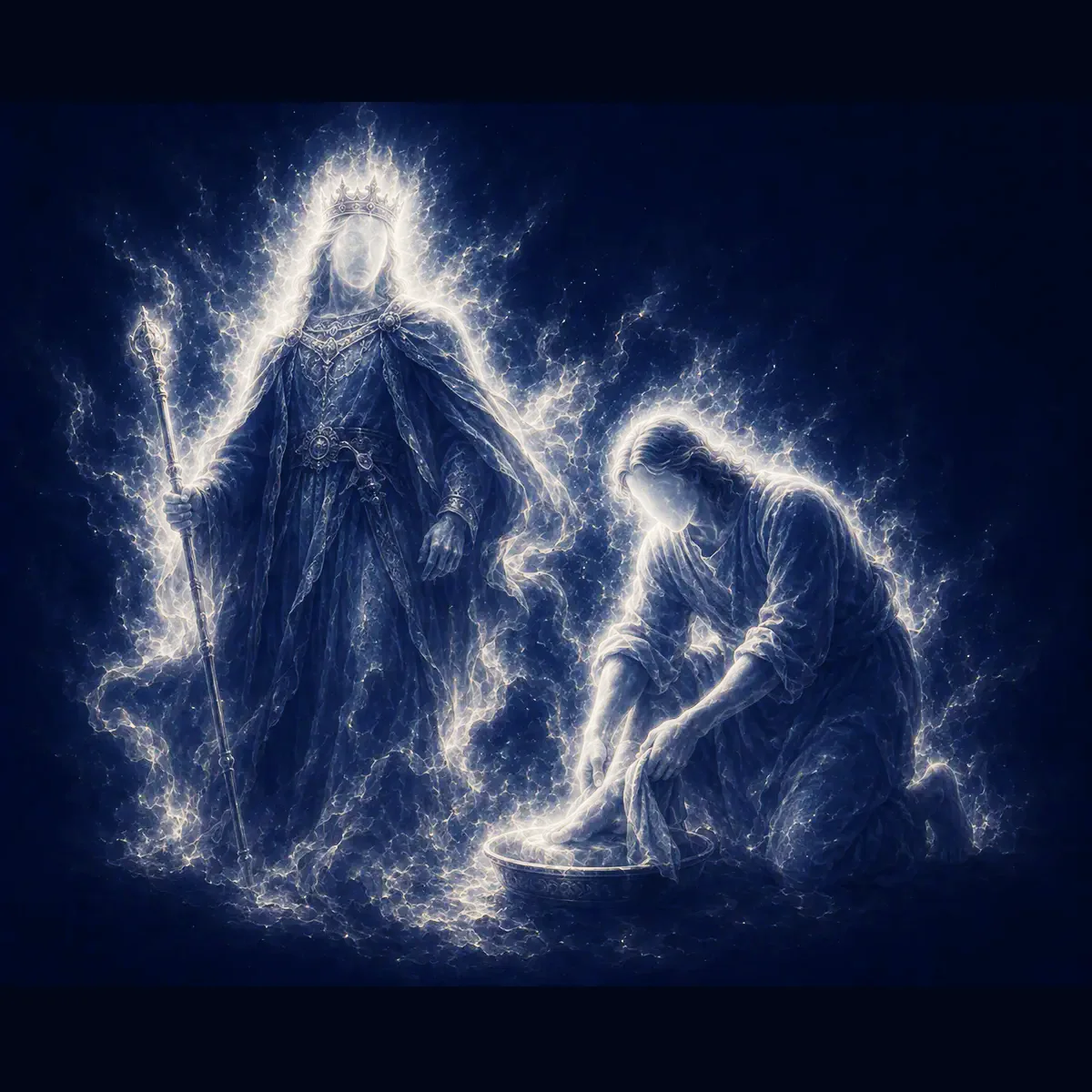
Twins
Suffering Savior and enthroned JudgeGemini depicts not two gods, but two inseparable images of the one Christ: the suffering Lamb and the victorious King. The One who was wounded for the salvation of mankind returns as Ruler and Judge.
Read interpretation →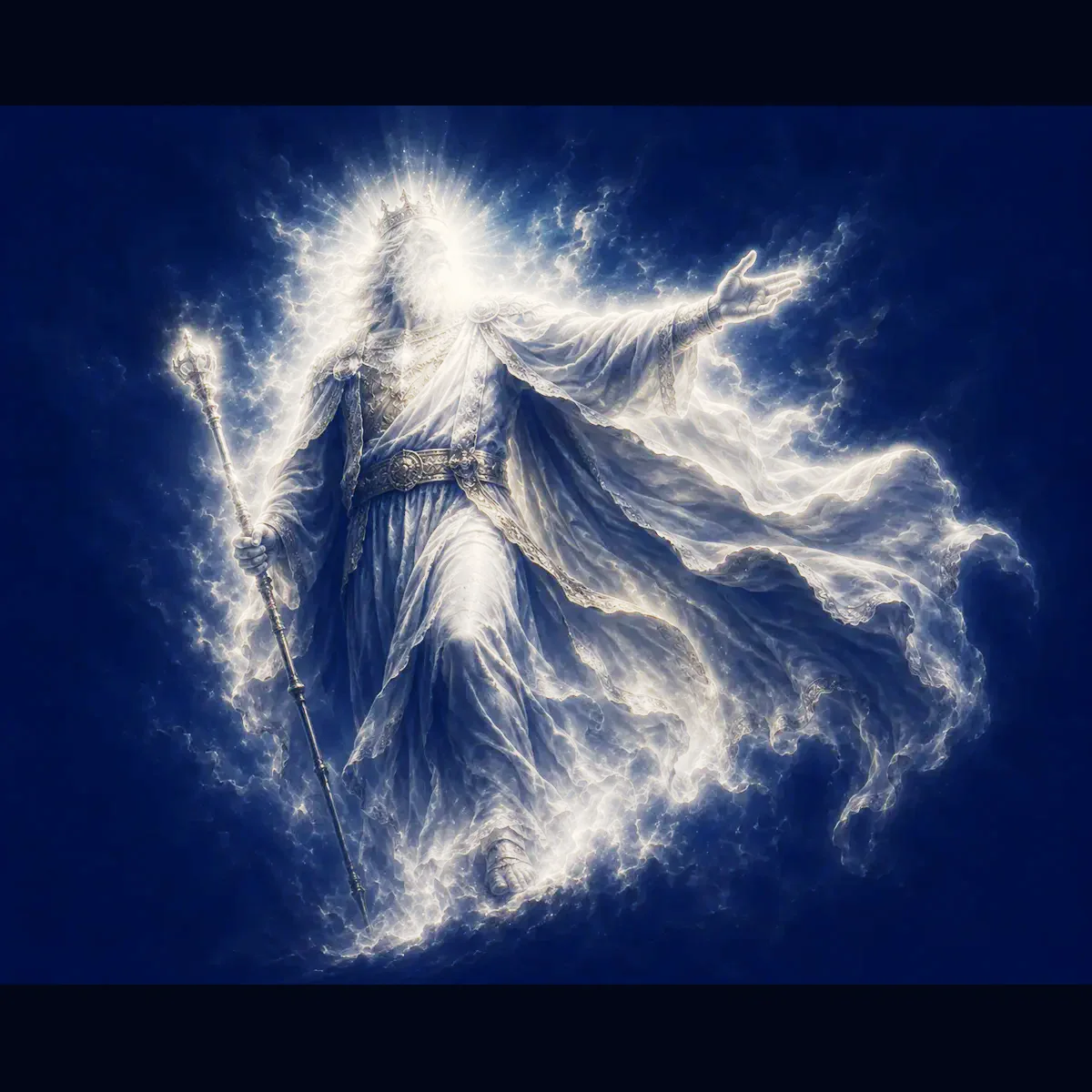
Greater Dog
The coming KingThe Greater Dog symbolizes the appearance of Christ as the great King and Victor, whose coming is foretold by the Forerunner. The heart of the whole figure is Sirius — the brightest star in the night sky. In ancient Mesopotamia, this region of the sky was not originally a dog at all: Sirius represented an Arrow, and the surrounding stars — a huge celestial Bow, i.e. an image of the decisive defeat of the enemy. Before Sirius rises Mirzam — 'Announcer', and even earlier appears Procyon — 'one who goes before'. Thus the whole composition says: first the announcement — then the Great One appears, who conquers and reigns.
Read interpretation →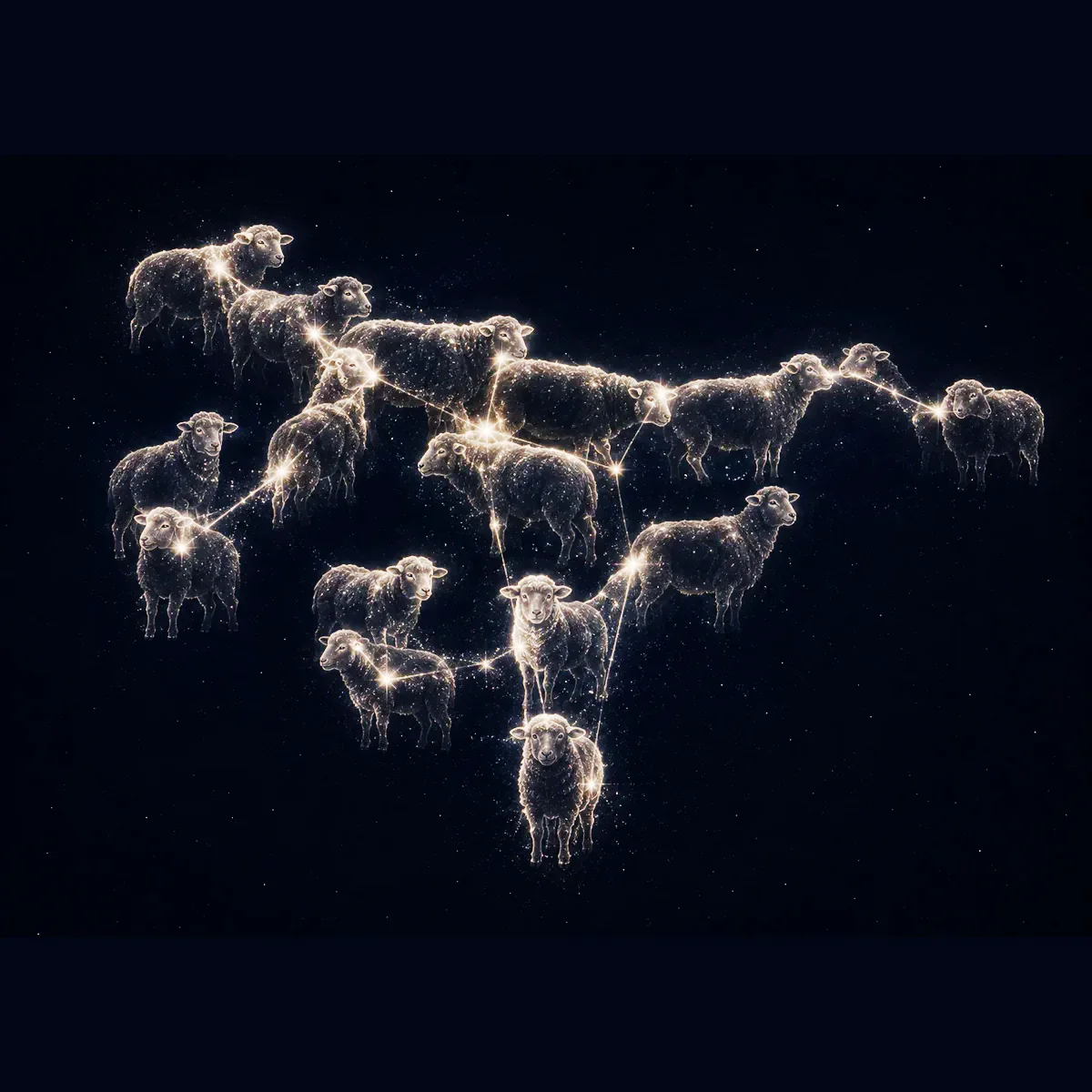
Great Bear
Great Flock — the ChurchThe Great Bear symbolizes God's Church — the great flock gathered by God and led by one Shepherd. The seven main stars of the Dipper remind us of the seven churches of Revelation, constituting one Church. In the overall heavenly picture, the Great Bear is connected with the Little Bear as two flocks of God's people — the Church and Israel, and the path to the Great Lion through the Little Lion reflects the biblical principle: one can come to the Father only through the Son.
Read interpretation →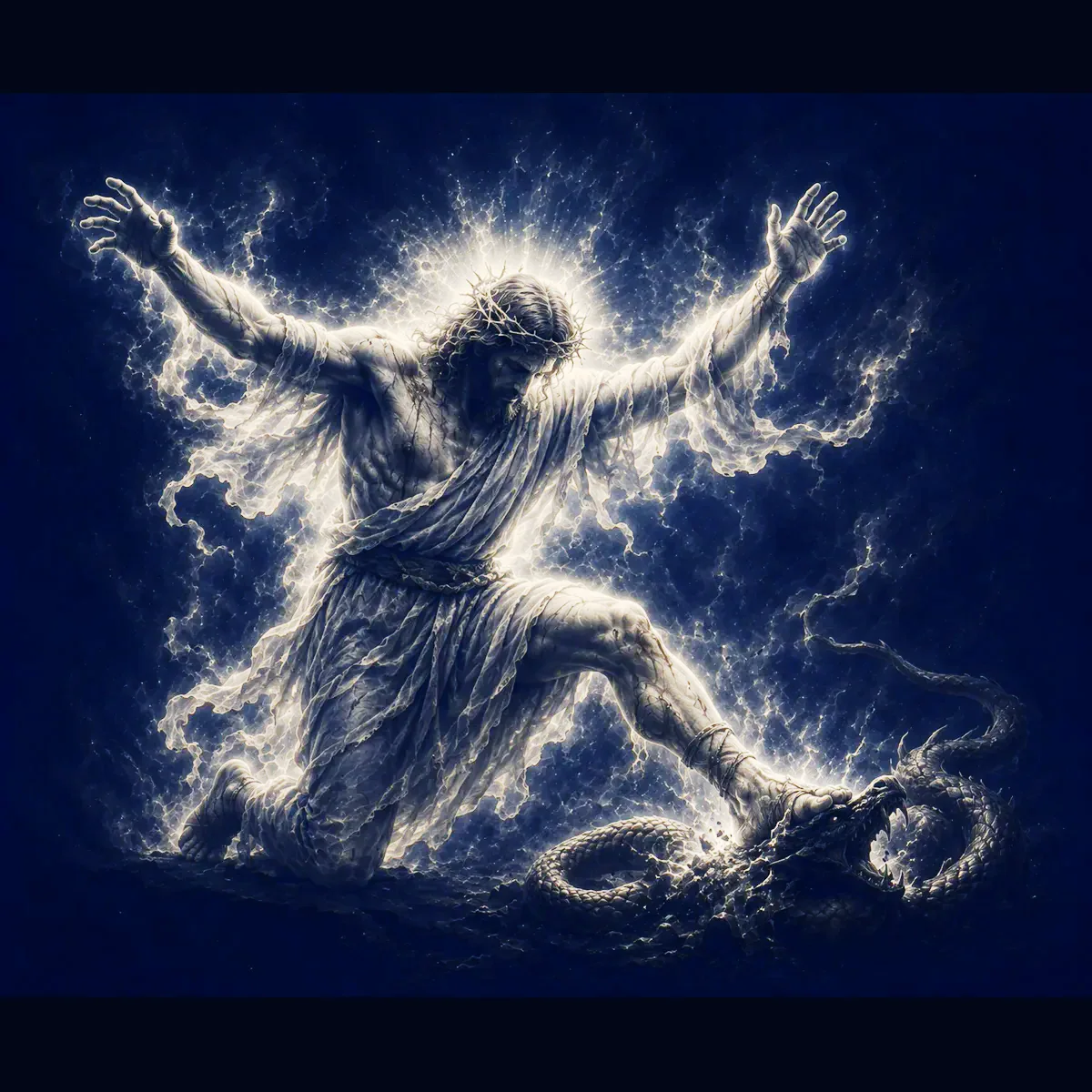
Hercules
The Kneeler — Suffering VictorThe Kneeler is an image of the Messiah, who through suffering strikes the ancient Serpent and gains victory. The ancient Greeks did not yet call this figure Hercules: Eudoxus and Aratus knew it as the mysterious Man kneeling, with His foot on the head of the Dragon. Beside Him shines the Northern Crown — the Crown, which wonderfully combines in one heavenly picture the most ancient prophecy of Gen. 3:15, the sufferings of the Messiah, and the subsequent victory: the Serpent strikes His heel, but the Seed of the woman crushes the Serpent's head, and after suffering comes the crown of life.
Read interpretation →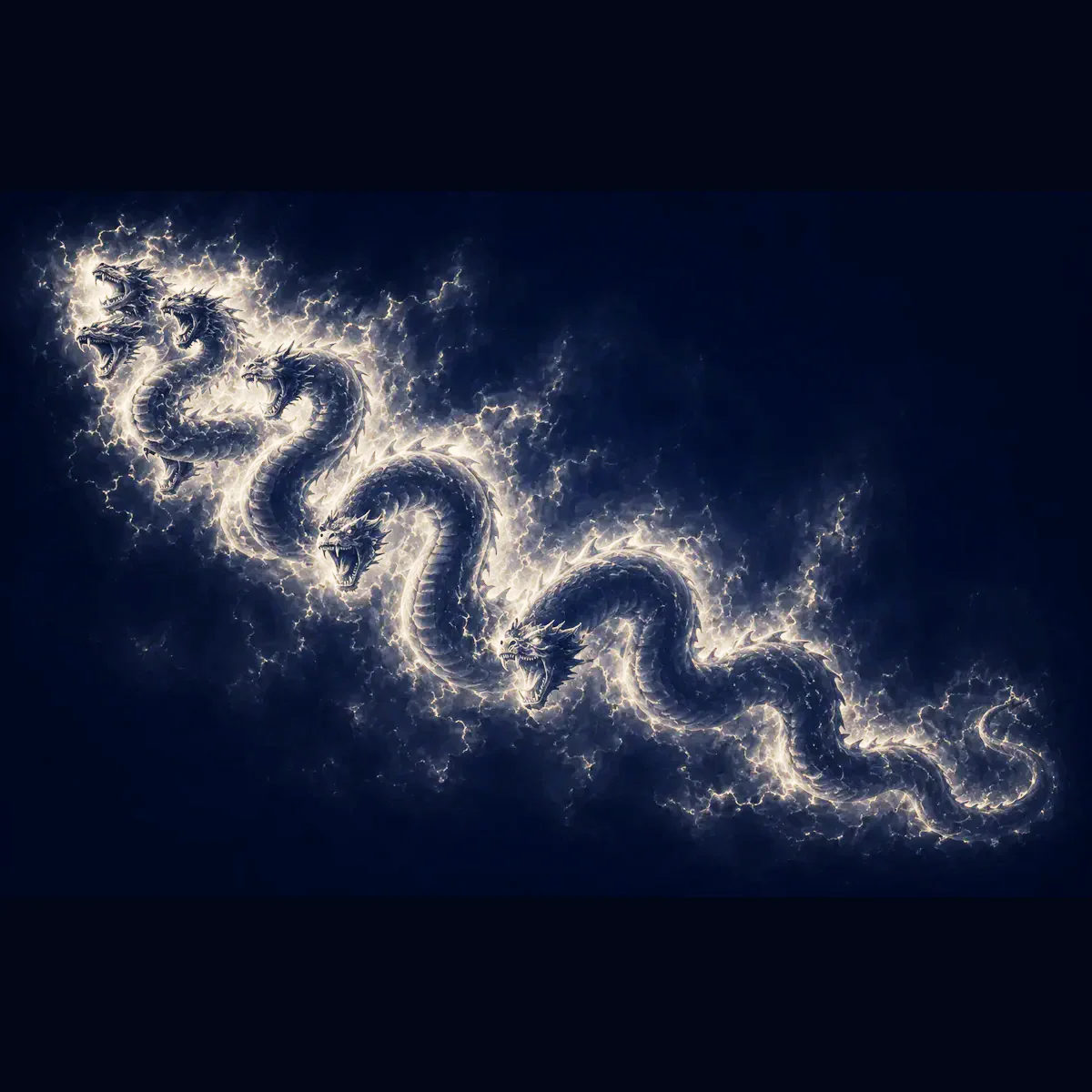
Water Snake
Satan under judgmentHydra is the image of Satan and fallen angels over whom God's judgment is executed. The most ancient Mesopotamian image of this region was MUŠ, a huge serpent-dragon, and already on ancient Babylonian depictions the Lion is above it, trampling the Serpent, while the Crow stands on its tail and pecks at it. In the classical celestial composition, the Cup and the Crow are also directly on Hydra's back, and the Lion is above its head. A unified picture of the enemy's final defeat emerges: the Lion crushes the ancient Serpent, the Cup of God's wrath is over it, and the Crow participates in the destruction of its body.
Read interpretation →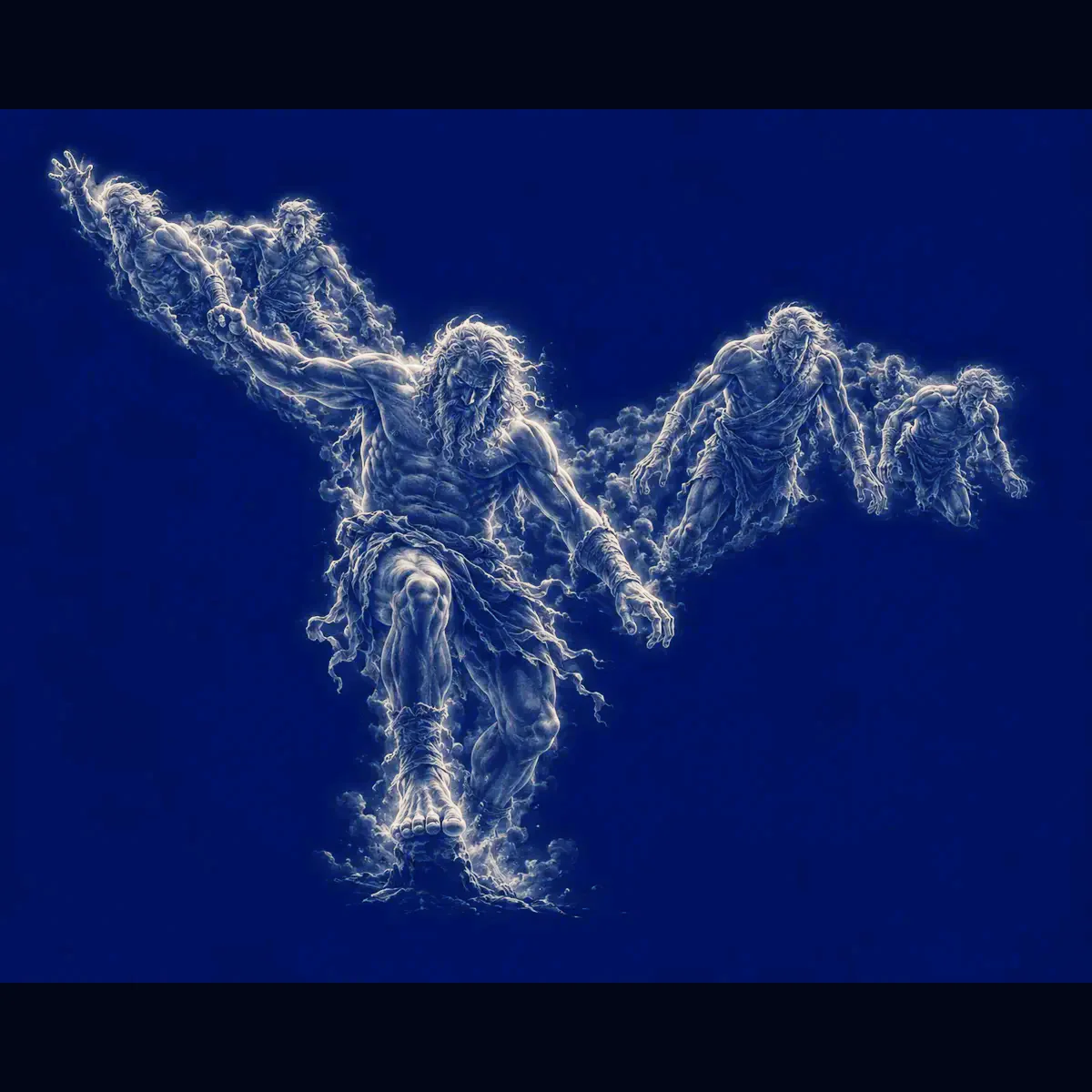
Hare
NephilimThe constellation of the Hare depicts the Nephilim — the earthly fruit of the Watchers' intrusion. It lies directly under Orion-Kesil, the bound fallen angels of the second wave. In ancient Babylonia, the region was DAR.LUGAL — 'Royal Rooster', associated with the legendary hero and king Lugalbanda, while ancient Arabs called the four main stars of this region the 'Throne of Orion'. This fits well with Genesis 6: the Watchers came down to men, and beneath them on earth appeared giants — 'mighty men who were of old, men of renown'.
Read interpretation →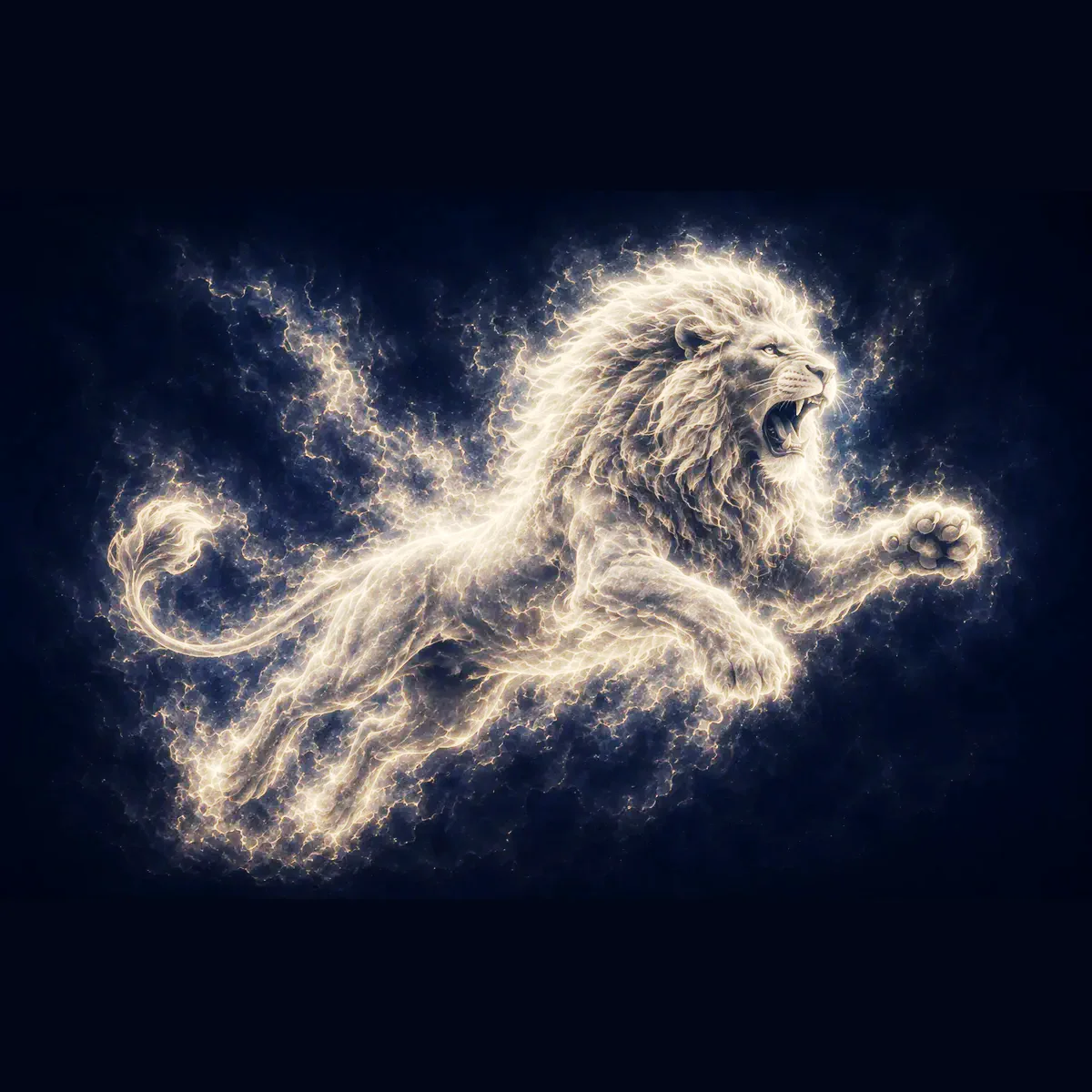
Lion
God the Father — KingThe constellation Leo depicts God the Father — the Great King, Lord over all creation. The image of the Lion is extremely ancient: in Mesopotamia the constellation was called UR.GU.LA — 'Lion', and its main star Regulus bore the name LUGAL — 'King'. Beside the Great Lion is the Lesser Lion — the image of the Son of God. Under the Lion stretches Hydra — the ancient serpent; upon it are the Cup and the Crow. Therefore, around the Lion unfolds the picture of God's final victory: the King crushes the serpent, the Cup of wrath is poured out upon the enemy, and final judgment is executed.
Read interpretation →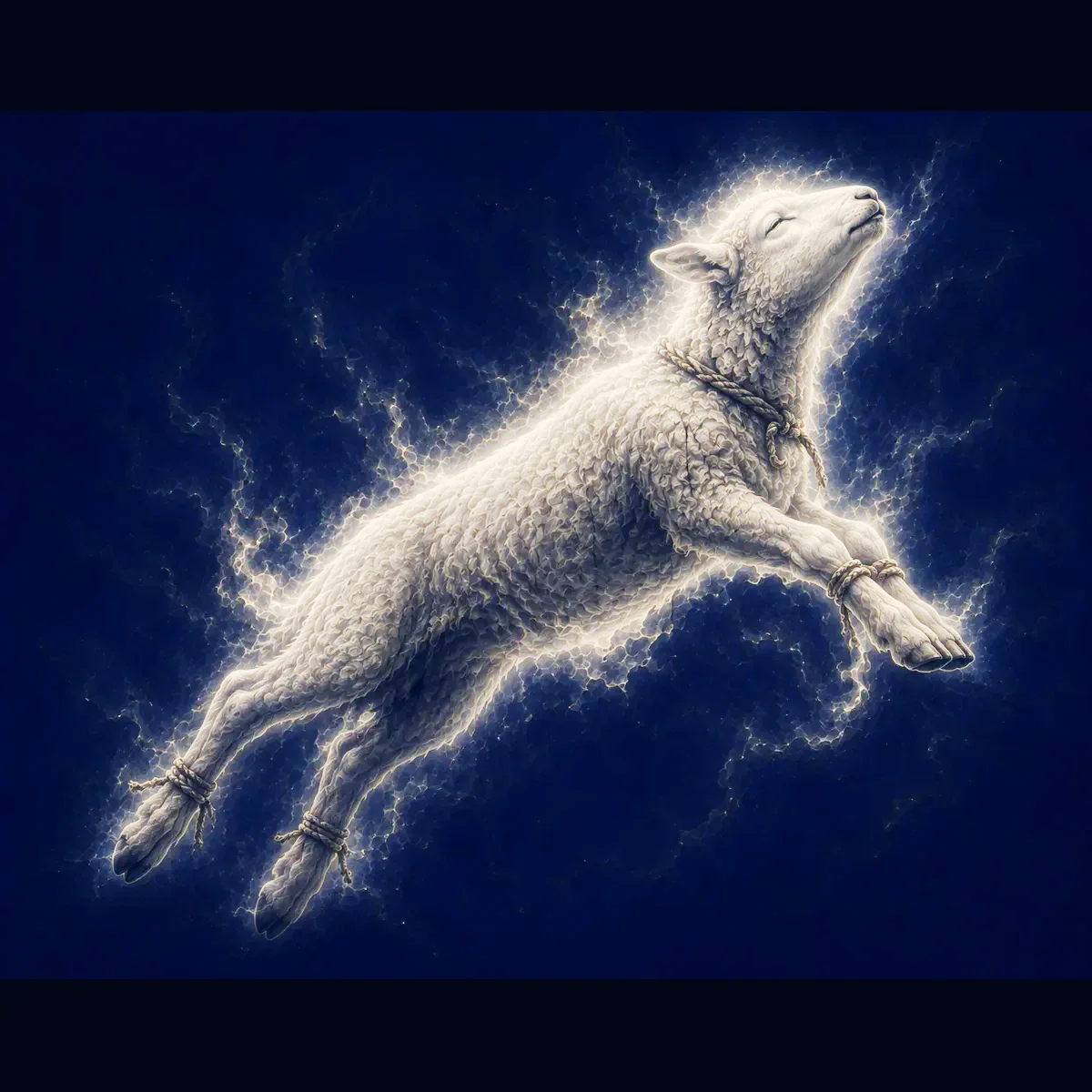
Wolf
Atoning sacrificeThe constellation of the Wolf depicts the sacrifice offered for redemption. The modern name 'Wolf' is secondary: the ancient Greeks called this figure simply Therion — 'Beast', and on ancient depictions it is already pierced and in the hands of Centaurus, who carries it toward the neighboring constellation of the Altar — Ara. Ancient authors directly described the animal as a victim. Therefore the main meaning lies not in the wolf itself, but in the position of the figure: Victim → Altar. In the biblical picture, this points to Christ, who voluntarily offered Himself to God as the perfect atoning sacrifice for the sins of the world.
Read interpretation →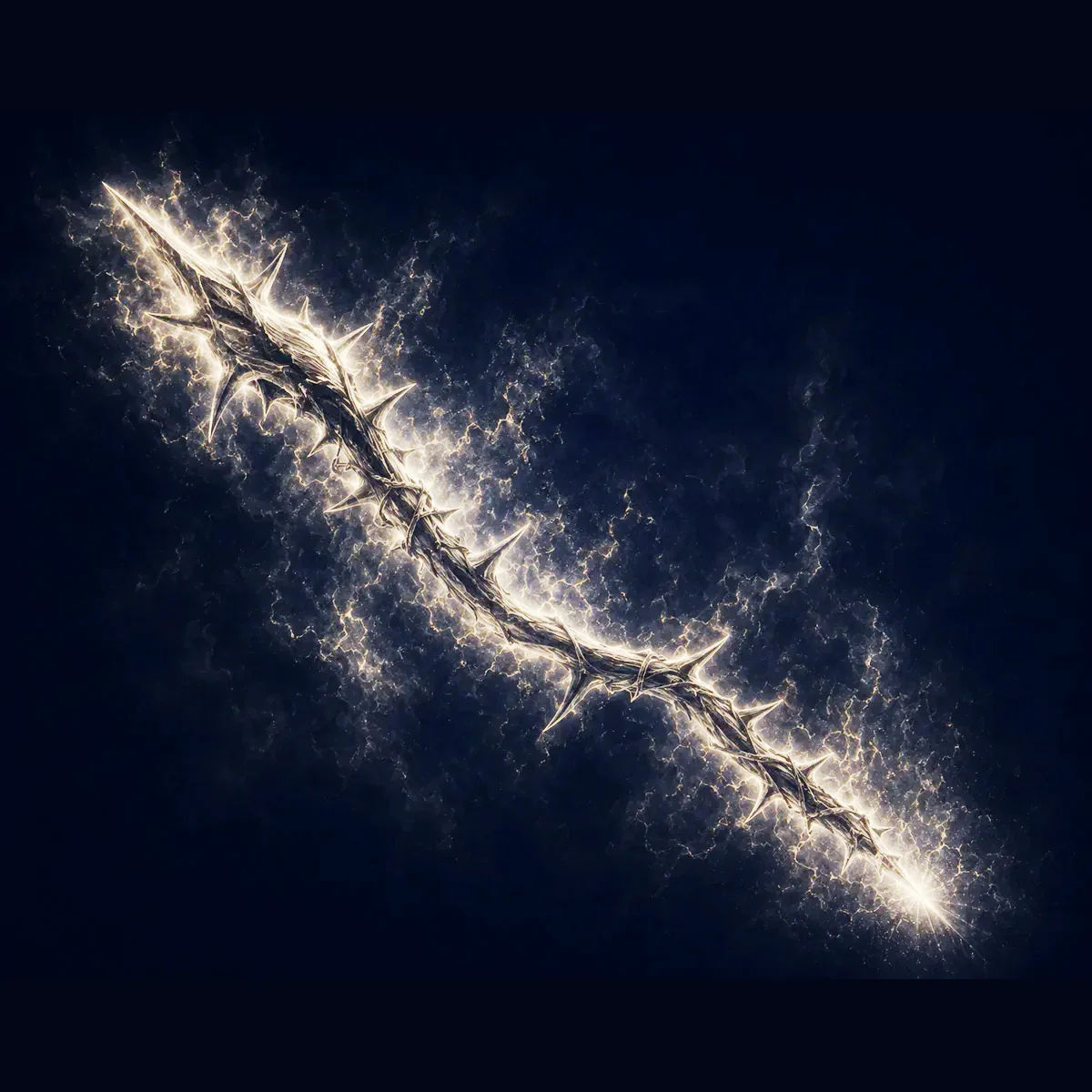
Lynx
Thorn of sufferingThe constellation Lynx is directly next to the Lesser Lion — the image of the Son of God, Jesus Christ. The constellation Lynx itself was only defined in the 17th century, so the meaning does not lie in the animal as such. The main key is found in one of its stars — Alsciaukat (31 Lyncis), whose name comes from the Arabic aš-šawkat and means 'Thorn'. Beside the Son appears the Thorn — the image of His sufferings, the crown of thorns, wounds, and death on the cross. The Lesser Lion shows who He is, and the Thorn beside Him shows what He endured for the salvation of men.
Read interpretation →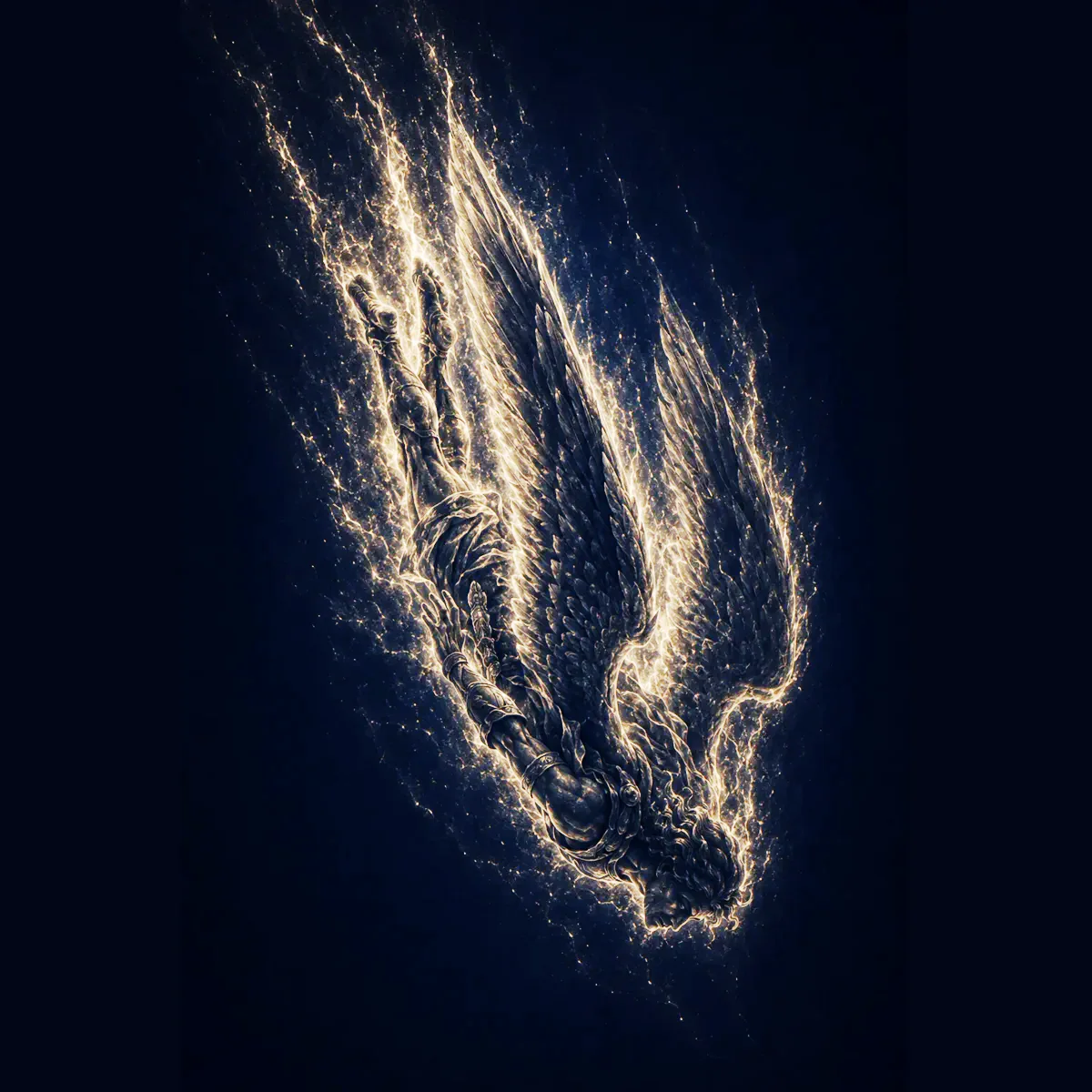
Lyre
Fallen angelsThe constellation Lyra depicts fallen angels, cast down from the spiritual heavens following Satan. The main star of Lyra — Vega — received its name from the Arabic al-nasr al-wāqiʿ, 'the falling' or 'swooping eagle'; ancient Arabs saw in Vega and two neighboring stars a bird with folded wings plunging downward. The position of Lyra is especially important: it lies between the Kneeling Victor, who strikes the Dragon, and the Northern Cross. Thus the heavenly picture shows Christ, who goes to the Cross in order to destroy the works of the devil and finally defeat the fallen spiritual powers.
Read interpretation →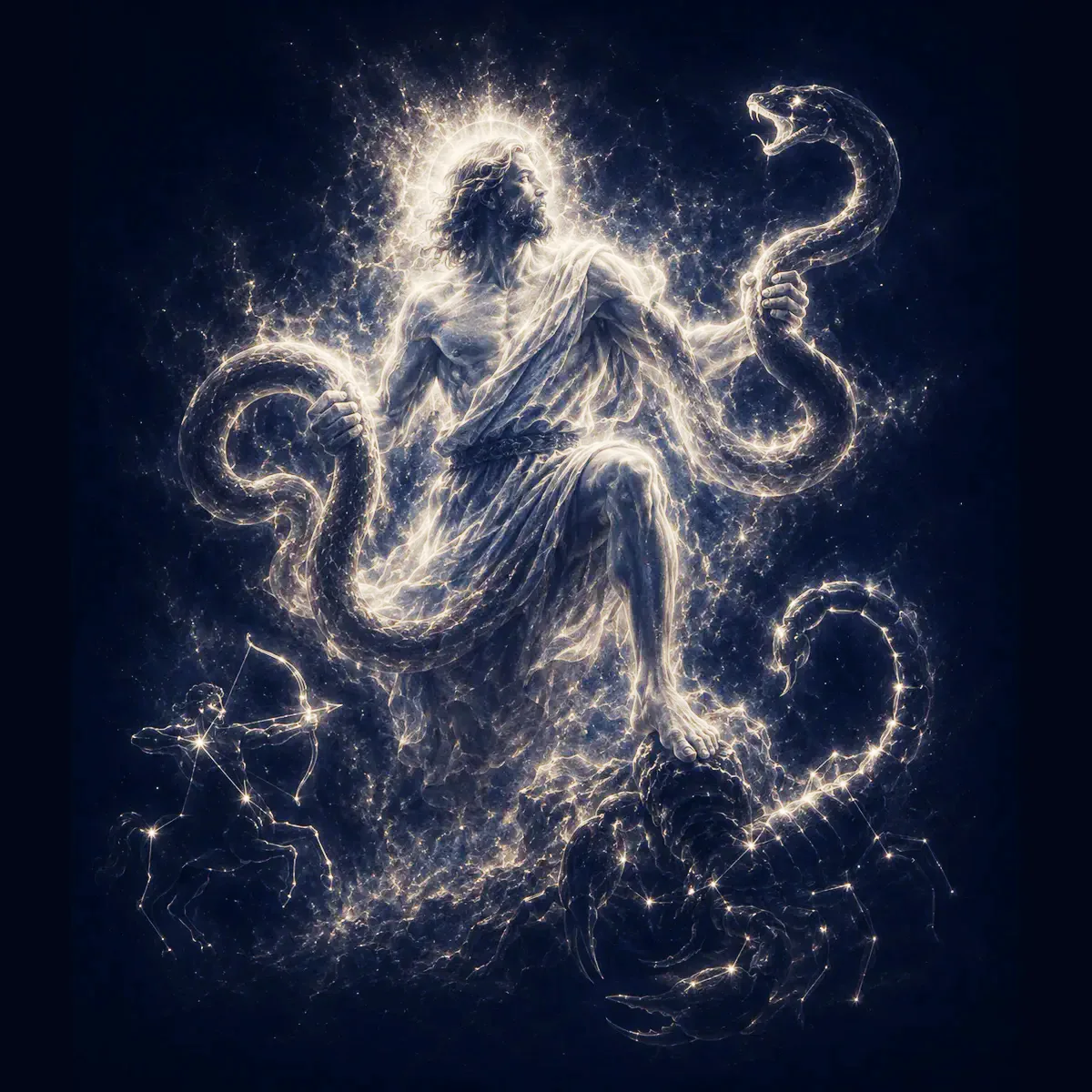
Serpent Bearer
Shepherd-VictorOphiuchus is the image of Christ, the Good Shepherd, who came to conquer the power of the ancient serpent. On the star chart, the Man holds the Serpent with both hands, not allowing it to act freely, and His feet stand over Scorpius — the image of the devil; directly next to Him is Sagittarius — Christ who came to earth. The ancient Arabic tradition also preserves a pastoral image here: Tselbalrai means 'shepherd's dog', and Ras Alhag was part of the same heavenly shepherd composition. Thus Ophiuchus shows Christ as the Shepherd who came for His flock and simultaneously entered into battle with the ancient serpent, depriving him of his power over man.
Read interpretation →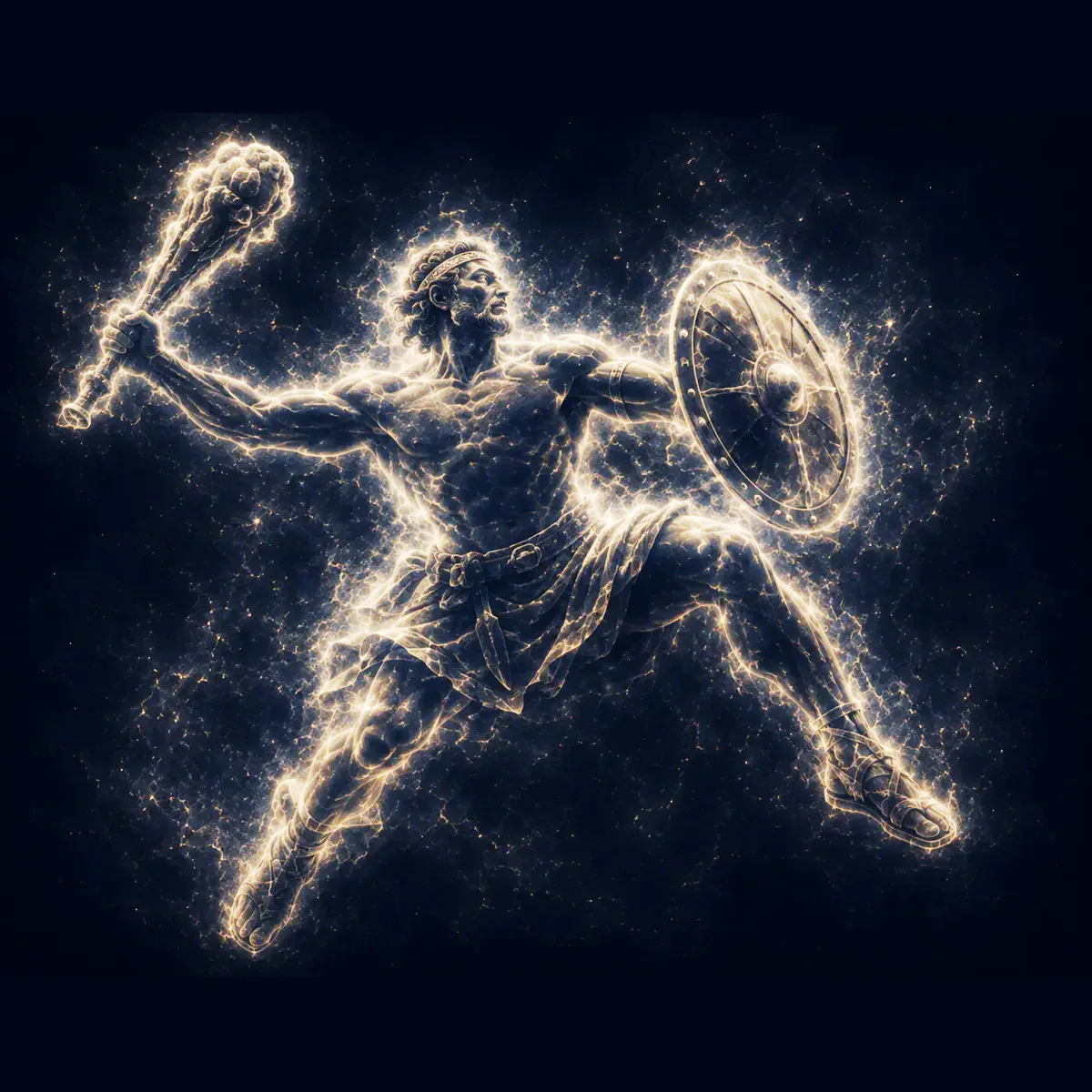
Orion
Bound WatchersThe constellation Orion — the biblical Kesil — depicts the fallen angels of the second wave, the Watchers, who left their appointed place, came down to men, and gave rise to the Nephilim. The main key to the constellation is found in Job 38:31: 'Can you bind the chains of Chimah and loosen the cords of Kesil?' The Hebrew text directly has 'cords, bonds of Kesil', which man is unable to loosen. This corresponds to Peter and Jude's words about the sinful angels, whom God confined in chains of darkness until judgment. On the celestial map, Kesil stands before Taurus and openly rebels against it, while Perseus — the first wave of fallen angels — attacks from the other side.
Read interpretation →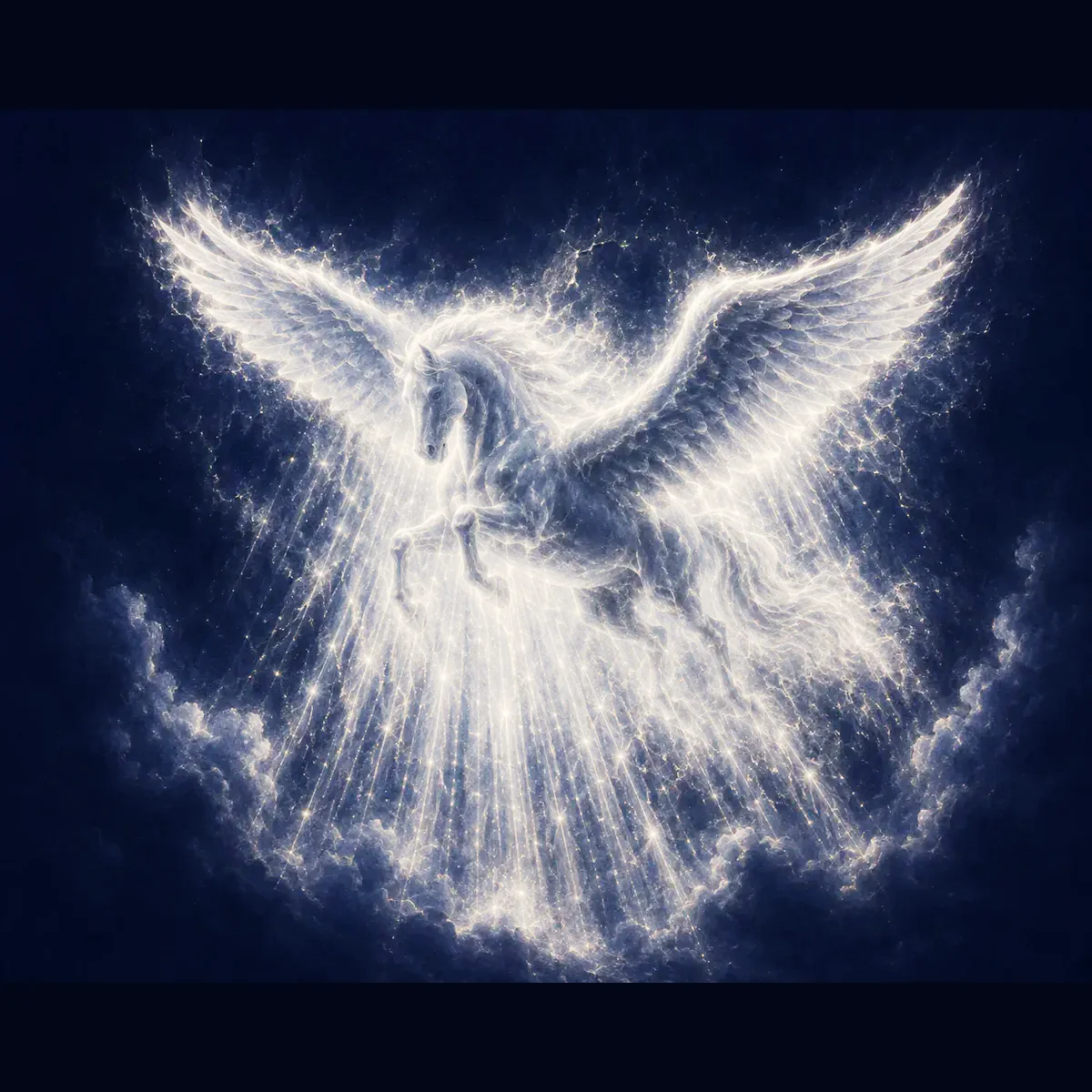
Pegasus
Blessing of AbrahamPegasus symbolizes God's blessing given to Abraham and Israel and extended through Christ to all nations. It lies directly next to Aquarius and Pisces, with one of the Fishes near the Great Square of Pegasus. The most ancient Babylonian image of this square was IKU, 'Field', and among the old Arabic star names of Pegasus there is an unusually large number with the root saʿd — 'happiness, prosperity, fortune': 'fortunate rain', 'happiness of the high-spirited', 'fortune of the surpassing one', 'fortune of young livestock'. A complete picture emerges: God pours water upon His Field and His people, and it is filled with blessing. Through Christ, the blessing of Abraham comes to the Gentiles together with the promised Spirit.
Read interpretation →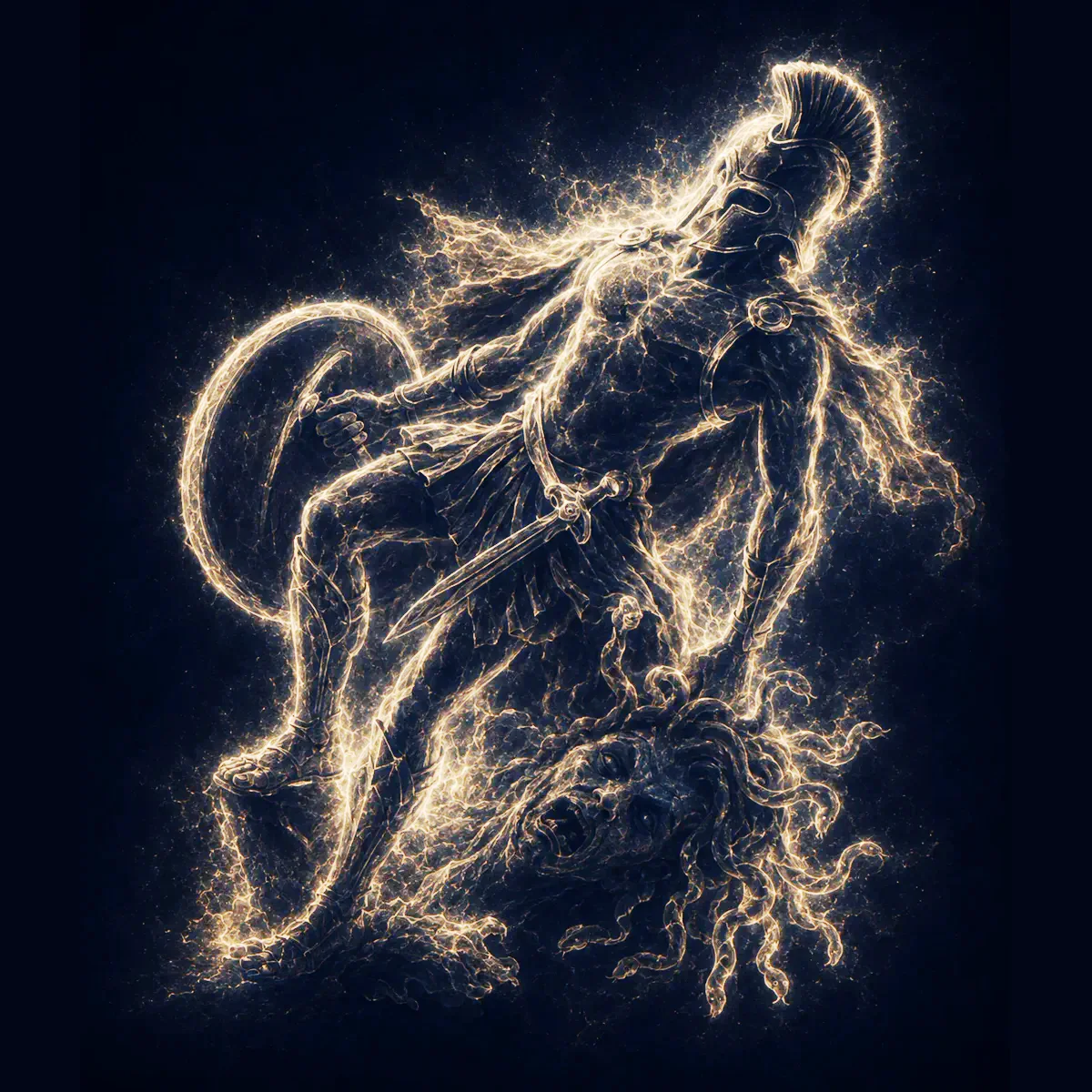
Perseus
First rebellionPerseus symbolizes Satan and the fallen angels of the first wave, who rebelled against God before the Watchers. On the star chart, Perseus and Orion-Kesil surround Taurus from two sides: Perseus approaches it from behind, Orion attacks from the front. These are two waves of angelic rebellion against God's order. The nature of Perseus is especially clearly revealed by the star Algol — its ancient Arabic name Ra's al-Ghūl means 'Head of the Demon'. Perseus also lies between the Pleiades — the Church-Bride — and Cassiopeia — the Church already enthroned as the Wife of the Lamb: Satan opposes God's people and strives to prevent them from reaching the glory intended for them.
Read interpretation →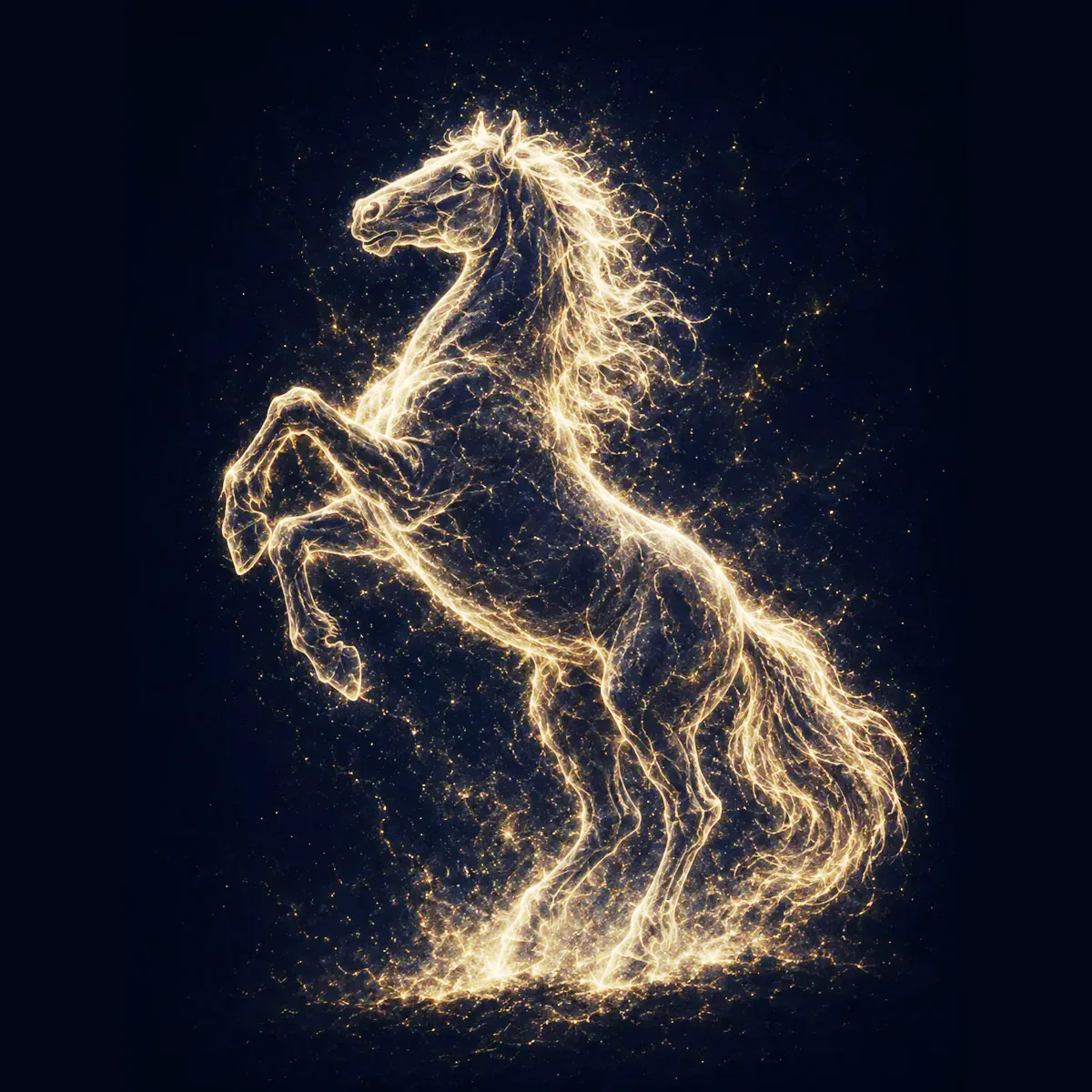
Little Horse
Firstfruits of blessingThe Little Horse lies directly before the great Horse — Pegasus, which in the overall heavenly picture is connected with God's blessing, first poured out on Abraham and Israel, and through Christ extended to all nations. The ancient Arabic name of the Little Horse, Al Faras al-Awwal — 'First Horse', is related to the fact that it rises before Pegasus. The constellation itself represents only a small front part of a horse, and its main star Kitalpha means 'part of the Horse'. Therefore the Little Horse conveys well the image of the firstfruits of blessing — the first promise, followed by the fullness of blessing.
Read interpretation →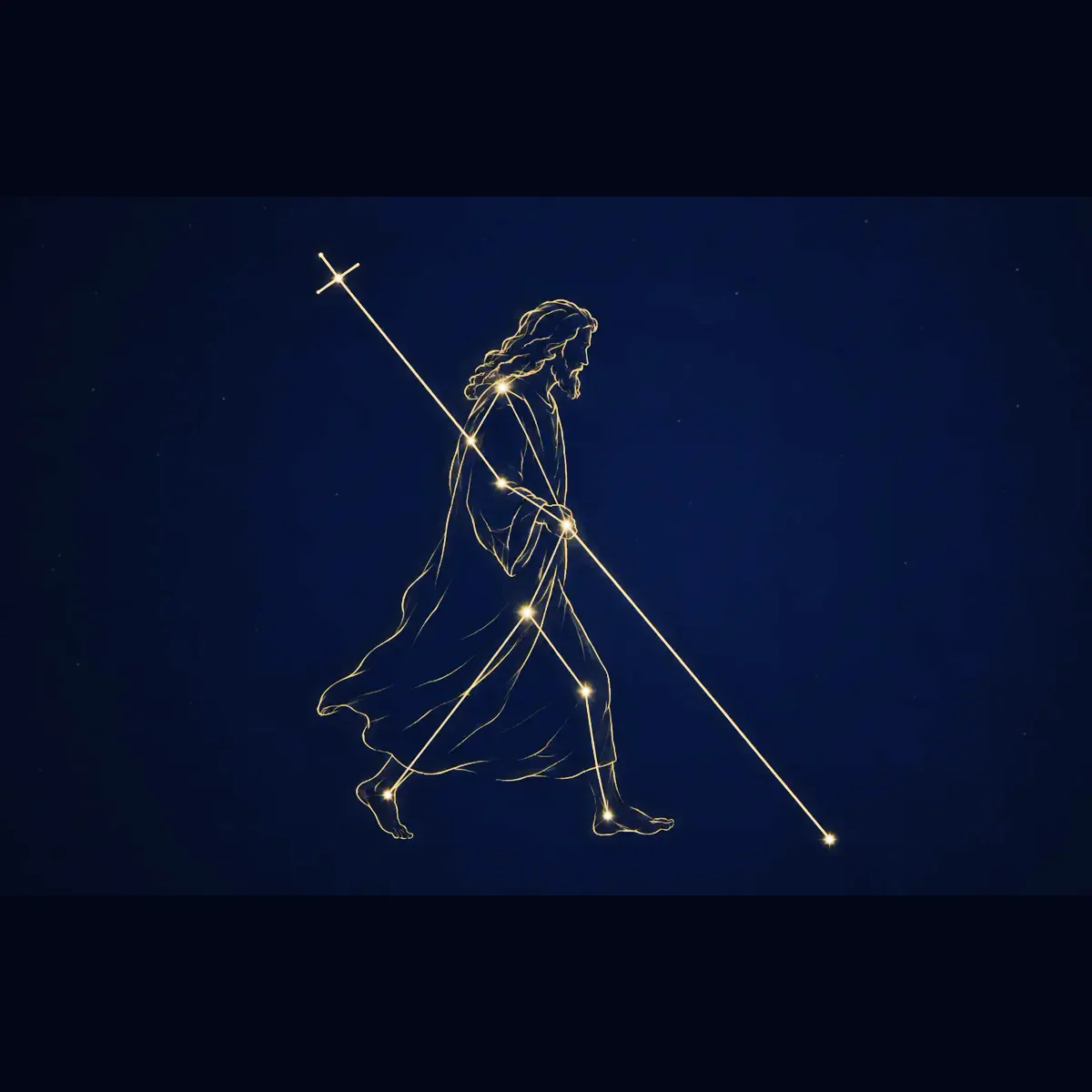
Lesser Dog
ForerunnerThe Lesser Dog symbolizes the Forerunner, sent ahead of the Lord to prepare His way and announce His coming. In antiquity, the main character of this small constellation was Procyon itself — its name literally means 'before the Dog', because it appears before Sirius, the main star of the Greater Dog. Therefore the Lesser Dog is not so much an independent hero of the heavenly picture, but the one who comes first and points to the One who follows — a precise image of John the Baptist before the appearance of Christ.
Read interpretation →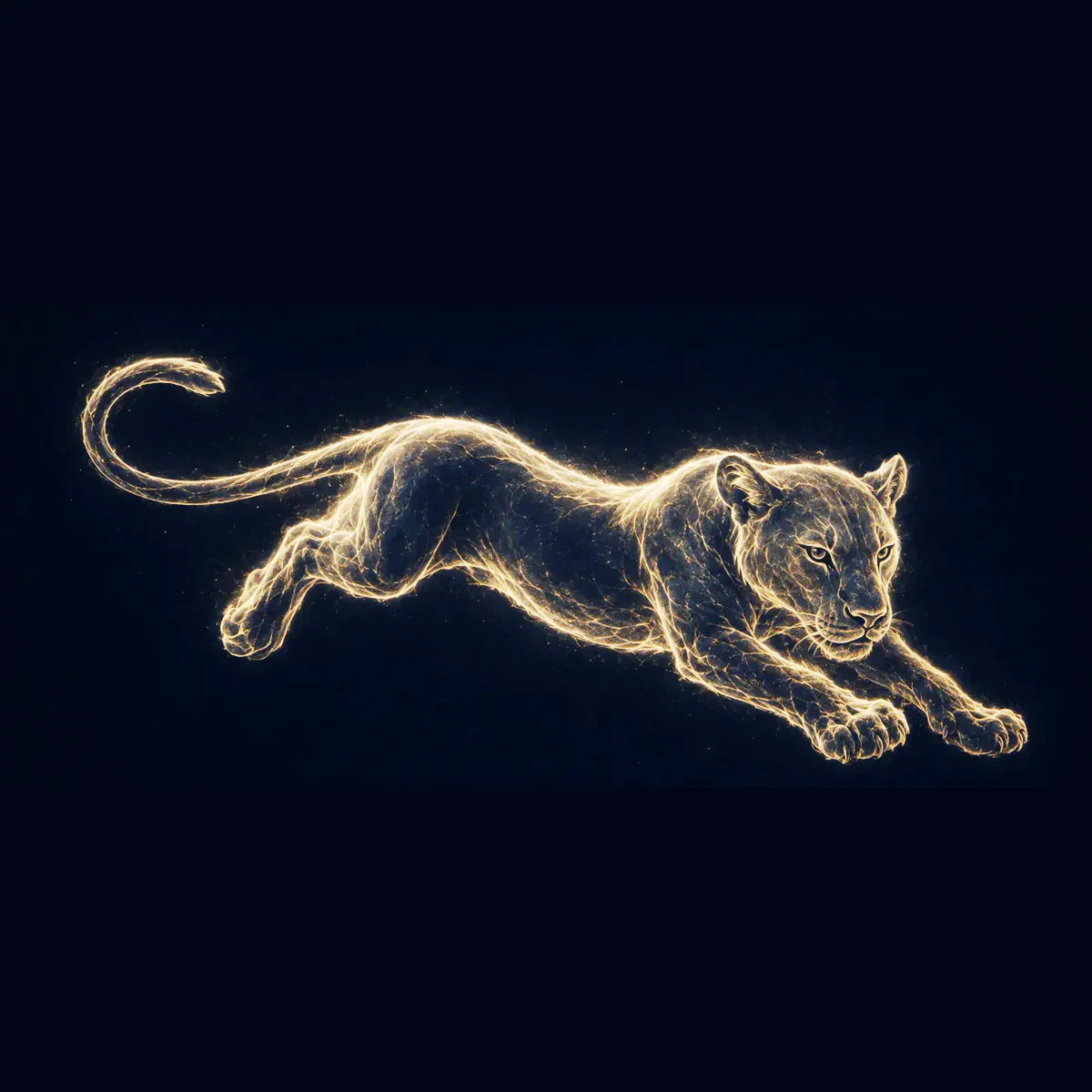
Lesser Lion
Son of GodThe Lesser Lion depicts Jesus Christ, God the Son. It lies between the Great Lion — the image of God the Father — and the Great Flock, the Church of God. Thus, the very picture of the sky shows the way: the Church comes to the Father through the Son. Next to the Lesser Lion is the Lynx with the star Alsciaukat — 'Thorn', pointing to the sufferings of Christ. The way to the Father was opened through the wounded and crucified Son of God: 'No one comes to the Father except through Me.'
Read interpretation →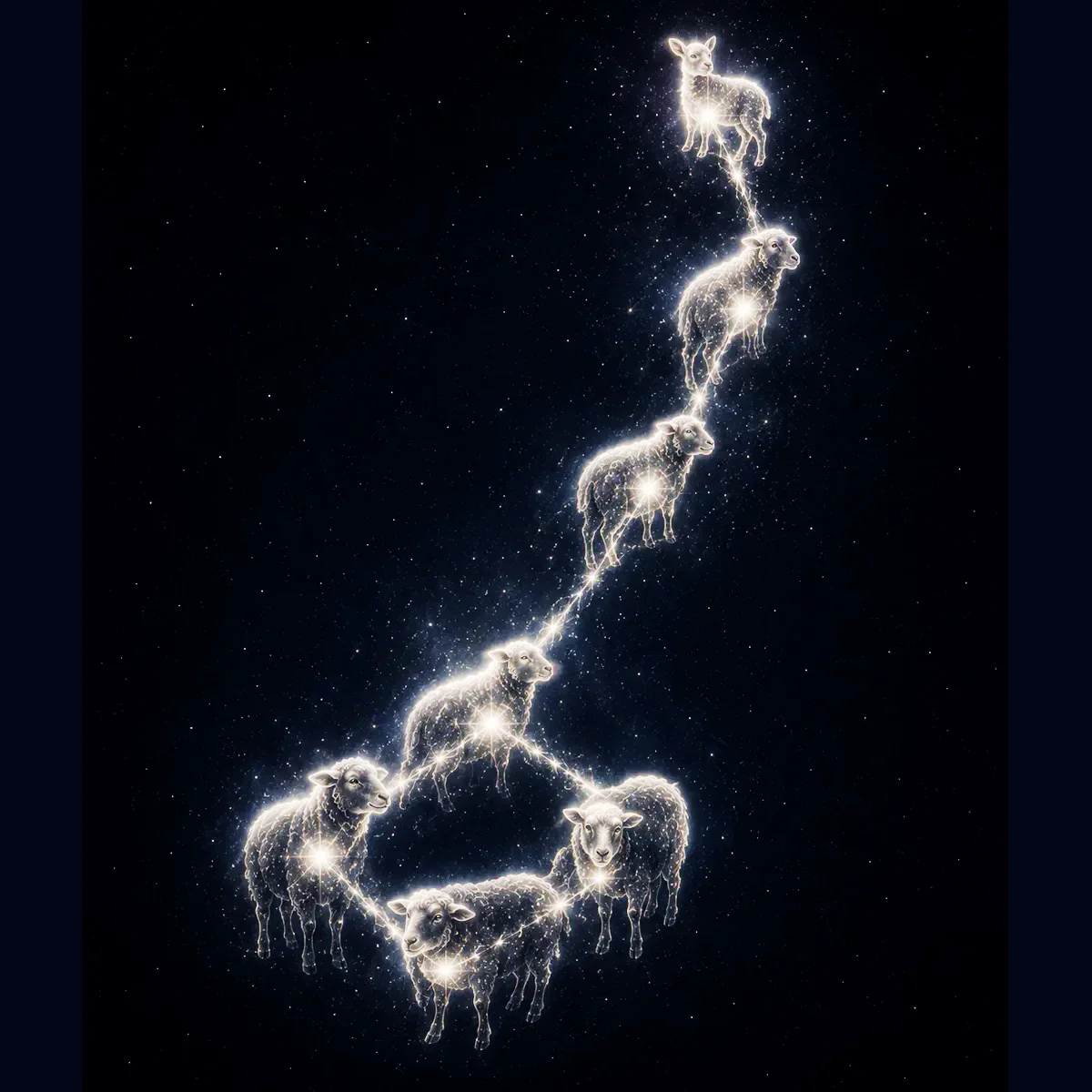
Lesser Bear
Little FlockUrsa Minor is the Little Flock, the people of God, Israel. Around it coils the Dragon — the image of Satan, who throughout history sought to destroy the people through whom the Savior was to come. But within the Little Flock itself lies the North Star — the image of Christ, who shone forth from Israel and became the guiding Light for the whole world. Therefore this heavenly picture shows Israel, surrounded by the ancient serpent, but preserved by God for the sake of the promised Seed: a star rises from Jacob, the Lord shines forth from the tribe of Judah.
Read interpretation →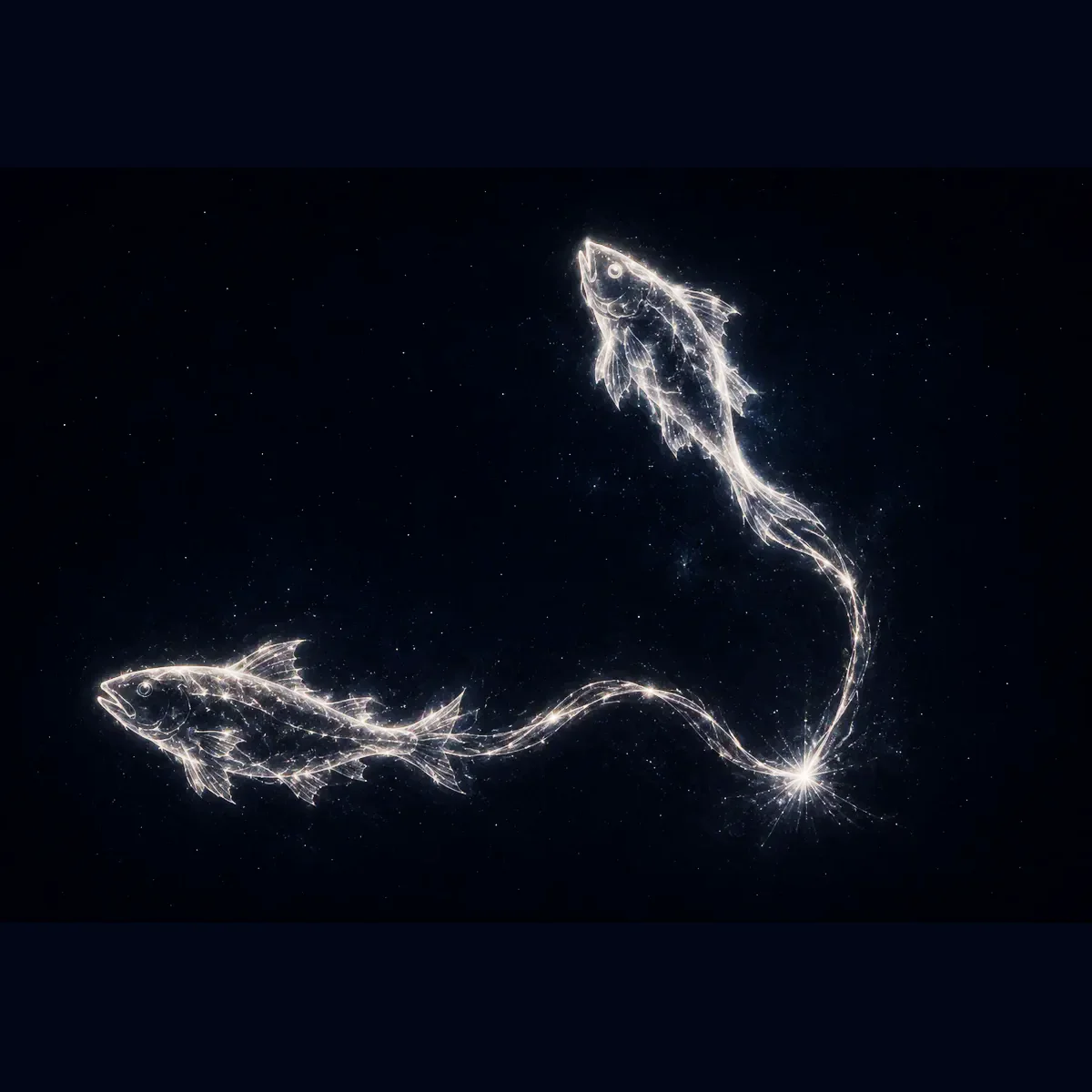
Fishes
Two Peoples of GodThe constellation Pisces depicts the two peoples of God — Israel and the Church — bound together by one divine plan of salvation. The two Fishes swim in different directions, but two lines connect them, converging at one point — the star Alrescha, whose name means 'rope, binding cord'. Already in ancient tradition this point was called the Heavenly Knot. Beneath the Fishes lies Cetus — the image of Satan and the power of death seeking to hold God's people. Nearby are Aquarius, bearing living water, and the Lamb, through whom liberation comes. Thus the heavenly picture shows Israel and the Church, joined by one promise of God and receiving life through Christ.
Read interpretation →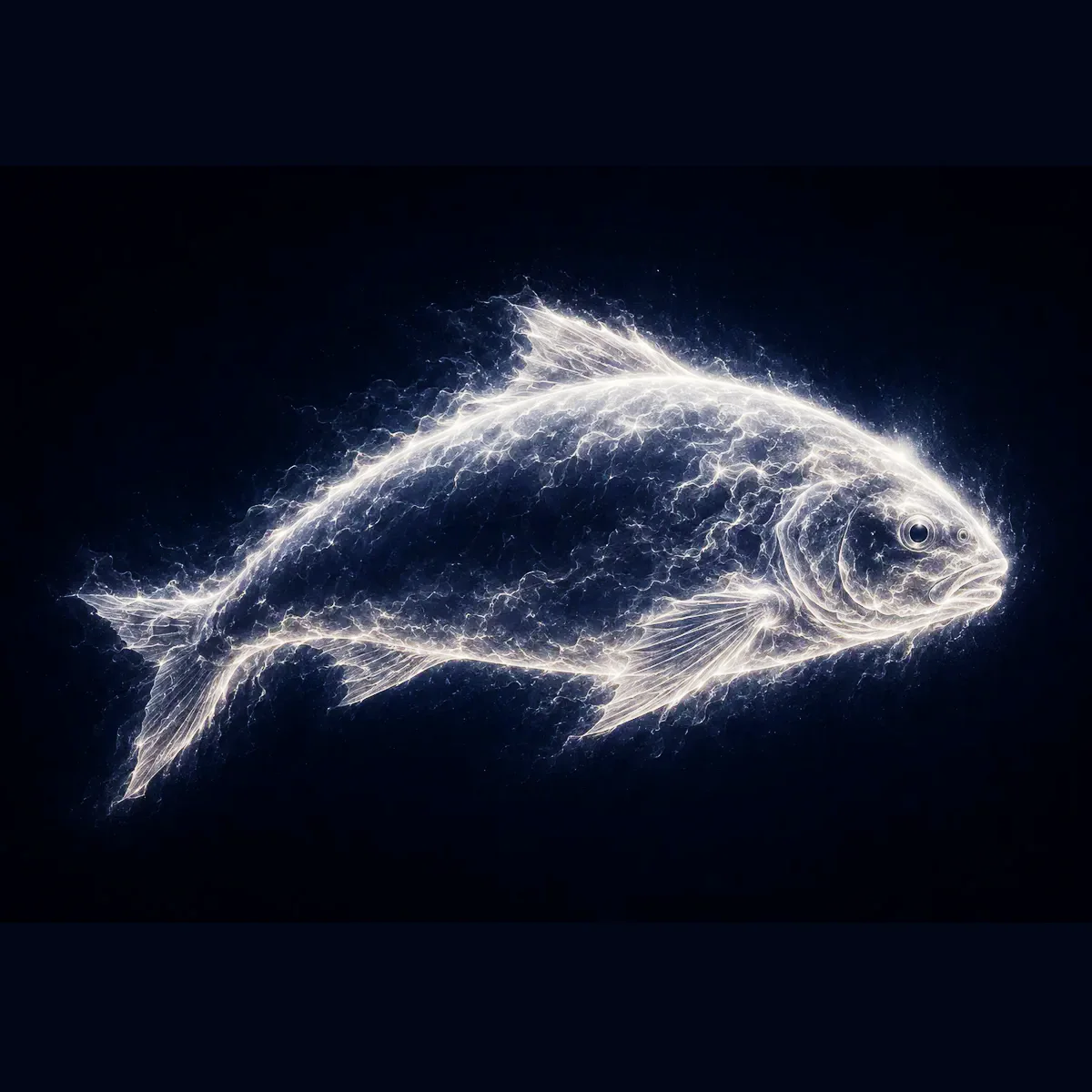
Southern Fish
Refreshed people of GodThe Southern Fish depicts the people of God receiving the water of life from God. It lies directly under Aquarius, and the ancient celestial Stream ends exactly in its open mouth — in the bright star Fomalhaut, whose Arabic name literally means 'mouth of the Fish'. Therefore the Southern Fish is close in meaning to the constellation Pisces, but does not merely repeat it: Pisces shows two peoples of God — Israel and the Church — bound together, whereas the Southern Fish shows the people of God as one whole, directly receiving the living water poured out by God — His life and Spirit.
Read interpretation →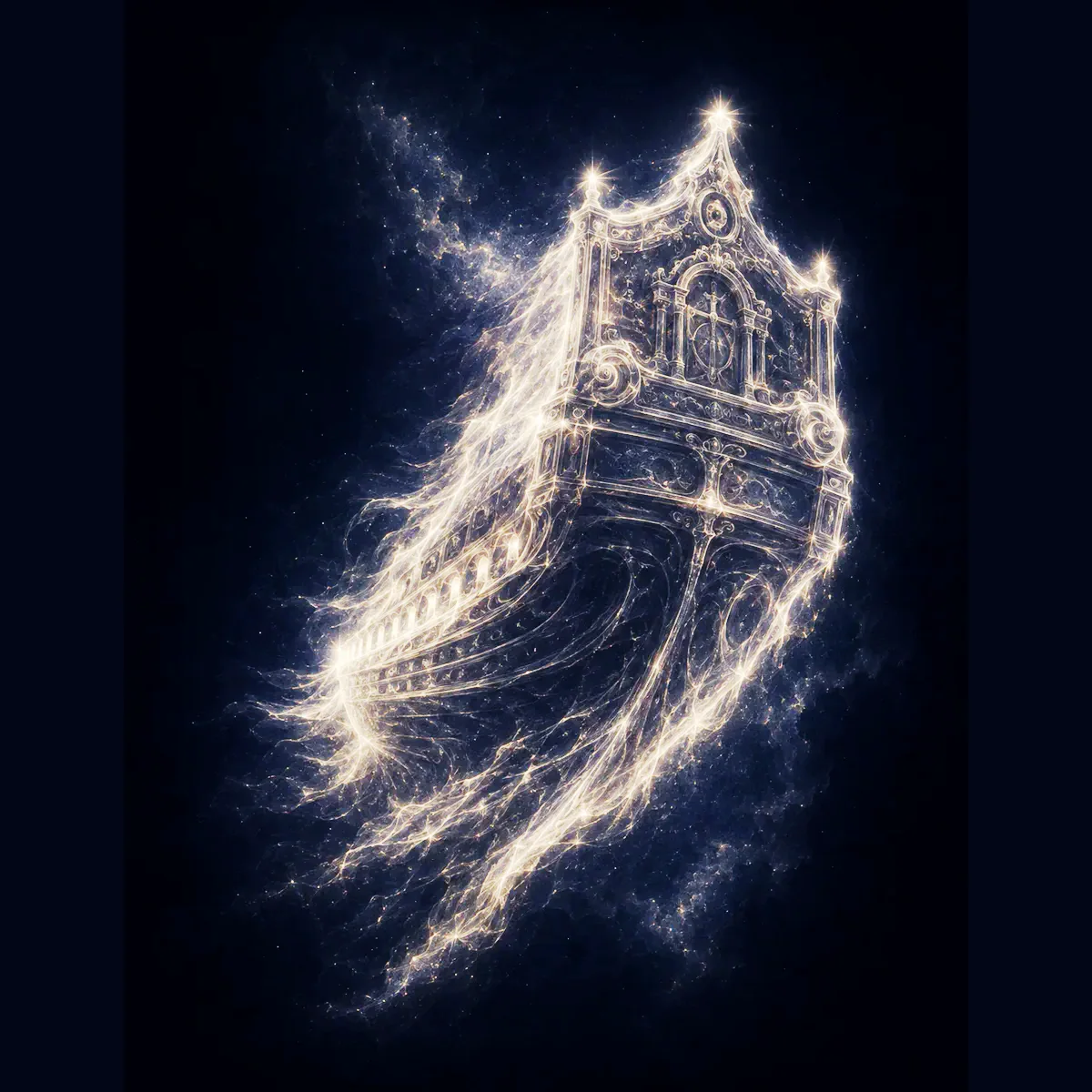
Stern
Returning homeThe Stern is an image of the completion of the journey of the saved and their return to the haven prepared by God. It is the rear part of the ancient unified Heavenly Ship, and the Ship itself moves across the sky unusually — stern-first. Already Aratus compared this to a ship that, after a long voyage, turns stern-first and enters the harbor. Therefore if the Keel shows the foundation of salvation, and the Sails show the guidance of the Spirit, then the Stern shows the outcome: the redeemed safely reach home.
Read interpretation →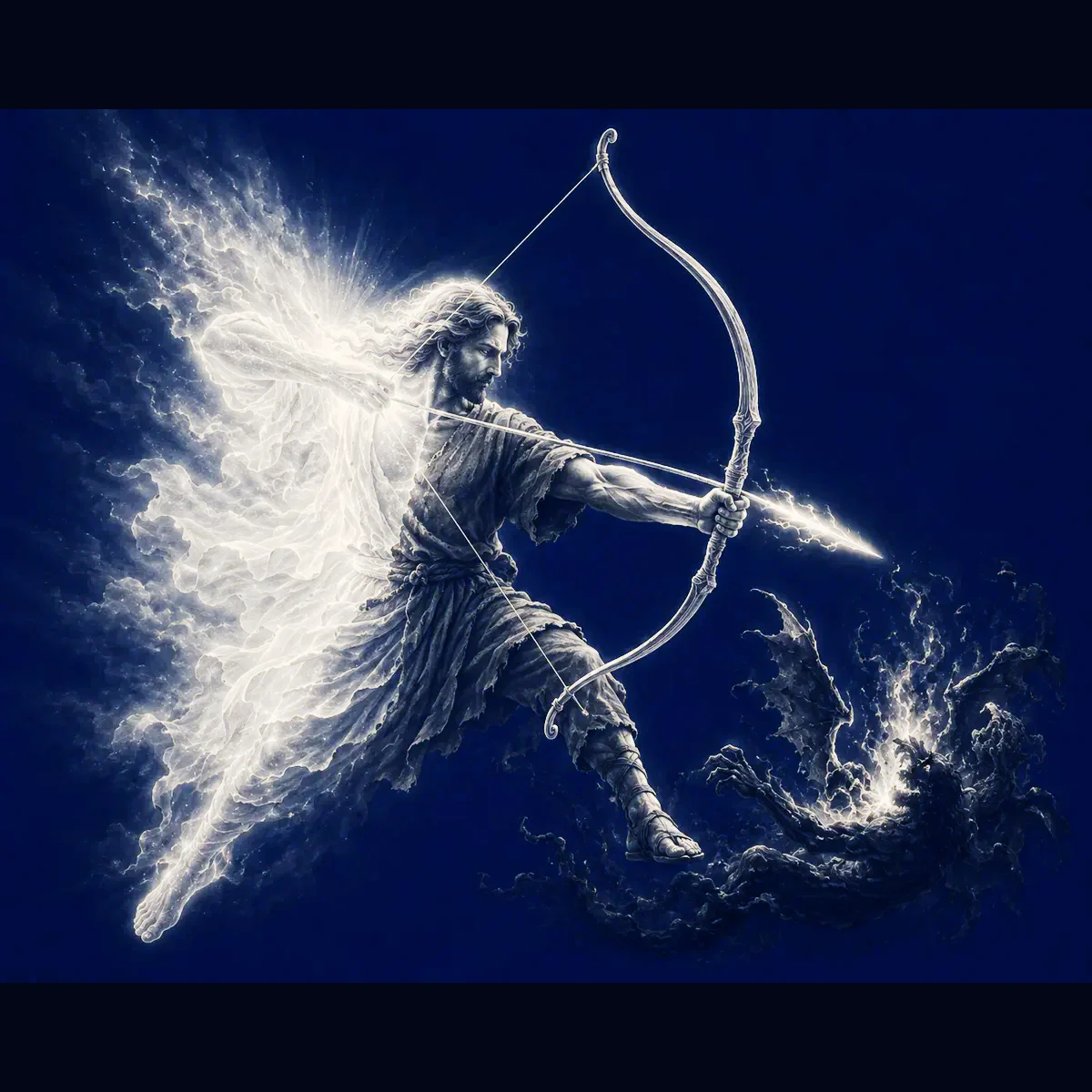
Archer
God-ManSagittarius depicts Christ who came to destroy the works of the devil. His ancient figure is the armed hybrid Pabilsag, and the arrow itself is aimed at Scorpius. In the overall map he stands between Scorpius and Capricornus: sin and rebellion → the coming of the Victor → His sacrifice → the water of life.
Read interpretation →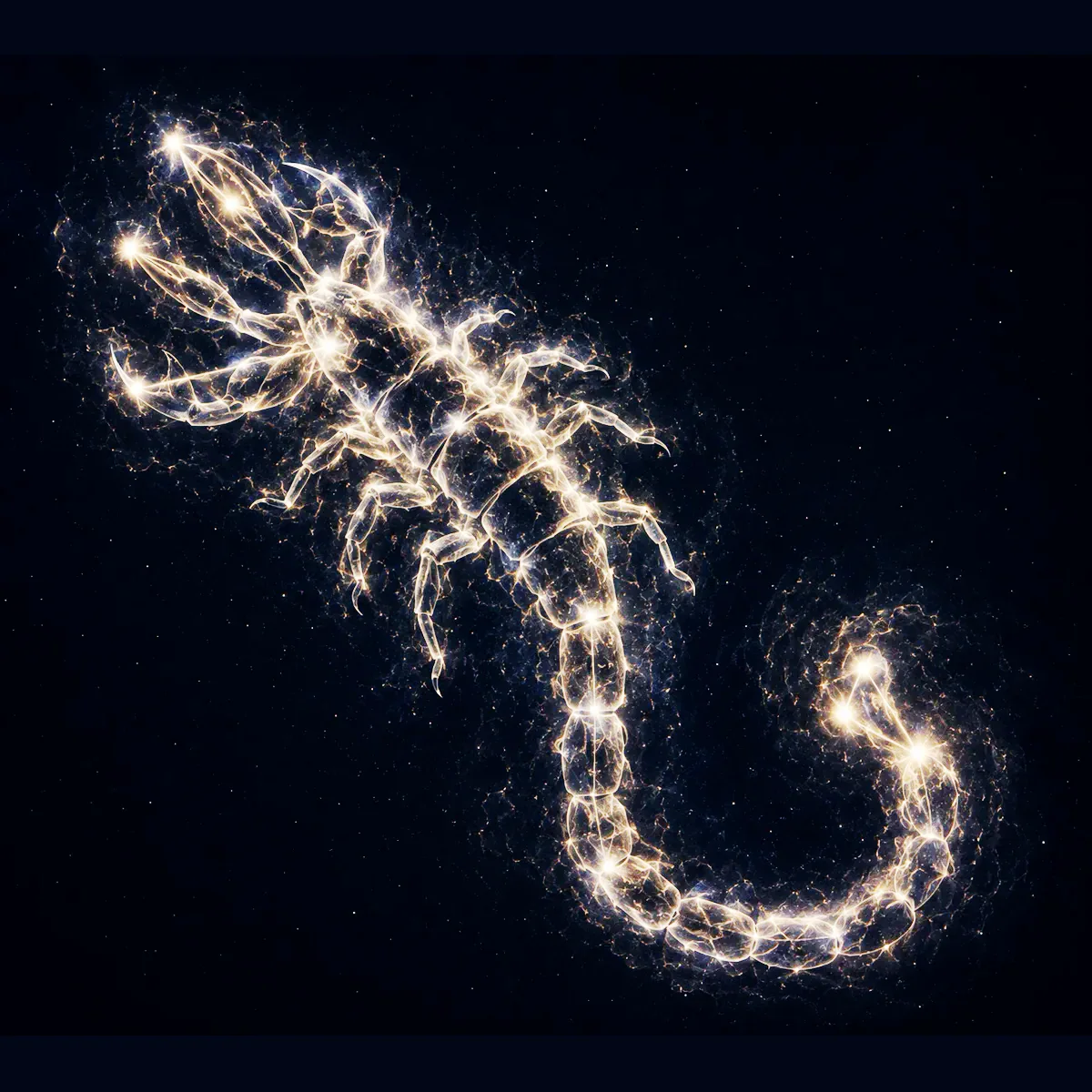
Scorpion
Sting of SinScorpius depicts Satan and fallen spiritual forces as the source of sin and death that struck mankind. This is one of the most ancient constellations: already in Mesopotamia it was called GÍR.TAB — Scorpion. Its raised tail ends in two stars of the ancient 'sting'; the name Shaula directly means 'sting of the Scorpion'. Thus the heavenly picture corresponds to the words of Scripture: 'the sting of death is sin'. Through the ancient serpent, sin entered Eden, and through sin, death. But nearby appears Sagittarius — Christ, who came to strike the power of Scorpius and free man from the enemy's power.
Read interpretation →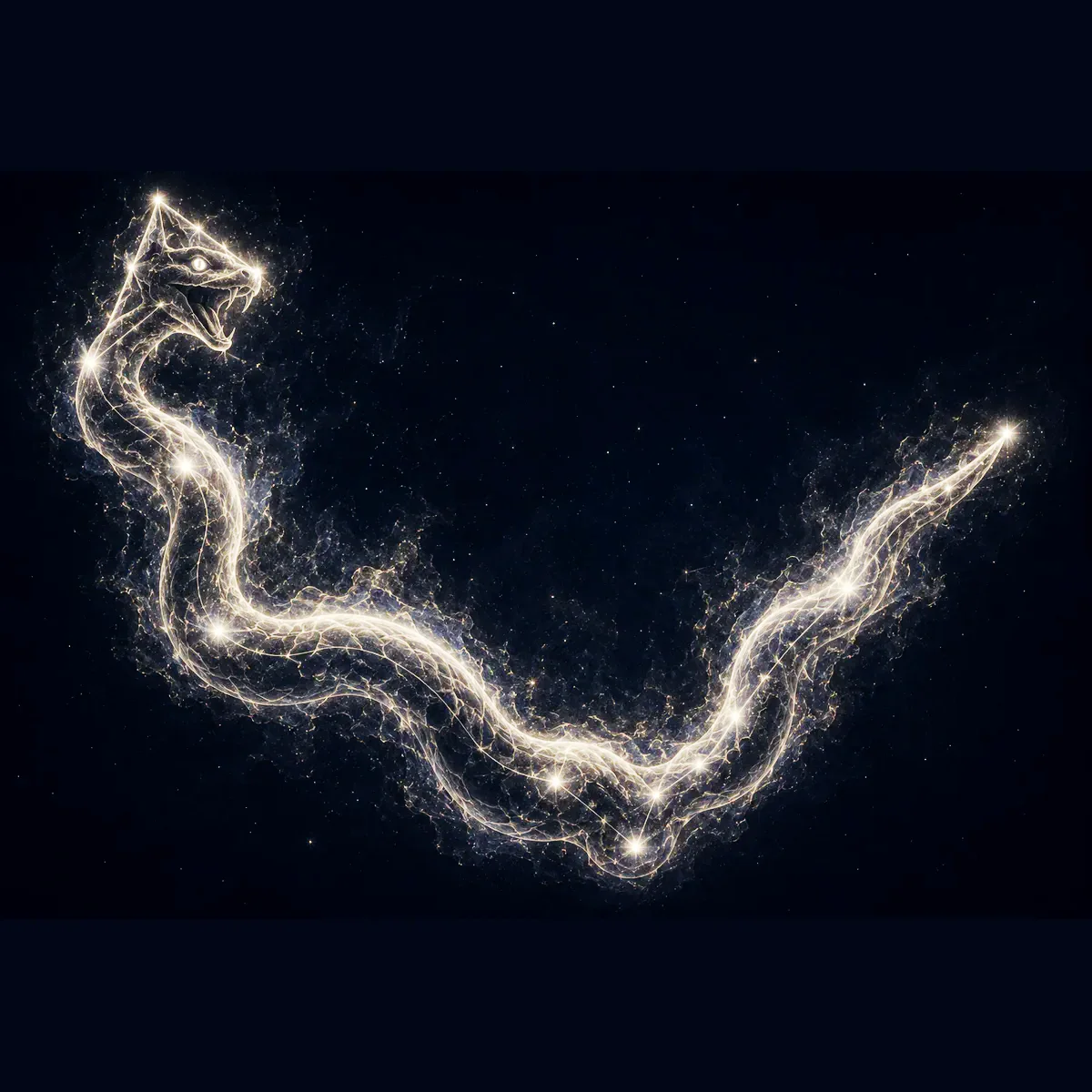
Serpent
Bound SerpentThe constellation Serpens depicts Satan — the ancient serpent, whose power is seized and limited by Christ. The Serpent passes through the figure of Ophiuchus, but Ophiuchus holds it with both hands: one hand grasps the head and front part of the Serpent, the other its tail. At the same time, Ophiuchus himself stands over Scorpius. This forms a unified picture of victory: Christ tramples Scorpius and holds the ancient serpent in His power. The serpent still exists and writhes, but is no longer free: the Son of God came to destroy the works of the devil.
Read interpretation →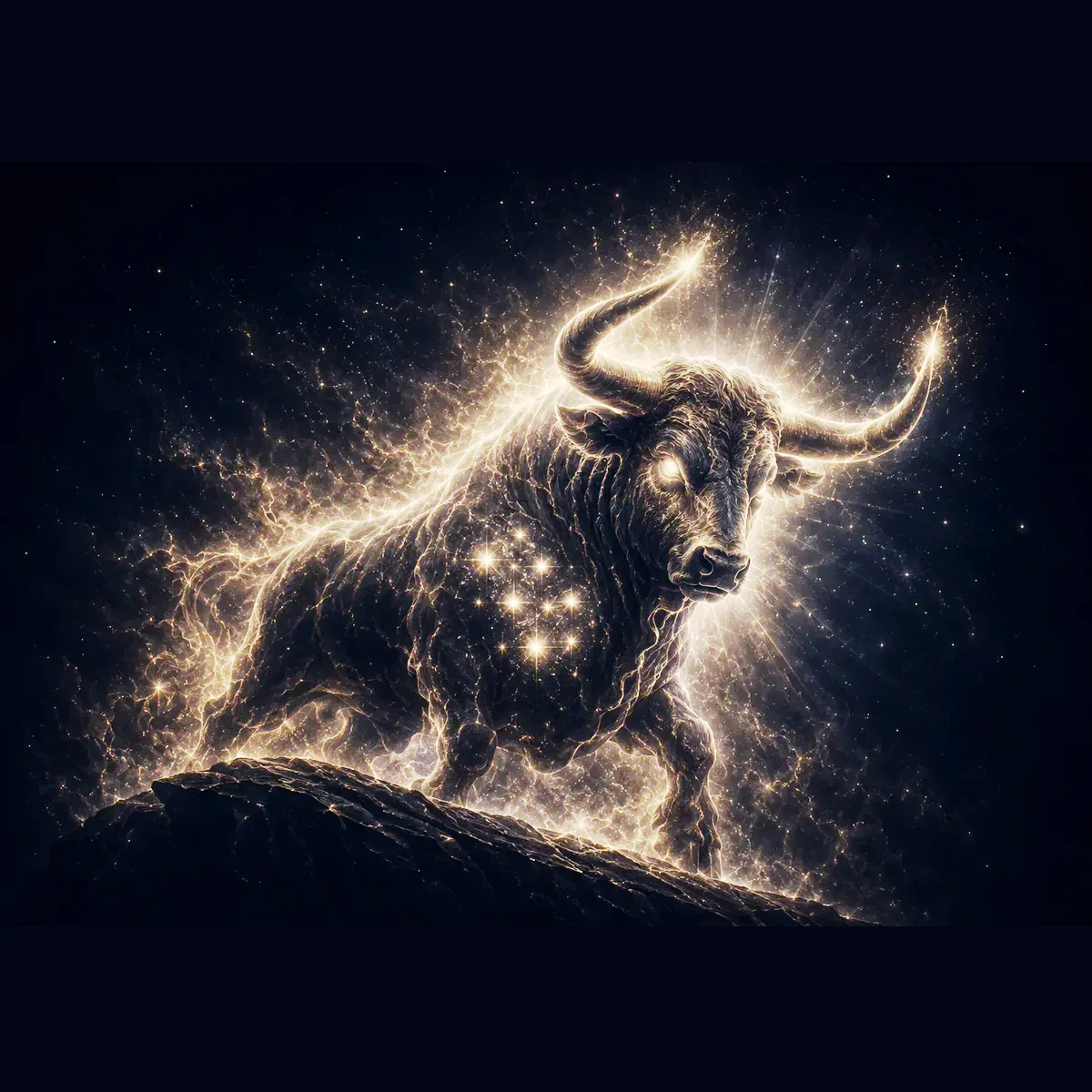
Bull
Coming JudgeThe constellation Taurus depicts Jesus Christ at His Second Coming — the King and Judge of the universe. The Lamb and the Bull show two sides of the ministry of the one Son of God: first Christ comes as the Lamb to offer Himself as a sacrifice for sin, then He returns as the mighty King to judge the earth. The ancient Mesopotamian name of Taurus was GU₄.AN.NA, 'Heavenly Bull'. Inside its figure are the Pleiades — Chimah, the seven stars of the Church of God; before its face are the Hyades. Thus the picture corresponds to Christ's words: at His coming, all nations will be gathered before Him, and the final separation of the righteous and the wicked will take place.
Read interpretation →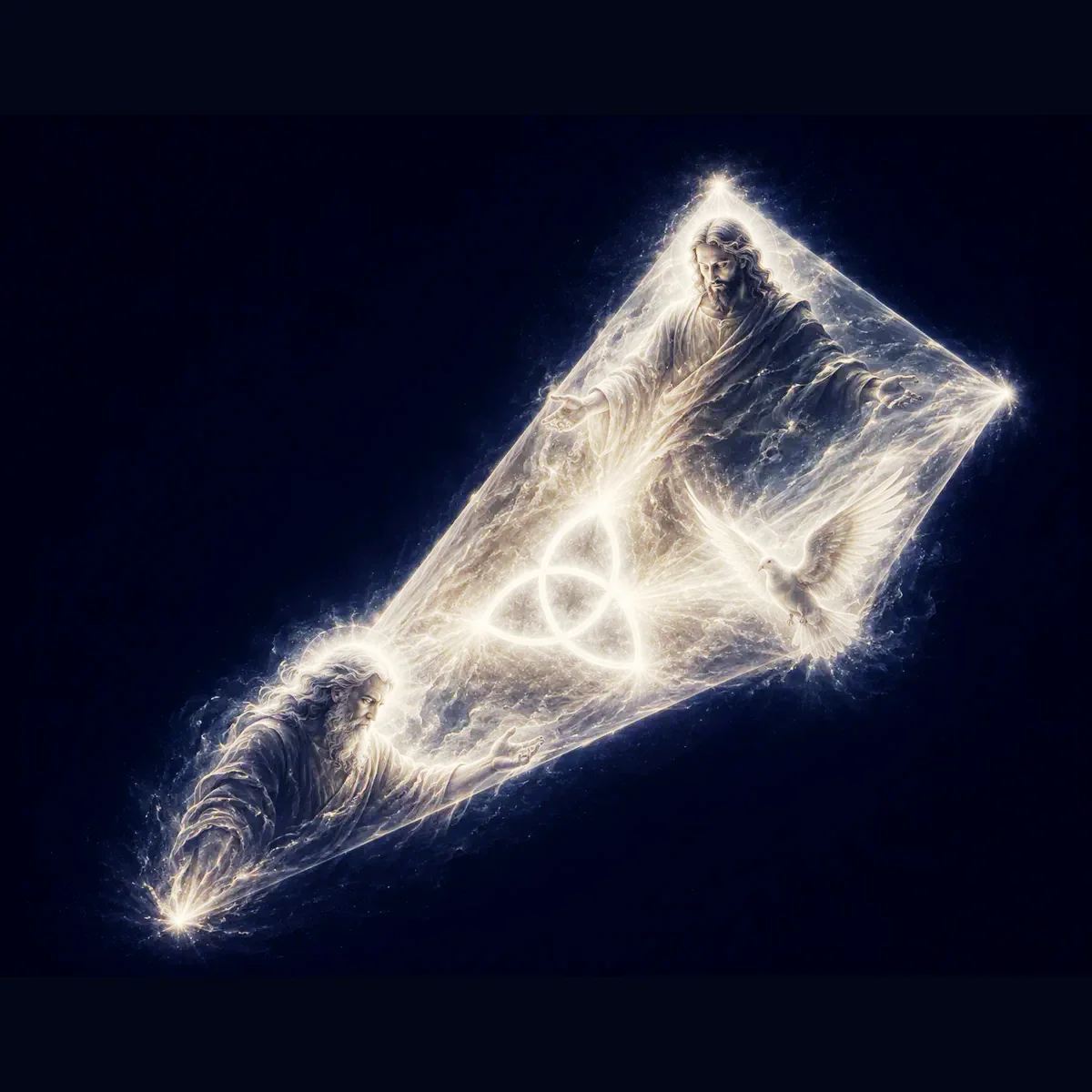
Triangle
Triune GodThe constellation of the Triangle depicts the Triune God — Father, Son, and Holy Spirit. Three sides form one indivisible figure: the three are distinct, but the triangle is one. Its position is especially important: the Triangle lies directly next to the constellation of Aries — the Lamb, the image of Jesus Christ, sacrificed for the sin of the world. Thus the heavenly picture joins the mystery of the Triune God with the Lamb: through the Son, the Father is revealed to man, and the Holy Spirit is given.
Read interpretation →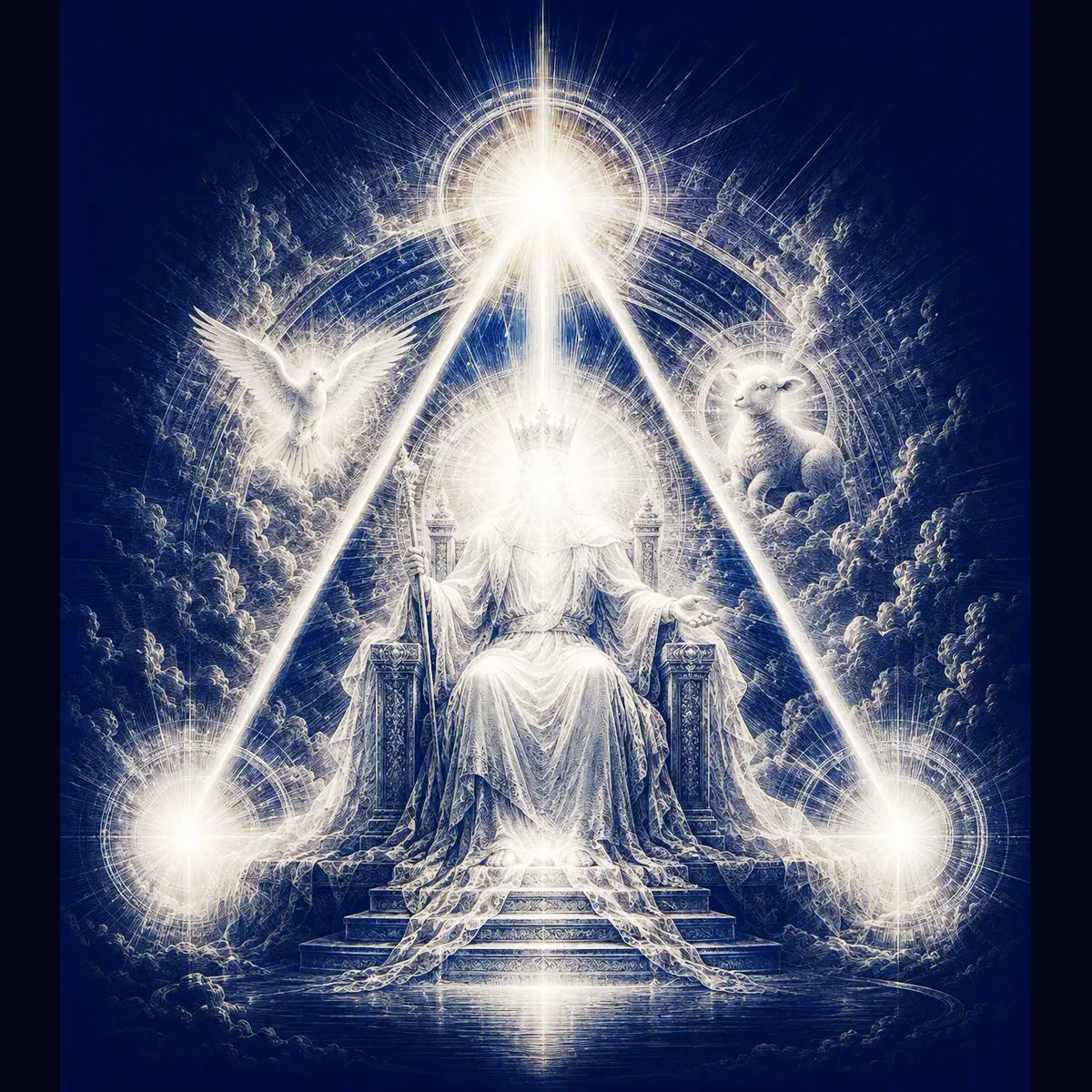
Southern Triangle
Triune GodThe Southern Triangle repeats in the southern sky the image of the Triune God — Father, Son, and Holy Spirit. But beside it is no longer the Lamb, but the constellation of the Altar. Therefore the two halves of the sky seem to repeat the same truth in different images: in the north, the Triangle is beside the Lamb; in the south, the Triangle is beside the Altar. Through the sacrifice of the Son, the way to the Father is opened to man and the Holy Spirit is given.
Read interpretation →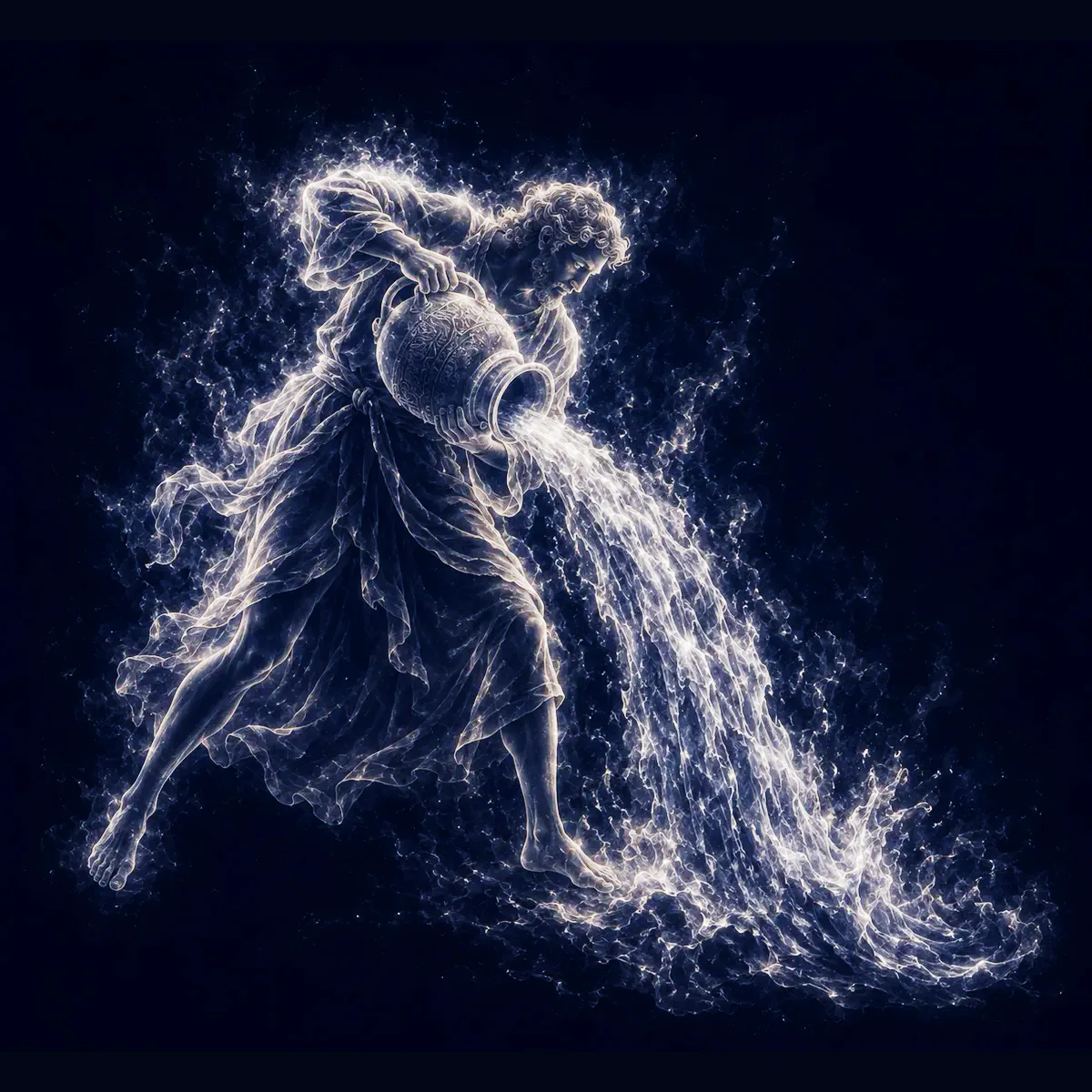
Water Bearer
Giver of the water of lifeThe constellation Aquarius depicts Christ pouring out the water of life upon God's people. Already the most ancient Mesopotamian figure of this region was called GU.LA — 'Great' — and was depicted as a mighty Man from whom streams of water issue, sometimes with fish within them. On the star chart, Aquarius's stream is directed toward the Fish: it enters directly into the mouth of the Southern Fish, and nearby are the two Fishes — Israel and the Church. The Old Testament already joins water flowing from vessels with the people's seed, and the pouring out of water with the pouring out of the Spirit upon the offspring. Christ gives the water of life freely to the thirsty; Scripture directly explains this image as the action of the Holy Spirit, who grants man new and eternal life.
Read interpretation →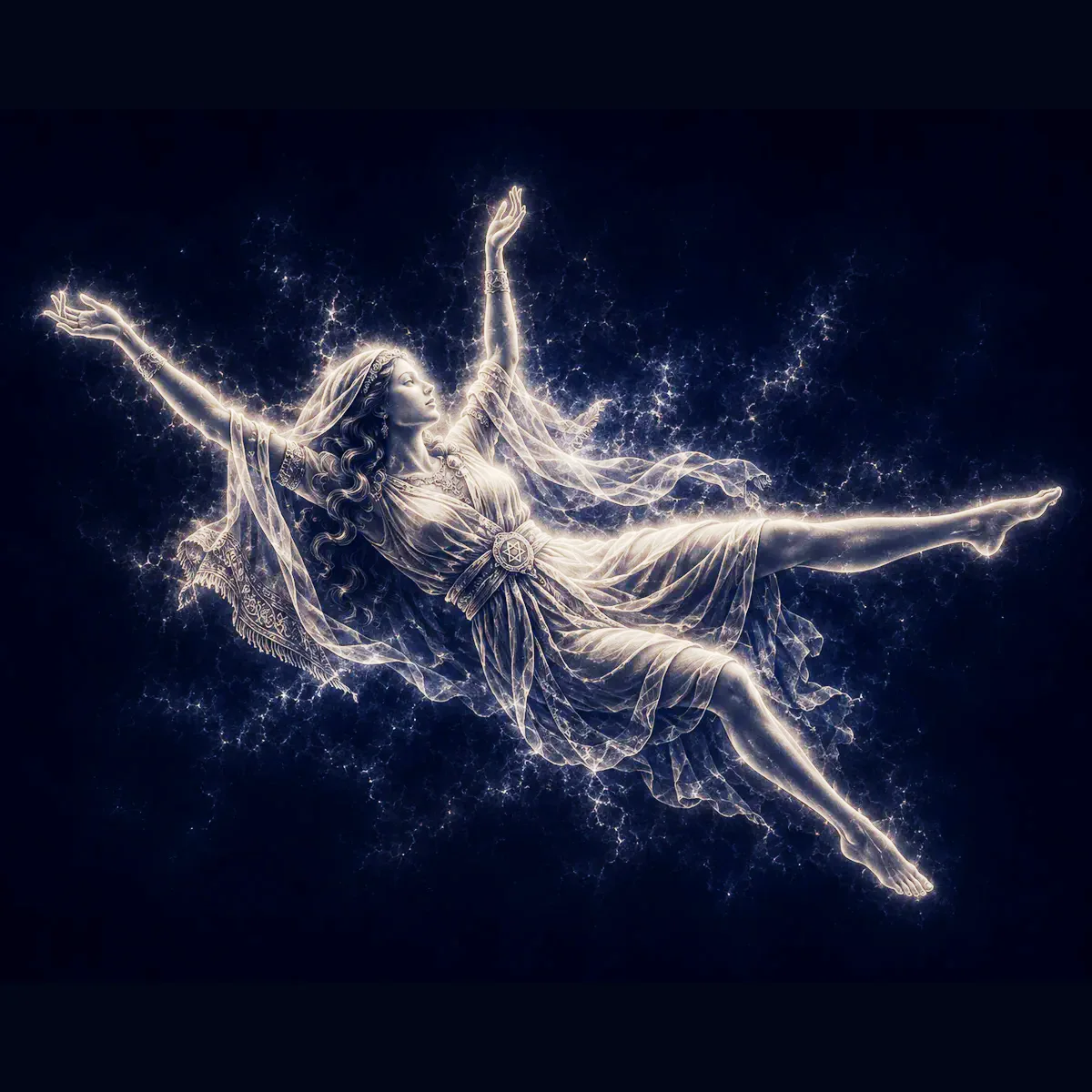
Maiden
Virgin of IsraelThe constellation Virgo depicts the people of God, Israel, through whom the promised Seed — Christ — was to come into the world. Scripture itself calls Israel the 'virgin of Israel'. The main star of Virgo is Spica, whose name means 'ear of grain'; already in ancient Mesopotamia this region was called AB.SIN — 'Furrow', and its depiction represented a woman holding an ear of grain. Thus the ancient picture joins the Woman and the Seed: from the Virgin the promised Offspring was to come, who would crush the ancient serpent. The specific fulfillment of this prophecy became the virgin Mary, a daughter of Israel, from whom by the action of the Holy Spirit Jesus Christ was born.
Read interpretation →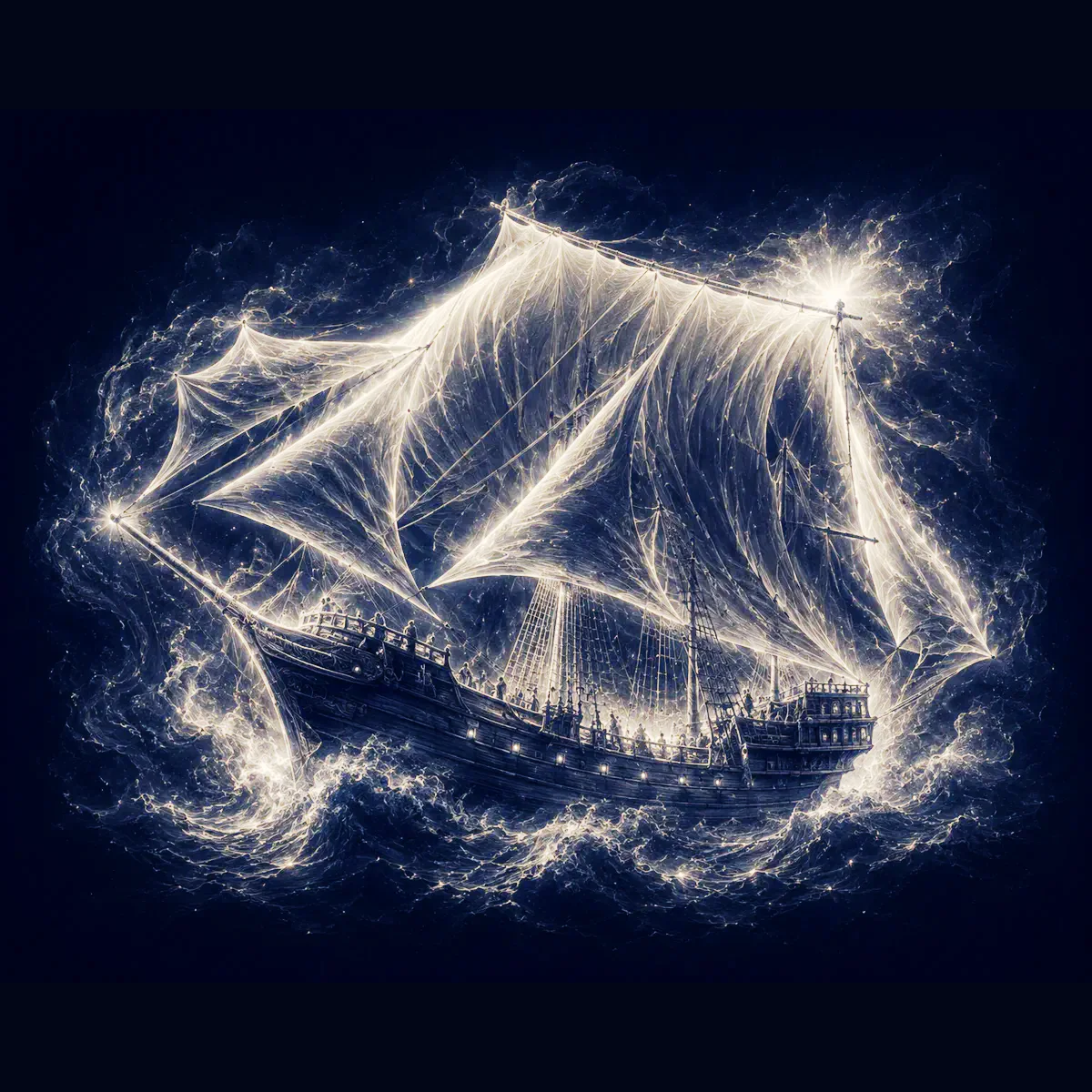
Sails
Led by the SpiritThe Sails are part of the ancient great Ship, which today is divided into Keel, Stern, and Sails. In the biblical picture, this Ship represents the redeemed people of God safely returning home, and the Sails reveal how it moves: not by its own strength, but receiving the wind — a beautiful image of a people led by the Spirit of God. In the overall picture of Cancer, after the two flocks of God — Israel and the Church — the Ship appears, carrying those gathered by God to a place of rest. The ancient description is especially expressive: the Ship goes stern-first, as if already entering the harbor after a completed voyage.
Read interpretation →