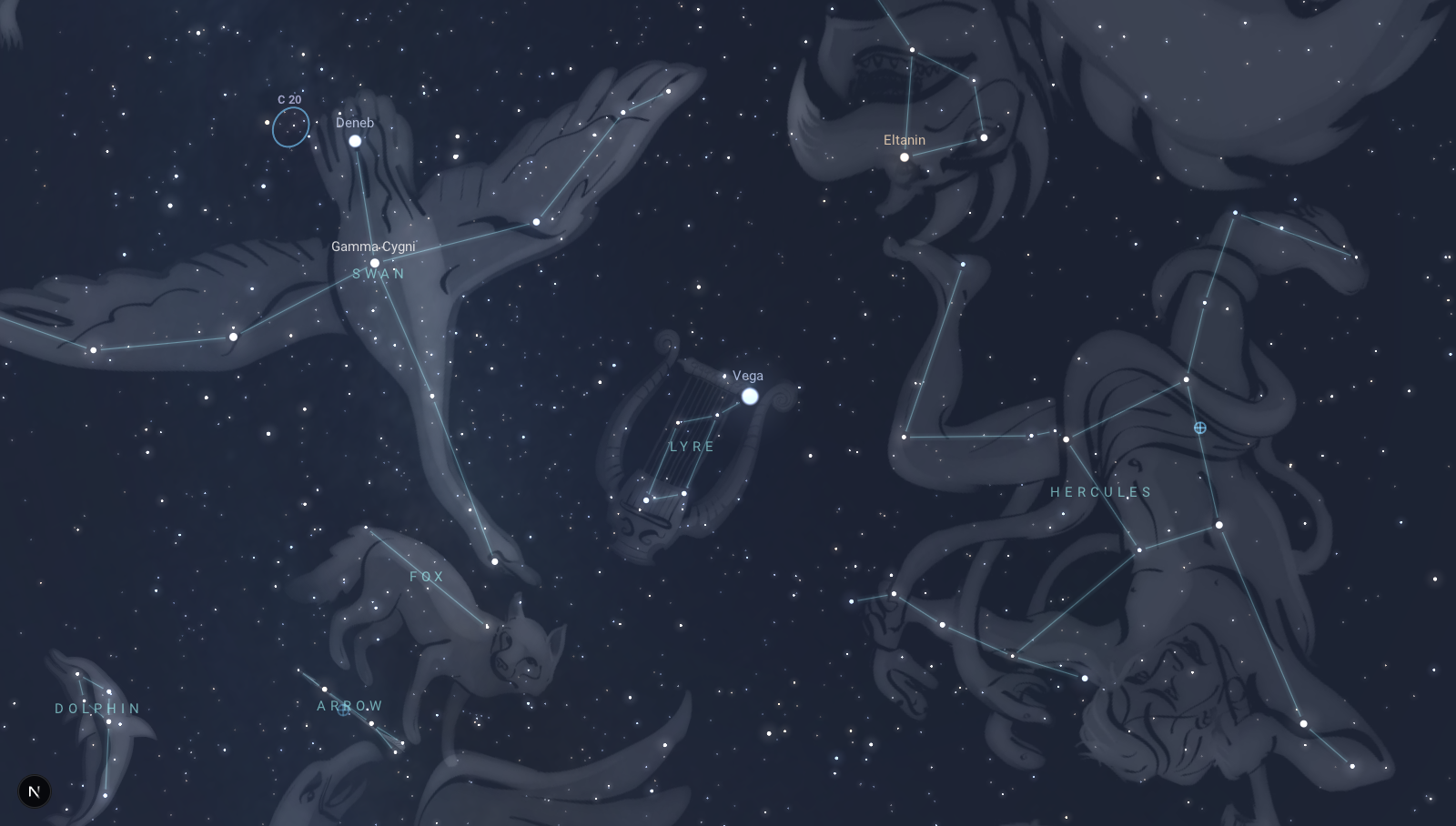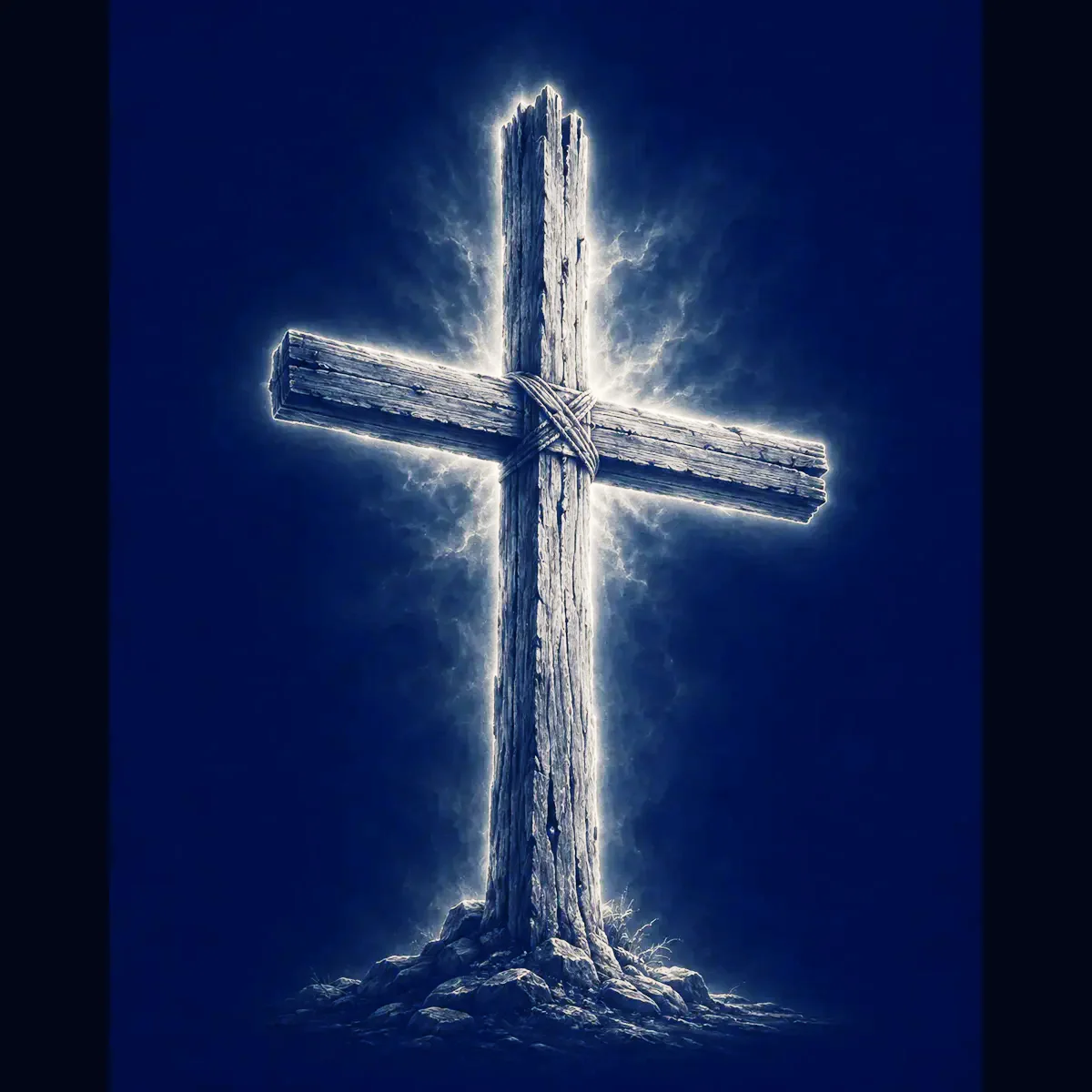
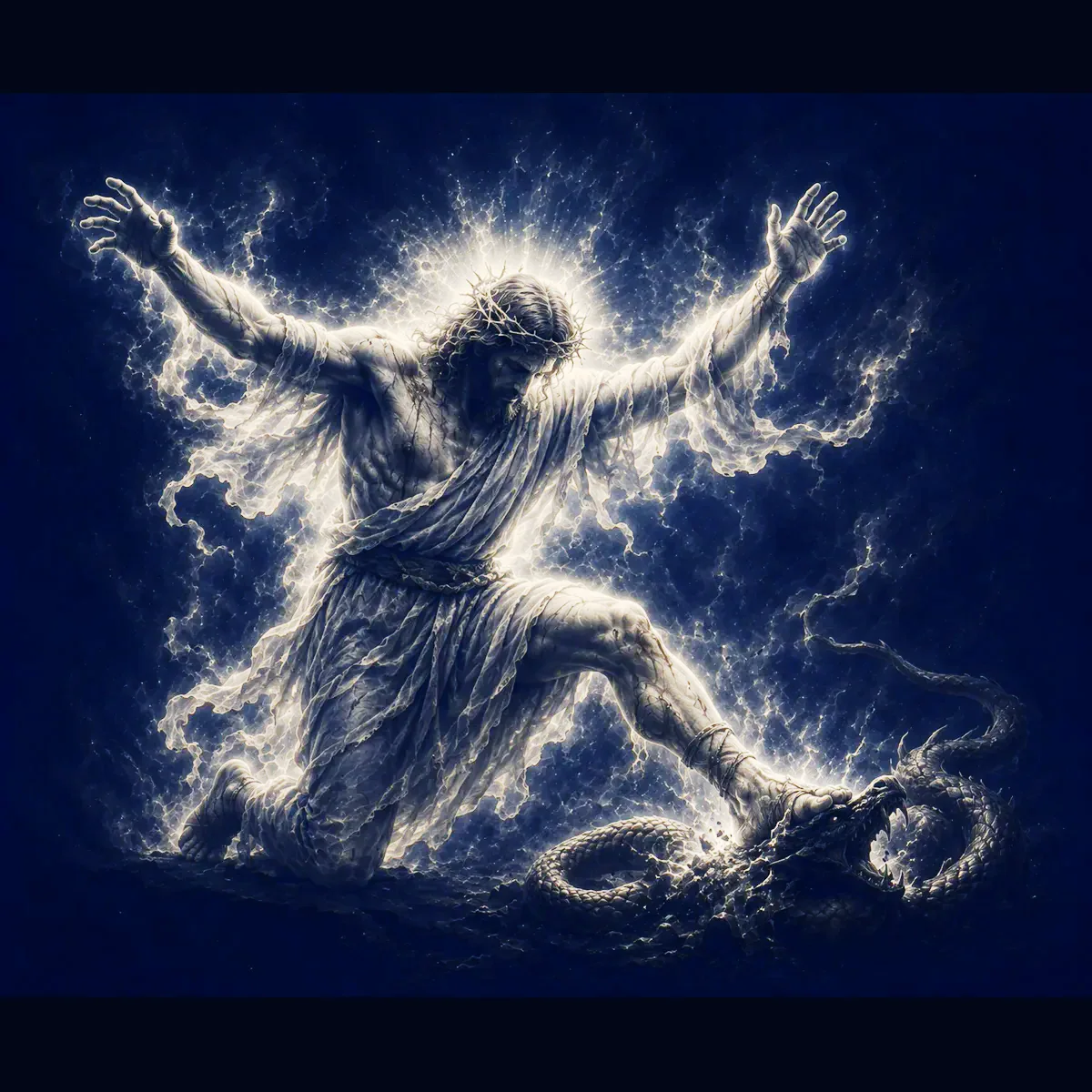
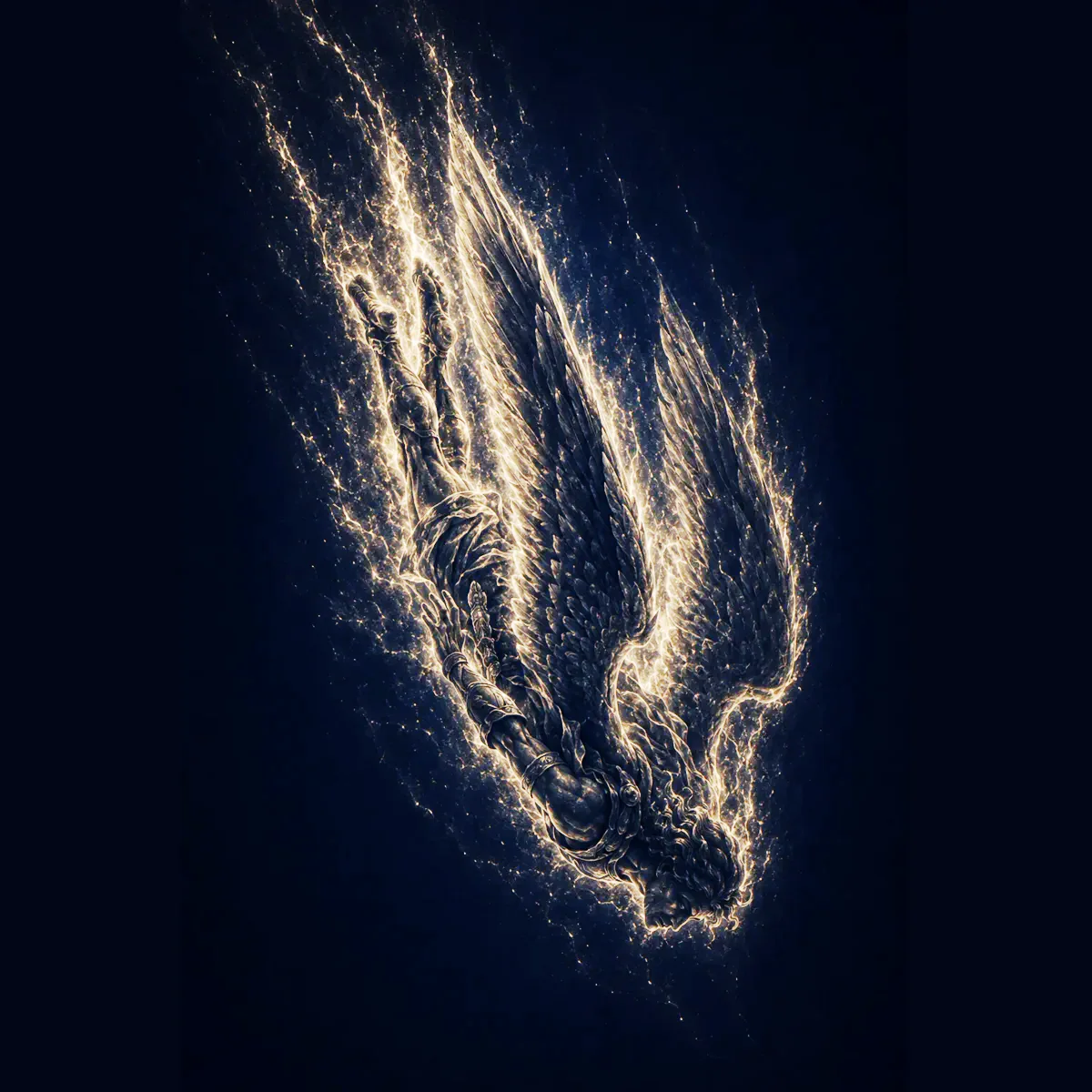
Cygnus is read as the Northern Cross. It is located next to the Kneeler — the image of the suffering Christ, who strikes the ancient serpent in the head. Between the Kneeler and the Cross lies Lyra with the star Vega — the image of fallen angels. The Son of God went to the Cross to destroy the works of the devil, redeem mankind, and open to them the way to eternity.
Full interpretation
Verifiable historical, etymological and topographical statements are accompanied by sources. The theological conclusions are the project’s interpretation according to its published methodology.
The constellation Cygnus is located in the northern sky, directly on the Milky Way. Its main stars form a huge and clearly distinguishable cross, so this figure is known as the Northern Cross.
The longitudinal line of the Cross consists of:
Deneb — α Cygni; Sadr — γ Cygni; Albireo — β Cygni.[Kunitzsch & Smart][IAU · имена звёзд]
The transverse beam is formed by:
Fawaris — δ Cygni; Gienah — ε Cygni.
The Northern Cross is significantly larger than the Southern Cross, although its figure is somewhat more elongated. In the unified heavenly history, both constellations bear witness to one event — the atoning death of Jesus Christ. The Northern Cross is revealed within Cygnus, while in the southern hemisphere the same image is repeated as the separate constellation of the Southern Cross.[Kunitzsch & Smart][IAU · имена звёзд]
The Kneeler and the Cross
Next to the Northern Cross is the Kneeler. His figure depicts the suffering Victor, who with one foot strikes the head of the Dragon, but Himself is wounded in the heel.
This scene unfolds the ancient promise:
'He shall bruise your head, and you shall bruise his heel.'
The Kneeler depicts Christ who entered into suffering for the final victory over the ancient serpent. The Northern Cross shows the place where that victory was accomplished.
Between the Kneeler and the Cross lies Lyra with the star Vega, connected in the overall picture of the atlas with the fall of the rebellious spiritual powers. This gives a sequential narrative:[Kunitzsch & Smart][IAU · имена звёзд]
Angels rebel against God. The devil brings man into sin. The Son of God comes into the world. The Kneeler accepts suffering. He goes to the Cross. The Cross destroys the power of sin and the works of the devil. Through the resurrection, Christ opens the way to eternal life.
That is why the Northern Cross is to be understood not as a sign of defeat, but as an instrument of God's victory over the devil:
'The reason the Son of God appeared was to destroy the works of the devil.'
The Cross as a bridge over the celestial river
The Northern Cross lies directly on the Milky Way — the great bright band crossing the sky. Its starry figure seems to lie across the celestial river.
In the Chinese story of Qi Xi, the region of Cygnus was associated with crossing the Milky Way. Deneb marked the celestial crossing, and the stars of Cygnus's wings were seen as a bridge or ford across the heavenly river, connecting those who were separated.[Ridpath · Star Tales][IAU · имена звёзд]
In a biblical reading, this image takes on special depth. Sin separated man from God, and man could not by his own strength cross the resulting chasm. But the Cross of Jesus Christ became the bridge of reconciliation.
Through the Cross, Christ:
bore human sin; destroyed enmity; reconciled man to God; opened access to the Father; transferred believers from death to life; opened the road to eternity.
Therefore the placement of the Northern Cross on the Milky Way becomes an image of the path across the dividing river. Not human merits nor religious deeds join earth to heaven. This crossing is opened only by the sacrifice of Jesus Christ.
Northern and Southern Cross
In the southern hemisphere there is no bright polar star like the North Star. To determine the southern direction, the Southern Cross is used: its long axis helps to approximately locate the south celestial pole.
Thus both hemispheres have the Cross as a celestial guide:
in the northern sky shines the Northern Cross in Cygnus; in the southern sky lies the Southern Cross; both point the direction; both bear witness to the one way of salvation.[Kunitzsch & Smart][IAU · имена звёзд]
This continues the general symmetry of the heavenly book. As the Northern and Southern Crowns speak of one crown, so the Northern and Southern Crosses speak of one Calvary.[Kunitzsch & Smart][IAU · имена звёзд]
The Cross is a guide for the whole world.
Humanity lost its direction because of sin, but Christ left a clear path of return to God. The Cross shows where redemption was accomplished and through whom man may enter eternal life.
The Cross in the atlas of Julius Schiller
In 1627, Julius Schiller published the star atlas Coelum Stellatum Christianum — 'The Christian Starry Sky'. In it, the familiar constellations were presented through biblical events and images.
Cygnus was depicted by Schiller as the Holy Cross. Alpha, Beta, and Gamma of Cygnus formed the vertical beam of the Cross, while Delta and Epsilon formed its transverse beam. The variable star P Cygni, which flared brightly at the beginning of the 17th century, was placed in the region of the body of the crucified Christ.[Kunitzsch & Smart][IAU · имена звёзд]
Schiller did not artificially create the shape of the Cross. He used the already existing and clearly distinguishable star pattern of Cygnus. His atlas shows how naturally this celestial figure was perceived precisely as the Christian Cross.[Kunitzsch & Smart][IAU · имена звёзд]
This is especially important for the overall picture:[Kunitzsch & Smart][IAU · имена звёзд]
nearby is the suffering Kneeler; the Northern Cross depicts the place of His sacrifice; P Cygni marks the body of the Crucified; the Milky Way becomes the celestial river over which the Cross opens the crossing.
Deneb — the summit of the Cross
Deneb, α Cygni, is the brightest star of the constellation and marks the top of the Northern Cross. Its traditional name comes from the Arabic expression meaning 'tail of the bird'.
Deneb is also part of the Summer Triangle together with Vega and Altair. In the overall structure of the atlas, this connects the Northern Cross with the neighboring images of Lyra and Aquila.[Kunitzsch & Smart][IAU · имена звёзд]
In the prophetic picture, Deneb may be read as the summit of the Savior's path: Christ was lifted up on the Cross to draw people to Himself and open to them the crossing over the division between earth and heaven.
Sadr — the heart of the Cross
Sadr, γ Cygni, is at the very center of the Northern Cross — at the intersection of the longitudinal line and the transverse beam.
Its Arabic name means 'chest'. It is at this point that both axes of the celestial figure converge.
Sadr becomes the image of the heart of the atoning sacrifice. Christ was not forced to go to death. He gave Himself willingly because He loved perishing people.
At the center of the Cross is not the cruelty of man, but the love of God:
'But God shows His love for us in that while we were still sinners, Christ died for us.'
Albireo — the base of the Cross
Albireo, β Cygni, marks the lower end of the longitudinal line of the Northern Cross. In the figure of Cygnus, it is in the region of the head or beak of the bird.[Kunitzsch & Smart][IAU · имена звёзд]
This is a well-known double star, whose components appear different in color when observed through a telescope. In the overall composition, Albireo completes the vertical path of the Cross, from Deneb through Sadr.[Kunitzsch & Smart][IAU · имена звёзд]
The image reminds us that Christ descended to man, took the form of a servant, and humbled Himself to death on the cross.
Gienah — the wing of the Cross
Gienah, ε Cygni, is one of the stars of the transverse beam of the Northern Cross. Its name comes from the Arabic word for 'wing'.
The outstretched wings of Cygnus simultaneously become the outstretched sides of the Cross. This recalls the words of Christ:[Kunitzsch & Smart][IAU · имена звёзд]
'And I, when I am lifted up from the earth, will draw all people to Myself.'[Kunitzsch & Smart][IAU · имена звёзд]
The Cross opens out to all nations. Christ did not die for one people, language, or culture, but offered Himself as a sacrifice for the sins of the whole world.[Kunitzsch & Smart][IAU · имена звёзд]
Fawaris — the other side of the transverse beam
Fawaris, δ Cygni, lies at the opposite end of the transverse beam. Its name is associated with an Arabic asterism meaning 'riders'.
Together with Gienah, this star forms the horizontal line of the Cross. Both sides extend from Sadr, showing the fullness of the atoning sacrifice and the universal call of the Gospel.[Kunitzsch & Smart][IAU · имена звёзд]
The Cross connects two directions:
vertical — reconciliation of man with God; horizontal — gathering people from all nations into one people of God.[Kunitzsch & Smart][IAU · имена звёзд]
Unified meaning of the constellation
Cygnus cannot be considered separately from the surrounding heavenly picture. Its position reveals the sequential history of salvation:[Kunitzsch & Smart][IAU · имена звёзд]
Fallen angels rebel against God. The ancient serpent leads humanity into sin. The promised Savior comes into the world. The Kneeler enters the struggle. The serpent bites His heel. Christ accepts death on the cross. Through the Cross He crushes the serpent's head. The works of the devil are destroyed. Enmity between God and man is abolished. The Cross becomes a bridge to eternity. Salvation is offered to the whole world. The victorious Christ rises and returns in glory.[Kunitzsch & Smart][IAU · имена звёзд]
The Northern Cross is a sign that the path to victory passed through voluntary sacrifice. The Kneeler suffered on the Cross, but there He accomplished redemption and dealt the decisive blow to the power of darkness.[Kunitzsch & Smart][IAU · имена звёзд]
The Cross on earth became the place of salvation for everyone who accepts the redemption accomplished by Christ. And the Cross in heaven remains a great reminder:[Kunitzsch & Smart][IAU · имена звёзд]
The Son of God appeared to destroy the works of the devil and open the way home for mankind.