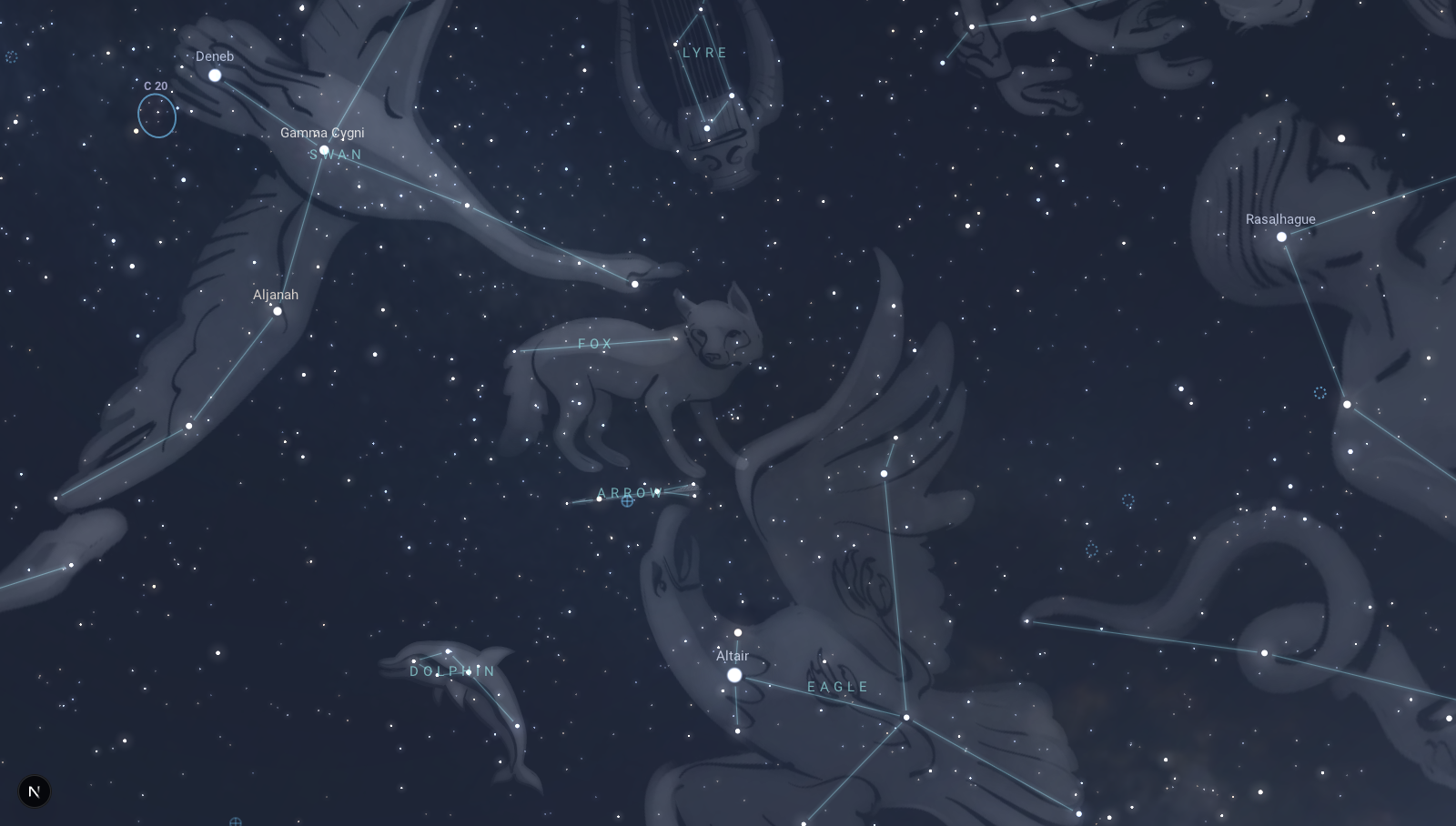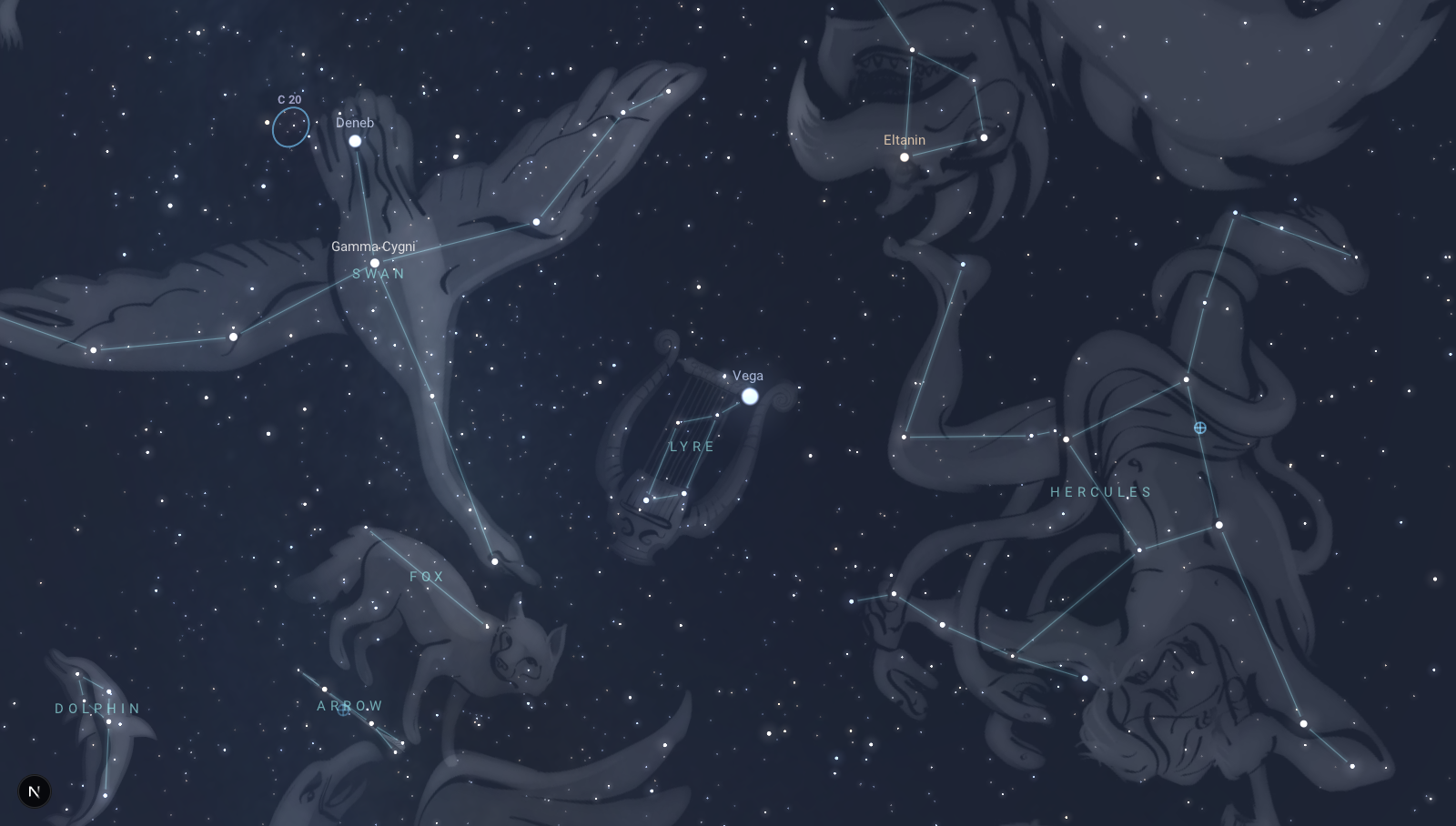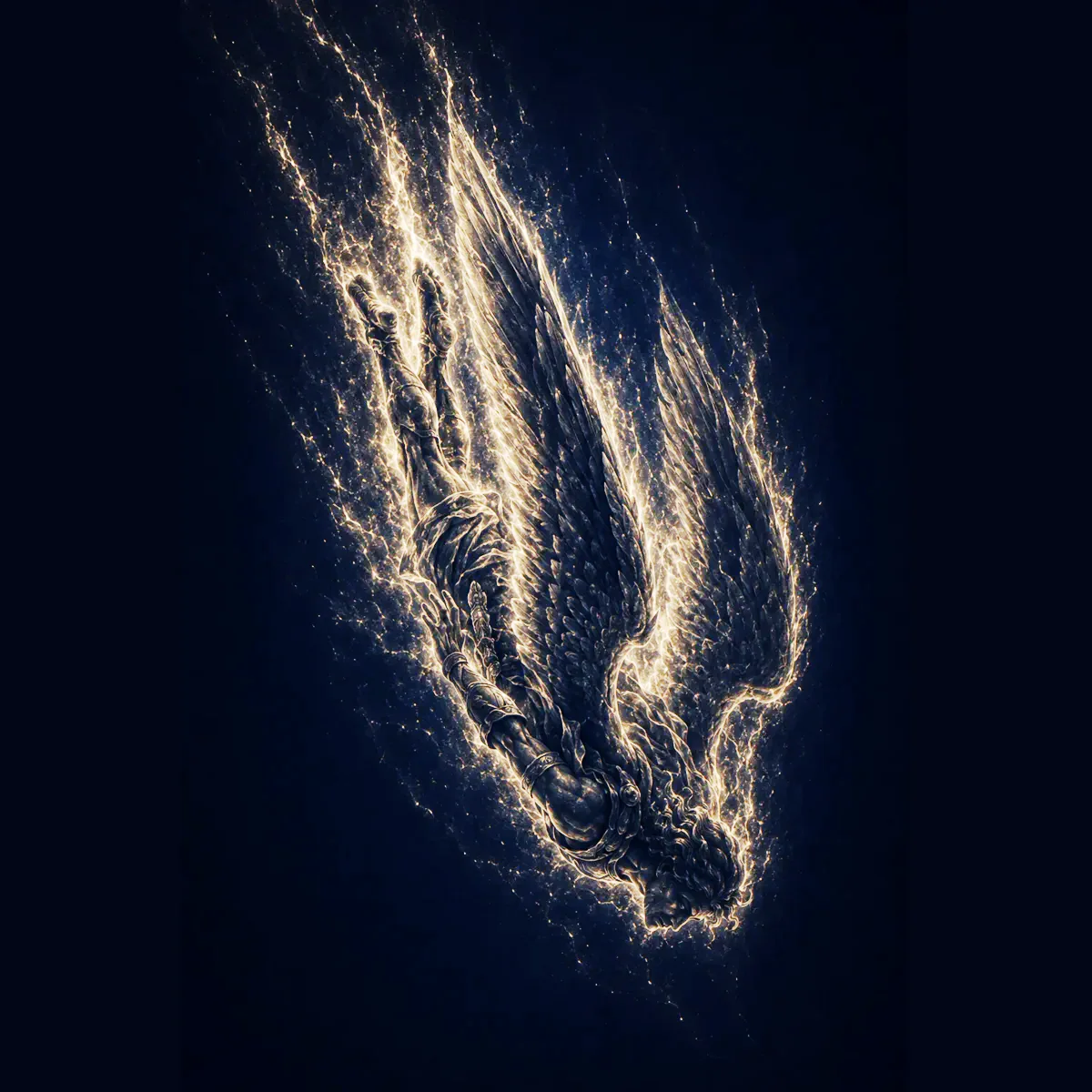
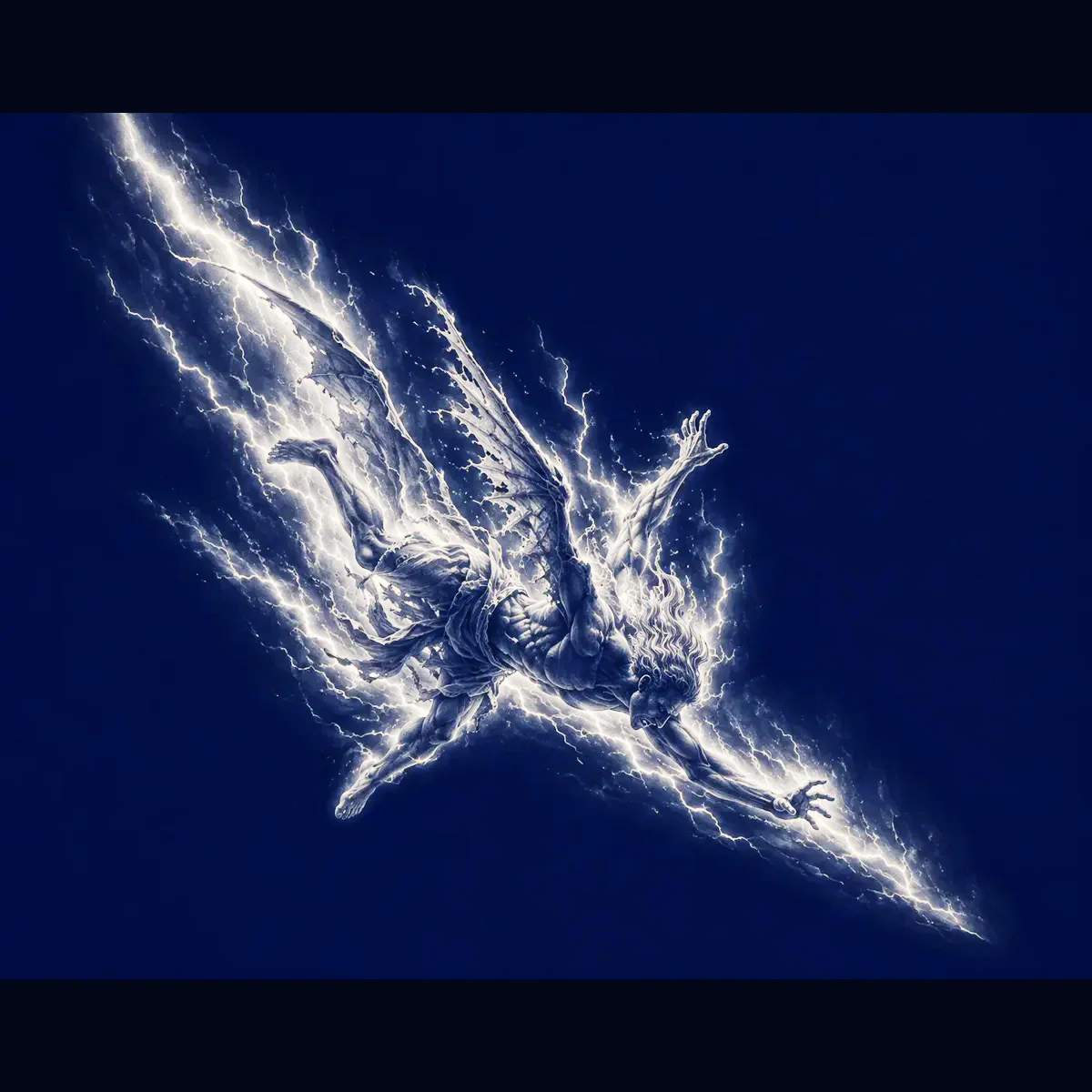
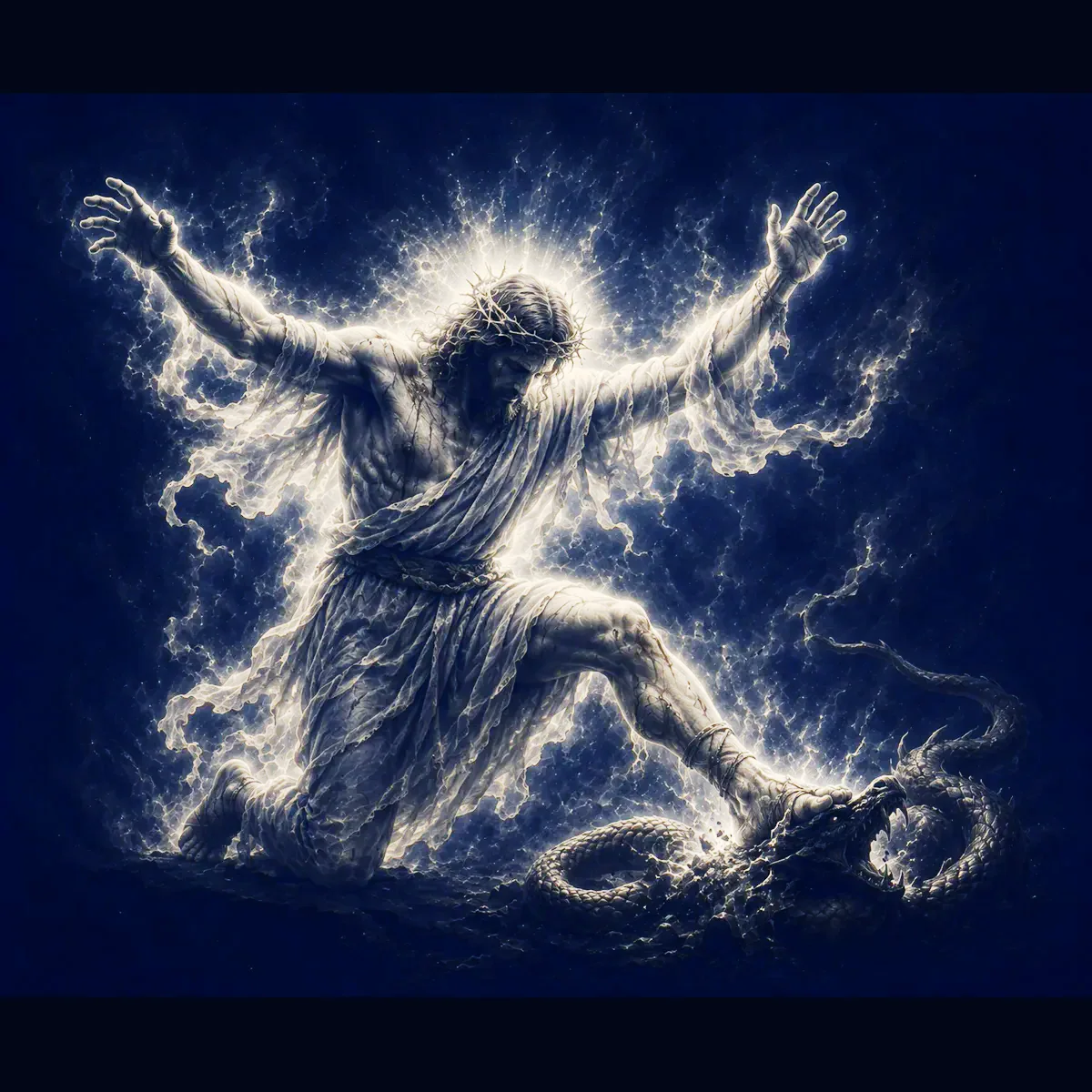
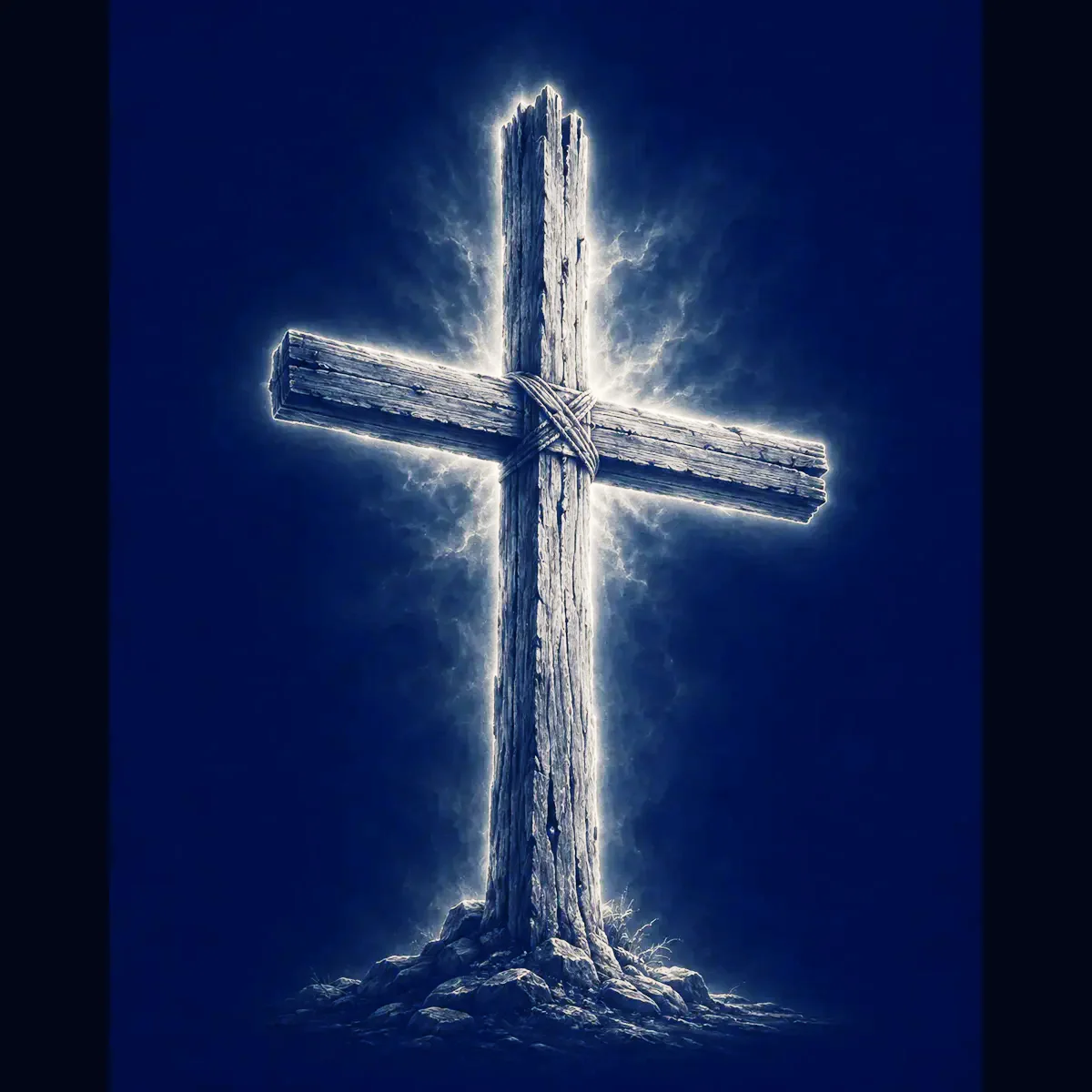
The constellation Lyra depicts fallen angels, cast down from the spiritual heavens following Satan. The main star of Lyra — Vega — received its name from the Arabic al-nasr al-wāqiʿ, 'the falling' or 'swooping eagle'; ancient Arabs saw in Vega and two neighboring stars a bird with folded wings plunging downward. The position of Lyra is especially important: it lies between the Kneeling Victor, who strikes the Dragon, and the Northern Cross. Thus the heavenly picture shows Christ, who goes to the Cross in order to destroy the works of the devil and finally defeat the fallen spiritual powers.
Full interpretation
Verifiable historical, etymological and topographical statements are accompanied by sources. The theological conclusions are the project’s interpretation according to its published methodology.
Today this constellation is called Lyra, yet its main star preserves a completely different ancient image.[Kunitzsch & Smart][IAU · имена звёзд]
The name Vega comes from the Arabic al-nasr al-wāqiʿ — 'the falling', 'descending', 'swooping eagle or vulture'. This name referred not only to one star: Vega together with ε and ζ Lyrae formed an ancient Arabic asterism resembling a bird of prey with folded wings, plunging rapidly downward.[Kunitzsch & Smart][IAU · имена звёзд]
In the overall biblical picture, this image means fallen angels.[Kunitzsch & Smart][IAU · имена звёзд]
They were created as heavenly beings, but following Satan they rebelled against God and fell from their original position.
Therefore the key word of Vega is precisely:
'Falling'.[Kunitzsch & Smart][IAU · имена звёзд]
This corresponds to Christ's words:
'I saw Satan fall from heaven like lightning.'
And Revelation shows the same picture: the great Dragon is cast down, and with him his angels are cast down.
Thus:
The Dragon — Satan. The falling eagle — fallen angels.[Kunitzsch & Smart][IAU · имена звёзд]
These are two depictions of one angelic rebellion: the leader and the heavenly host that followed him.
Vega — former center of the northern sky
There is another unusual feature of Vega.
Due to the precession of the earth's axis, the position of the celestial pole slowly changes. About 14,000 years ago, Vega was near the north celestial pole and served as the polar star; in about 12,000 years it will again be in that region.
In our picture, this has profound symbolic meaning.
The star whose name means 'Falling eagle' was once near the axis around which the entire northern sky seemed to revolve.[Kunitzsch & Smart][IAU · имена звёзд]
Fallen angels were banished from the spiritual heavens and became bound to the created material world. Therefore the former position of Vega near the celestial pole becomes an expressive image: a fallen spiritual being becomes connected with the structure of the temporal created world, but no longer belongs to God's Heaven.[Kunitzsch & Smart][IAU · имена звёзд]
However high Vega may be on the celestial map, its name still speaks of its direction:
it is falling.[Kunitzsch & Smart][IAU · имена звёзд]
Between the Victor and the Cross
Especially important is the whole region of the sky around Lyra.[Kunitzsch & Smart][IAU · имена звёзд]
On one side is the Kneeler — the Suffering Victor, who strikes the head of the Dragon.
On the other side is the Northern Cross.
And between them — Lyra with Vega, the Falling eagle.[Kunitzsch & Smart][IAU · имена звёзд]
A sequential picture emerges:
Kneeler → fallen angels → Cross.[Kunitzsch & Smart][IAU · имена звёзд]
Christ comes precisely because evil entered God's creation. He enters into battle with the ancient serpent and his angels, accepts suffering, and goes to the Cross.
Therefore John's words practically explain this composition:[Kunitzsch & Smart][IAU · имена звёзд]
'The reason the Son of God appeared was to destroy the works of the devil.'
The Kneeler shows Christ, who through suffering defeats the Dragon.
Lyra shows the fallen angelic power, standing between the human world and God.[Kunitzsch & Smart][IAU · имена звёзд]
The Northern Cross shows the place of Christ's decisive victory.
The Cross, which outwardly appeared as the Son of God's defeat, becomes precisely the weapon through which the enemy's power was destroyed.
Two eagles
The ancient Arabic map preserves another important detail. In this region of the sky there were two celestial eagles:
Vega — al-nasr al-wāqiʿ, 'Falling eagle'.[Kunitzsch & Smart][IAU · имена звёзд]
Altair — al-nasr al-ṭāʾir, 'Flying eagle'.[Kunitzsch & Smart][IAU · имена звёзд]
Vega and two neighboring stars depicted a bird with folded wings falling downward; Altair with neighboring stars — a bird with outstretched wings.[Kunitzsch & Smart][IAU · имена звёзд]
In the overall picture, both eagle images relate to the angelic world, but Vega especially clearly reveals its tragedy:[Kunitzsch & Smart][IAU · имена звёзд]
heavenly beings became falling ones.[Kunitzsch & Smart][IAU · имена звёзд]
And therefore Lyra does not speak of music, but of the fall.[Kunitzsch & Smart][IAU · имена звёзд]
The main meaning
Lyra lies at the very center of the story of spiritual warfare.
The Dragon rebels against God.
His angels fall after him.[Kunitzsch & Smart][IAU · имена звёзд]
Vega preserves the name 'Falling eagle'.[Kunitzsch & Smart][IAU · имена звёзд]
Christ the Kneeler enters battle with the Dragon.
And the Victor's path leads to the Cross.
Therefore the constellation Lyra shows the fallen angels, for the destruction of whose power the Son of God entered the created world and accepted death on the cross.[Kunitzsch & Smart][IAU · имена звёзд]
But the last word belongs not to the Falling eagle.[Kunitzsch & Smart][IAU · имена звёзд]
The last word belongs to Christ.
The fallen fall. The Dragon is defeated. The Cross becomes victory.[Kunitzsch & Smart][IAU · имена звёзд]