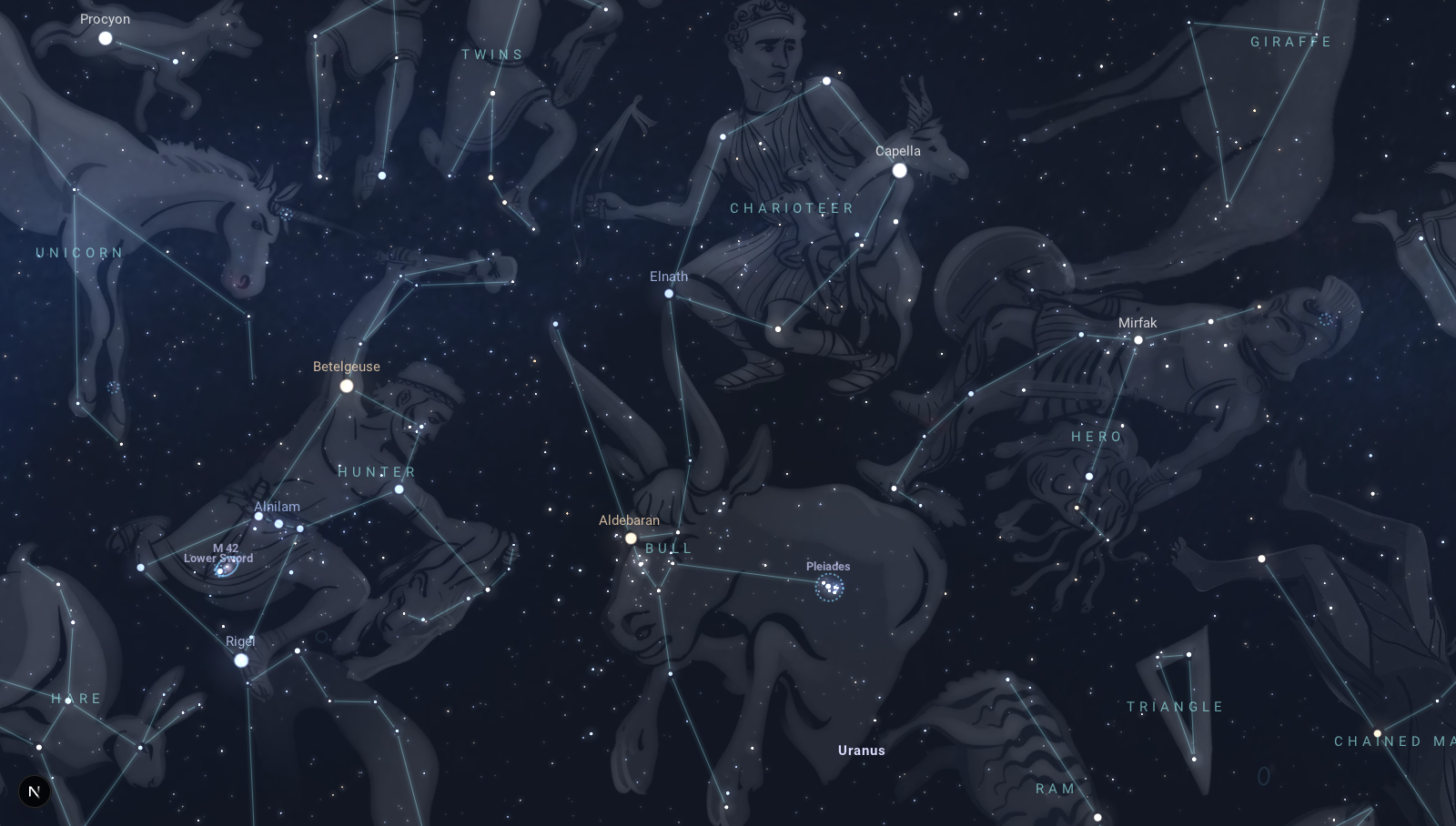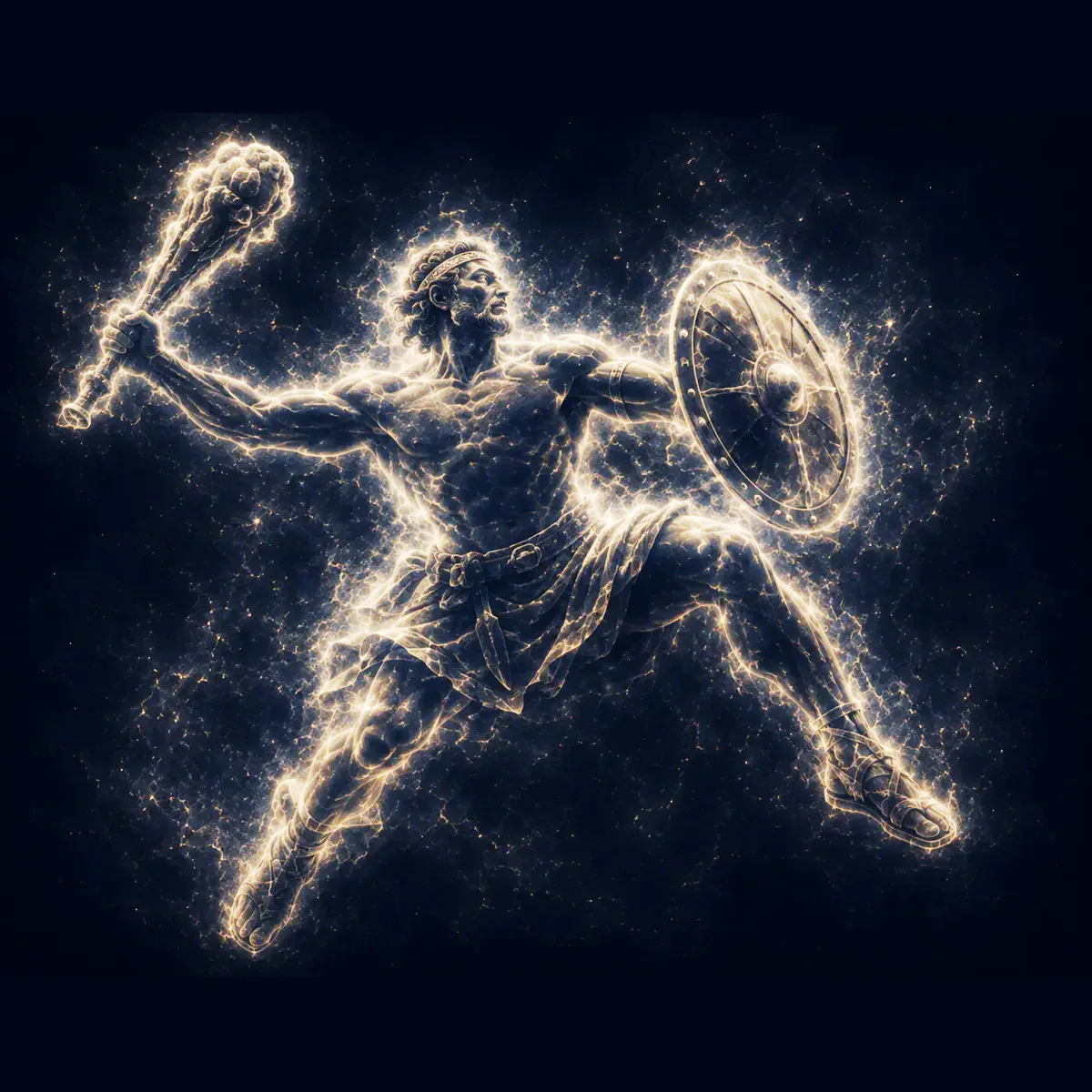
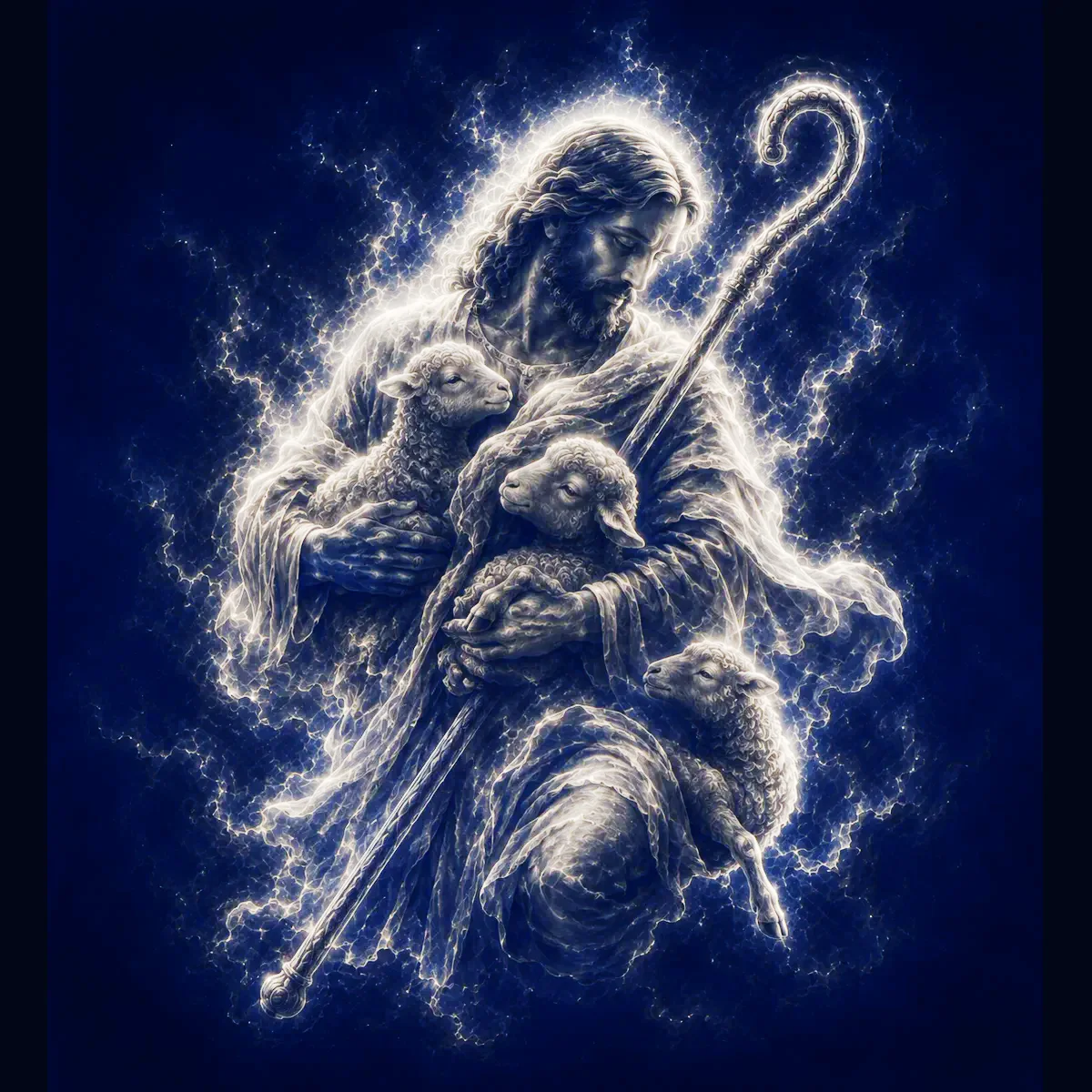
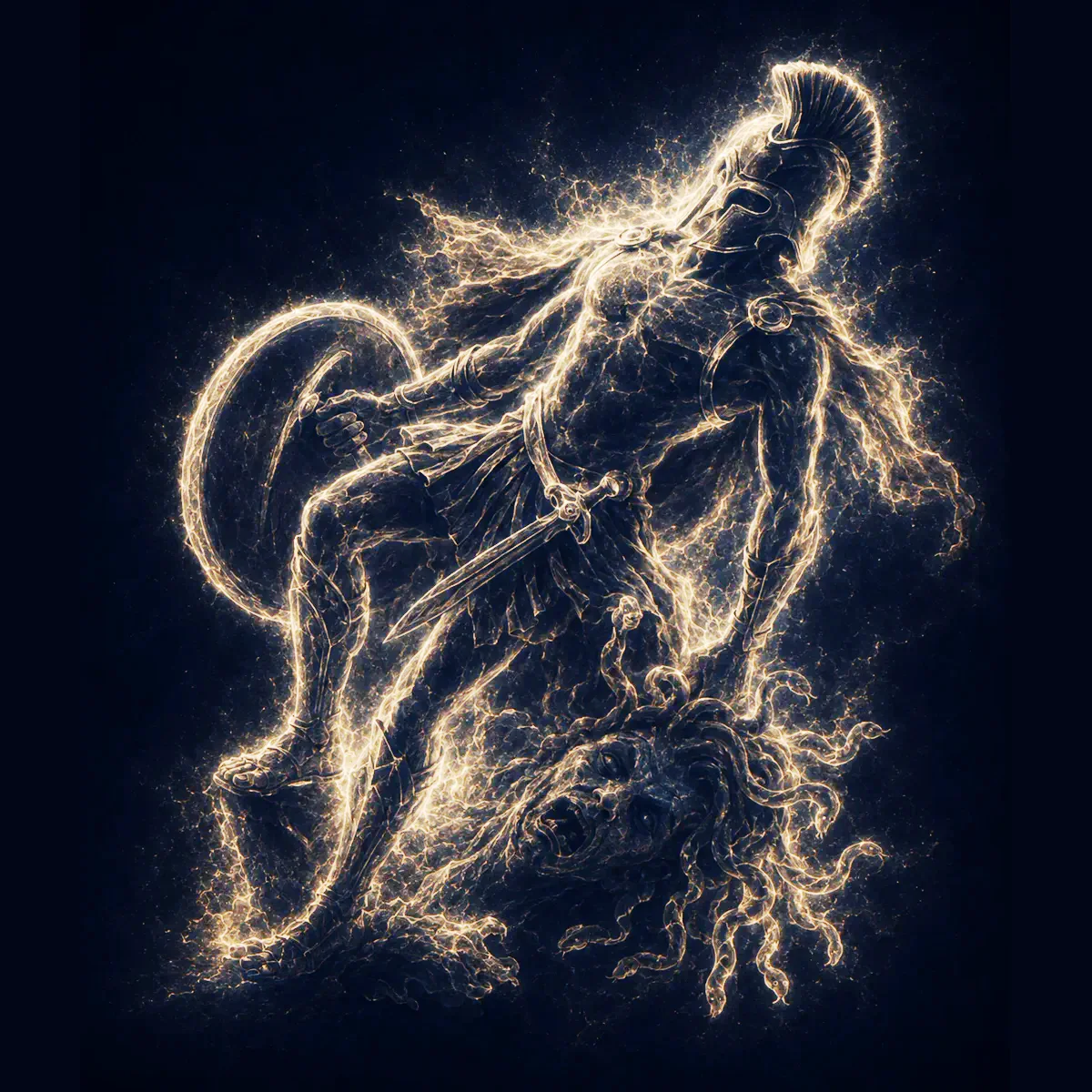
The constellation Orion — the biblical Kesil — depicts the fallen angels of the second wave, the Watchers, who left their appointed place, came down to men, and gave rise to the Nephilim. The main key to the constellation is found in Job 38:31: 'Can you bind the chains of Chimah and loosen the cords of Kesil?' The Hebrew text directly has 'cords, bonds of Kesil', which man is unable to loosen. This corresponds to Peter and Jude's words about the sinful angels, whom God confined in chains of darkness until judgment. On the celestial map, Kesil stands before Taurus and openly rebels against it, while Perseus — the first wave of fallen angels — attacks from the other side.
Full interpretation
Verifiable historical, etymological and topographical statements are accompanied by sources. The theological conclusions are the project’s interpretation according to its published methodology.
Orion is mentioned several times directly in the Bible under the Hebrew name Kesil — כְּסִיל. In Job 38:31, the modern JPS translation directly renders Kesil as Orion, and the expression מֹשְׁכוֹת כְּסִיל — moshkhot Kesil — means his cords, bonds, or chains: God asks man whether he is able to untie them.
It is precisely this detail that reveals the biblical meaning of Kesil:[Kunitzsch & Smart][IAU · имена звёзд]
he is bound.
Man does not bind him, and man is unable to free him. God's question is framed to show that the authority over these bonds belongs only to the Creator.
This remarkably corresponds to the New Testament description of the sinning angels.
Peter says that God 'did not spare the angels who sinned, but... delivered them to be kept for judgment'.
Jude says even more precisely:
'And the angels who did not stay within their own position of authority, but left their proper dwelling, He has kept in eternal chains under gloomy darkness until the judgment of the great day.'
Therefore Kesil does not represent merely a giant. It is the heavenly rebels bound by God — the Watchers.
The word kesil in ordinary biblical usage means 'fool', 'stupid'. In the astronomical texts of the Bible, the same word becomes the name of a heavenly constellation, traditionally identified with Orion. And this meaning remarkably fits the nature of the Watchers' rebellion: before us are powerful spiritual beings, possessing knowledge and strength, but who acted as fools, knowingly transgressing the boundary set by God.[Kunitzsch & Smart][IAU · имена звёзд]
Also very important is the most ancient Mesopotamian image of Orion. In the cuneiform tradition, it was called SIPA.ZI.AN.NA — 'True Shepherd of Anu', and Mesopotamian lexical texts directly identify this figure with Orion.[Hunger & Pingree · MUL.APIN][Rogers · Origins][Вавилонские звёздные каталоги][Stellarium · MUL.APIN][Kunitzsch & Smart][IAU · имена звёзд]
In our picture, this name preserves the memory of the Watchers' original purpose. They were not created evil. They belonged to the heavenly order and were to guard what was entrusted to them. Therefore the ancient image of a heavenly shepherd or guardian fits well with their original assignment.
But Kesil shows how it all ended.[Kunitzsch & Smart][IAU · имена звёзд]
The Shepherd became a rebel. The Guardian broke the boundary. The heavenly being left its position. And God bound it until judgment.
That is why the Mesopotamian 'True Shepherd of Heaven' and the biblical 'Kesil in chains' do not contradict each other. They seem to show the beginning and end of one story: what these beings were meant to be — and what they became after their fall.[Hunger & Pingree · MUL.APIN][Rogers · Origins][Вавилонские звёздные каталоги][Stellarium · MUL.APIN][Kunitzsch & Smart][IAU · имена звёзд]
Kesil against Taurus
The position of Orion on the star map reveals the next part of this story.[Kunitzsch & Smart][IAU · имена звёзд]
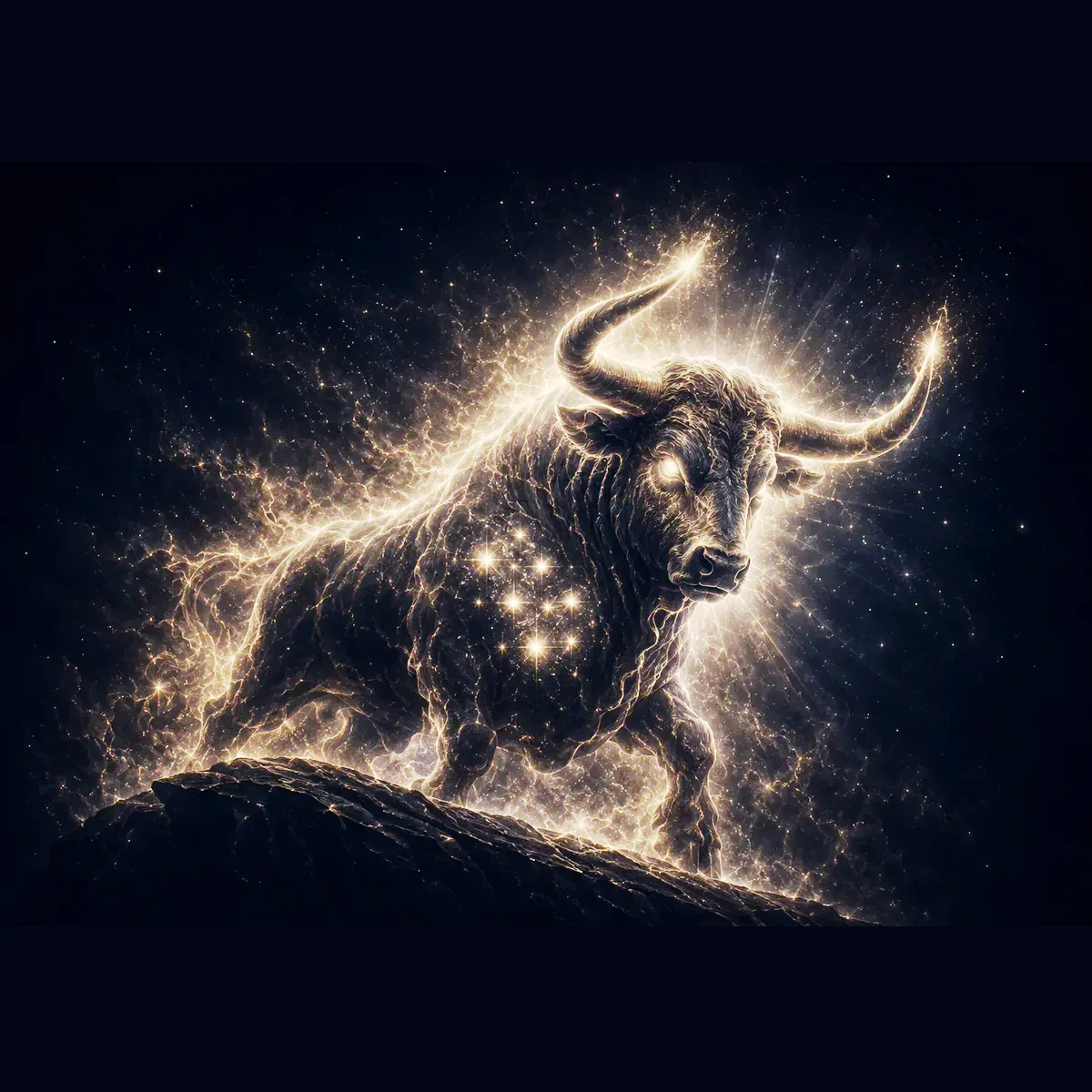
Orion-Kesil stands directly before Taurus and is directed against it.
Taurus represents Christ at the Second Coming — the coming Judge and King. And before Him stands the giant Kesil, as if hurling an open challenge at Him.[Kunitzsch & Smart][IAU · имена звёзд]
On the other side of Taurus is Perseus.
Thus Taurus is surrounded by two rebellions:
Perseus behind — the first wave of fallen angels, Satan and those who followed him.[Kunitzsch & Smart][IAU · имена звёзд]
Kesil in front — the second wave, the Watchers.
The difference in their position makes sense. The Watchers committed their crime already after the first angelic rebellion. They knew the consequences of rebellion against God, yet they knowingly left their appointed place. Therefore Kesil does not hide behind — he stands face to face with Taurus, openly entering into opposition.[Kunitzsch & Smart][IAU · имена звёзд]
But his defeat is already shown by his very name:[Kunitzsch & Smart][IAU · имена звёзд]
Kesil is bound.
He may look like a huge warrior risen against Taurus, but his fate is not in his own hands. God has already humbled him and appointed the time of judgment.[Kunitzsch & Smart][IAU · имена звёзд]
Kesil and the Nephilim
Under Orion's feet lies the constellation of the Hare, which in the overall picture represents the Nephilim — the earthly fruit of the Watchers' fall.[Kunitzsch & Smart][IAU · имена звёзд]
Therefore this region of the sky unfolds a sequential history:
Orion-Kesil — the Watchers. Under them — the Nephilim, arising from their invasion of the human world. Before them — Taurus, God's Judge, against whom they rebel.
This corresponds to Gen. 6: after the 'sons of God' enter the daughters of men, Scripture immediately speaks of giants — the mighty men of old, men of renown.
Chimah and Kesil — two opposite bonds
A particularly deep meaning opens when we read Job 38:31 in its entirety:
'Can you bind the chains of Chimah and loosen the cords of Kesil?'
In one verse, God contrasts Chimah — the Pleiades — with Kesil — Orion.
In our heavenly picture, Chimah is the Church of God. The seven stars of the Pleiades correspond to the seven churches of Revelation, joined by God into one people.
Kesil, in contrast, is the rebellious angels, bound for judgment.
Therefore one verse contains two entirely different bonds:
Chimah — God binds together. Kesil — God keeps bound.
Man is unable to do either.
People constantly divide God's people into denominations, movements, traditions, and groups. Catholics, Orthodox, Baptists, Pentecostals, Charismatics, and many other communities often struggle to recognize one another. Human efforts cannot create true spiritual unity from such diverse people.[Kunitzsch & Smart][IAU · имена звёзд]
But God is able to bind Chimah — to gather those who belong to Him into one Church.
And only God is able to hold Kesil in chains, not allowing the rebellious spiritual powers to go beyond the limits He has set.[Kunitzsch & Smart][IAU · имена звёзд]
The next verse expands this thought:
'Do you know the ordinances of the heavens? Can you establish their rule on the earth?'
Man does not establish the heavenly order. God does. He binds what is to be united; He holds what is to be bound; and at the appointed time He brings the heavenly purpose to fulfillment on earth.
Therefore we pray:
'Your will be done on earth as it is in heaven.'
The main meaning
Orion-Kesil shows the tragedy of the second angelic rebellion.
Those who were to be guardians themselves broke God's order.
Those who possessed heavenly knowledge acted as fools.
Those who possessed enormous strength found themselves powerless before God's sentence.
In the sky, Kesil still looks like a giant challenging Taurus.[Kunitzsch & Smart][IAU · имена звёзд]
But God already says of him:[Kunitzsch & Smart][IAU · имена звёзд]
'Can you loosen the cords of Kesil?'
The answer is obvious:
no.
Only the One who laid them can loosen them.
And when the appointed day comes, the same God will execute final judgment on the Watchers and on all the spiritual powers that have rebelled against His Kingdom.[Kunitzsch & Smart][IAU · имена звёзд]