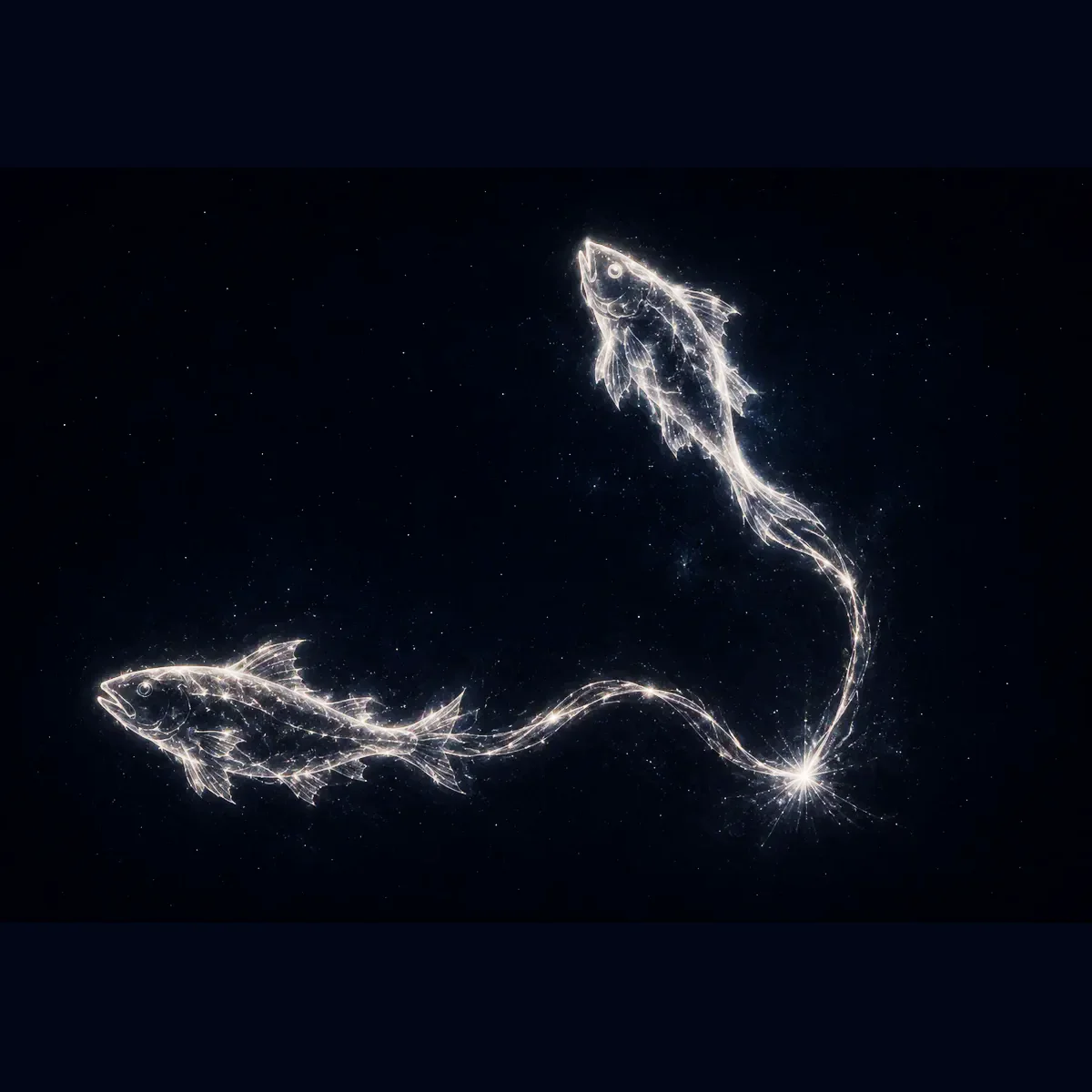
Cas · Cassiopeia

Cassiopeia

Church — Wife of the Lamb

Cassiopeia depicts the Church of God after the marriage feast. If the Pleiades are an image of the Church-Bride on earth, then Cassiopeia shows her future — the Wife of the Lamb, sharing in Christ's reign.

Author and editor: Heavens Remember Editorial BoardPublished Updated
Astronomical constellation Cassiopeia
Cassiopeia · constellation figure diagram
HemisphereNorthern
IAUCas
J2000 positionα 1.02h · δ +60.1°
Stars in the atlas160

Astronomical data: IAU, HYG 4.1 and Stellarium 26.1.

Follow this image through the sky

Move step by step or start automatic playback. The tour shows how this constellation is connected with the other figures in the same narrative.

Loading sky engine…

Constellation line framework

Line figure sources and licenses: Marc van der Sluys · CC BY-SA 4.0 · Stellarium Modern 26.1

Cassiopeia constellation line geometry
Gold shows the Marc van der Sluys reference figure; the muted extension follows Stellarium Modern. These are conventional asterisms, not official IAU boundaries.
Summary

Cassiopeia depicts the Church of God after the marriage feast. If the Pleiades are an image of the Church-Bride on earth, then Cassiopeia shows her future — the Wife of the Lamb, sharing in Christ's reign.

Full interpretation

Verifiable historical, etymological and topographical statements are accompanied by sources. The theological conclusions are the project’s interpretation according to its published methodology.

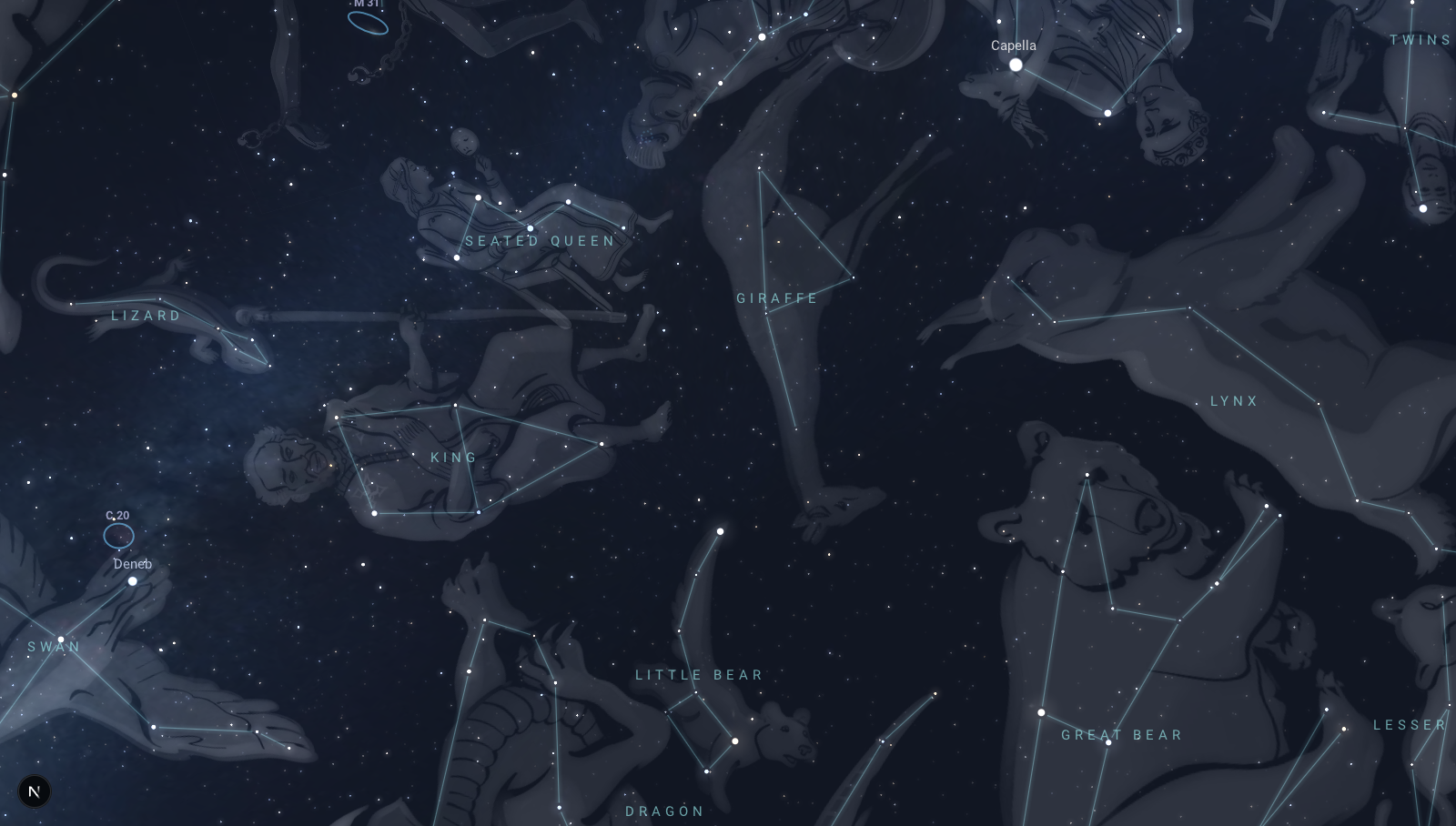
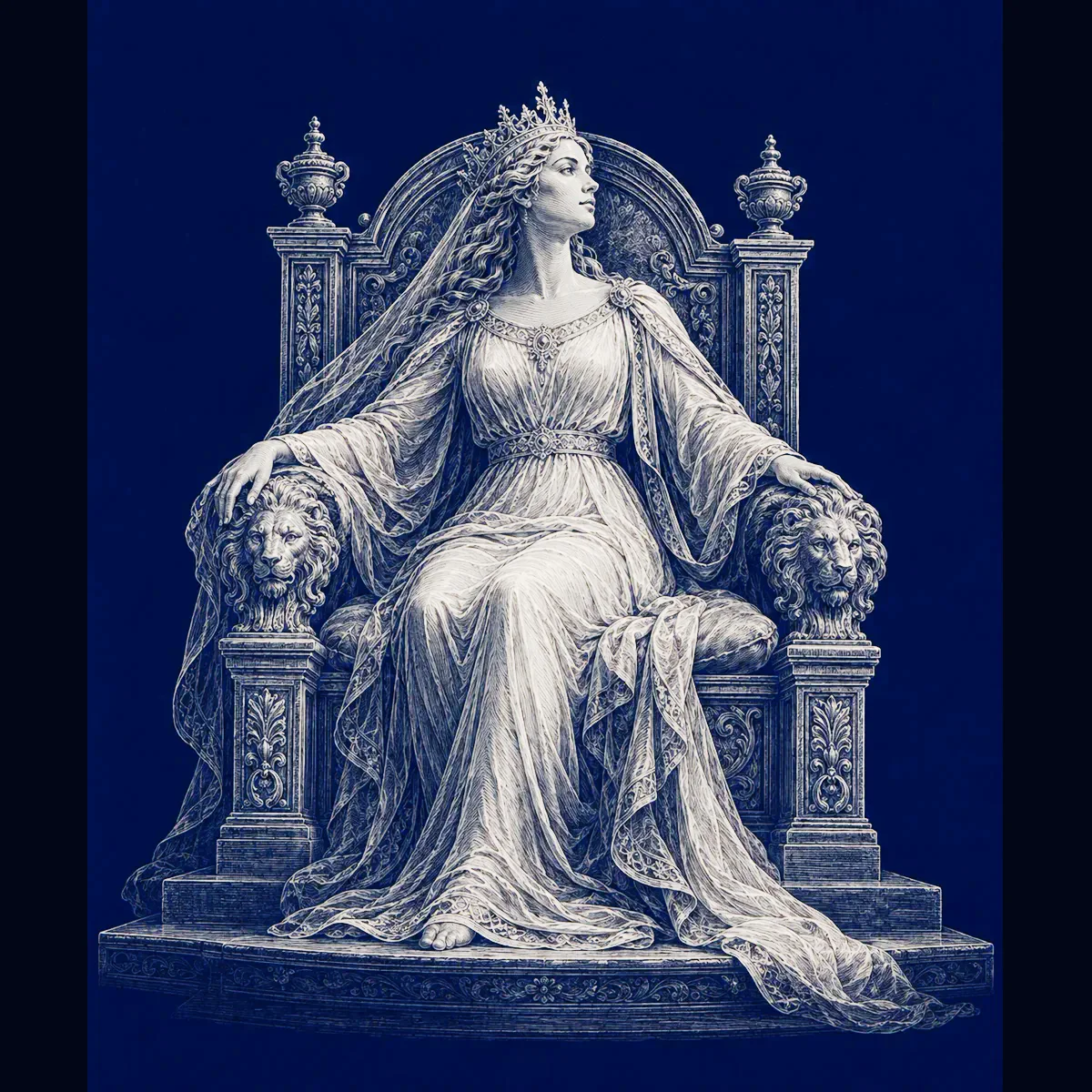
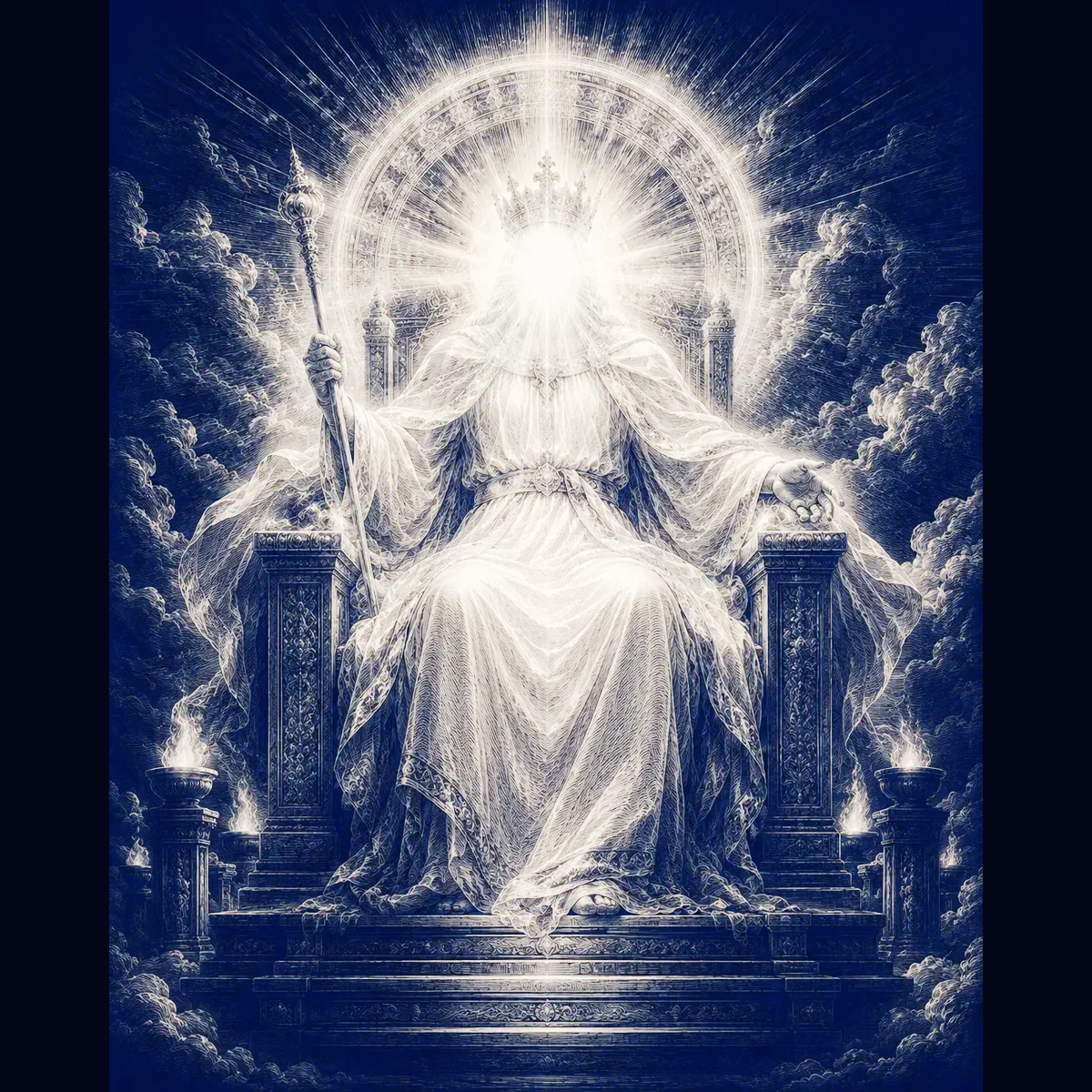
The constellation Cassiopeia is located next to Cepheus — the image of the enthroned King. On the celestial map, Cassiopeia is depicted seated on a throne, corresponding to the biblical promise: after the marriage feast, the Church of God will reign together with Christ.

In some ancient Arabic manuscripts, Cassiopeia is called the "Sitting Woman," and the arrangement of its stars resembles a woman pointing forward with her hand.[Kunitzsch & Smart][IAU · имена звёзд]

The names of its stars are of particular interest.

Schedar (α Cassiopeiae) bears the Arabic name Al Dhāt al Kursiyy, which is associated with the expression "breast of the Pleiades." This is unusual, since the actual Pleiades are in a completely different region of the sky. Such a name seems to connect the two constellations into one story.

Caph (β Cassiopeiae) means "palm," and the full Arabic name translates as "palm of the Pleiades." And again Cassiopeia is named through the Pleiades.[Kunitzsch & Smart][IAU · имена звёзд]

Another star of the constellation — Al Sanam al Nakah — means "camel's hump." This name recalls the ancient image of the constellation Camelopardalis, which was originally depicted as a camel—the very camel that brought Rebekah to Isaac. In the biblical story, this is a type of the Holy Spirit bringing the Bride to Christ.[Kunitzsch & Smart][IAU · имена звёзд]

Thus the names of the stars form a coherent picture:

Pleiades — the Church as Bride on earth. The camel brings the Bride to the Bridegroom. The Sitting Woman takes her place beside the King. The Church becomes the Wife of the Lamb and shares in His reign.

On the celestial map, the Great Bear — the image of God's Church on earth — is on one side of the Pole Star, and Cassiopeia is on the other. Between them lies the constellation Camelopardalis (the ancient Camel), as well as Andromeda — the image of the Church still awaiting the meeting with the Bridegroom. All this forms a sequential narrative: God's Church passes from Bride to Wife of the Lamb.[Kunitzsch & Smart][IAU · имена звёзд]

Therefore one can say:

The Pleiades are the past of Cassiopeia. Cassiopeia is the future of the Pleiades.
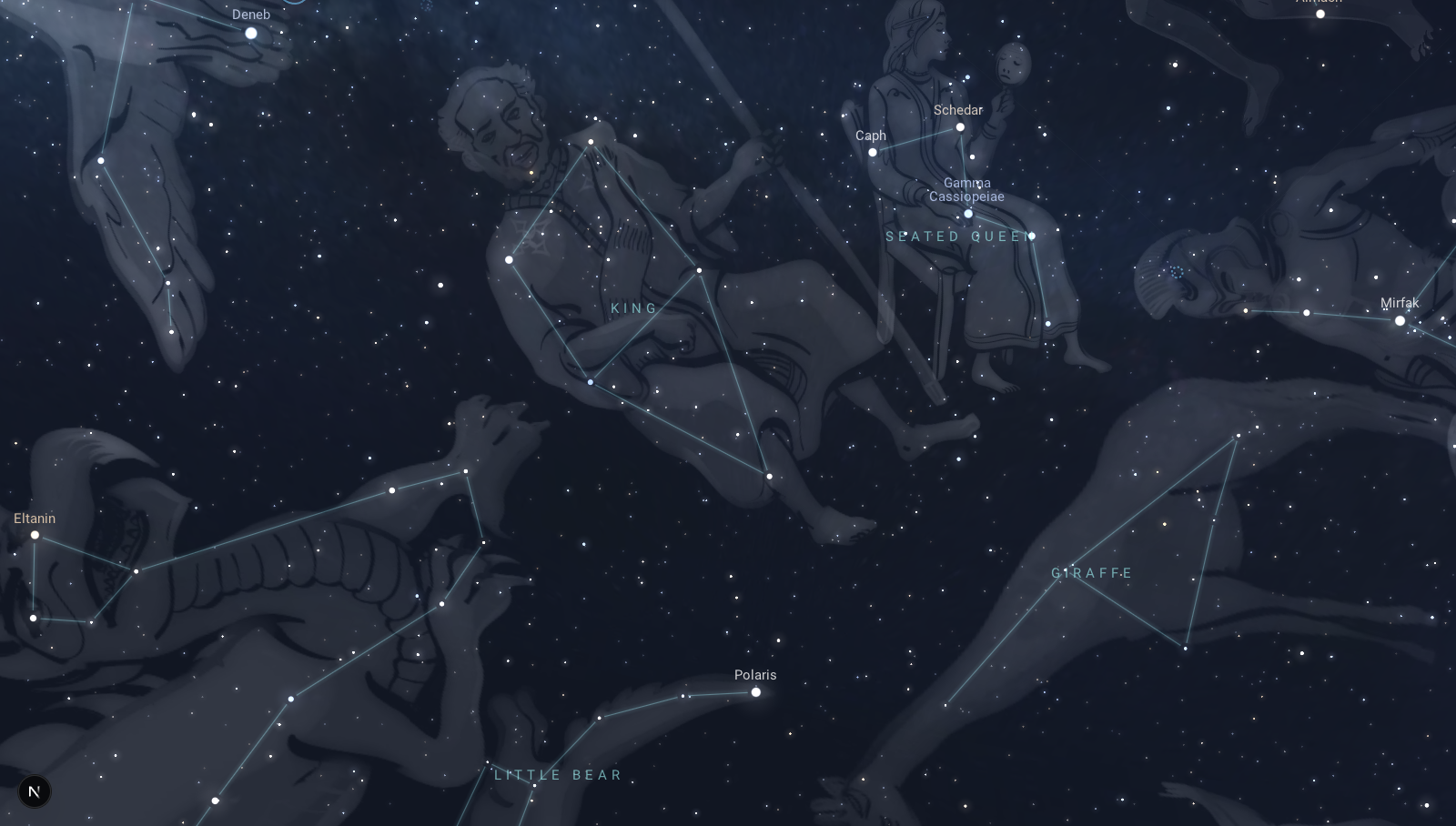
Stories of the sky

Scenes formed by neighbouring constellations — read together, not as isolated symbols.

The reigning Christ

Cepheus is the king with sceptre and “shepherd” (Alrai). One foot rests toward the pole and Ursa Minor.

Polaris is the guiding star rising from Israel — “the bright and morning star”. Through precession the pole moved from Thuban to Kochab, then to Polaris, and later toward Alderamin — Cepheus’s “right hand”.

The atlas reads this as the Son’s path: birth among Israel, service as the world’s guide, and seating at the Father’s right hand.

Откровение 22:16

Cepheus enthroned beside Ursa Minor and Cassiopeia
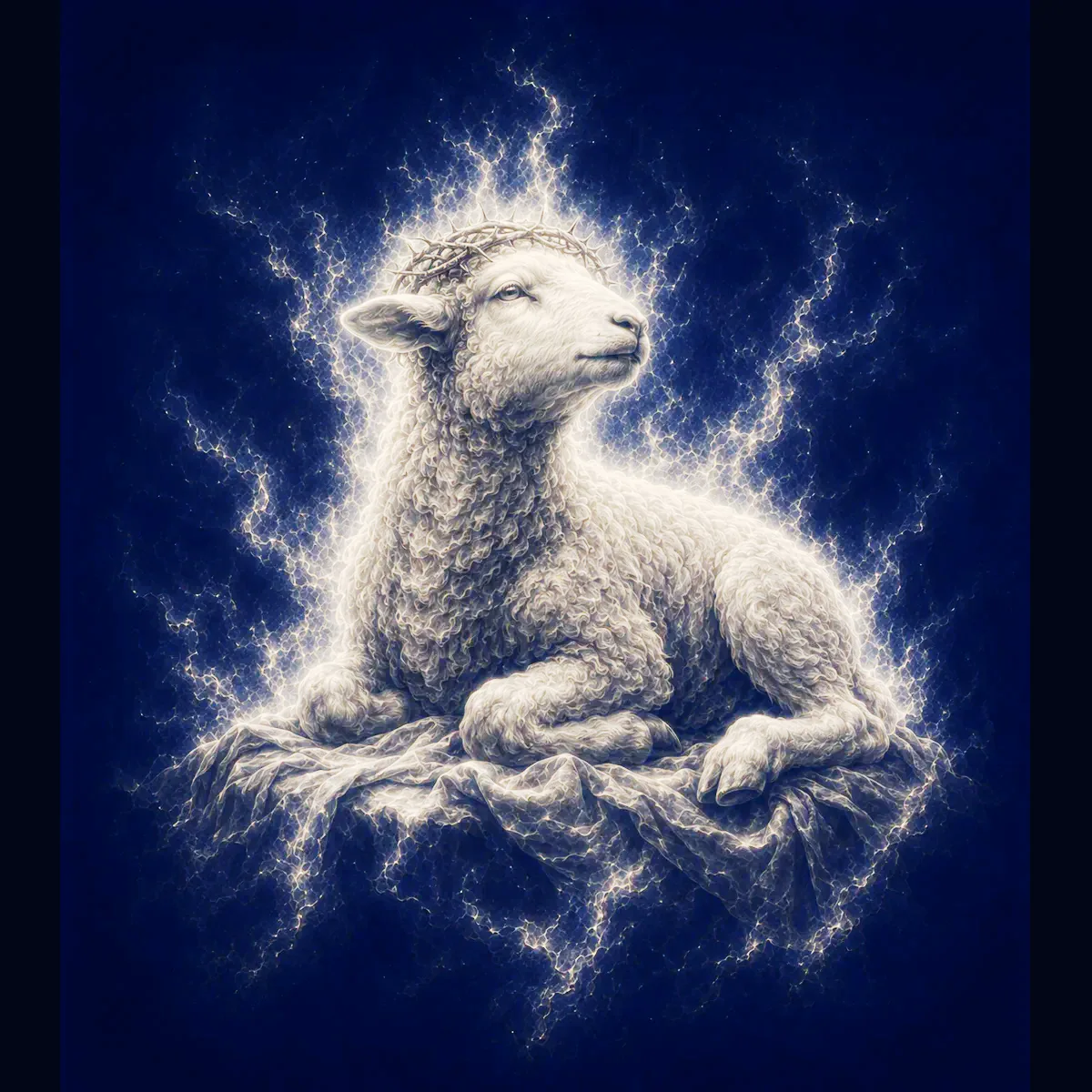
Cepheus reigning while resting on the lesser flock

From the flock’s girdle to the bride’s throne

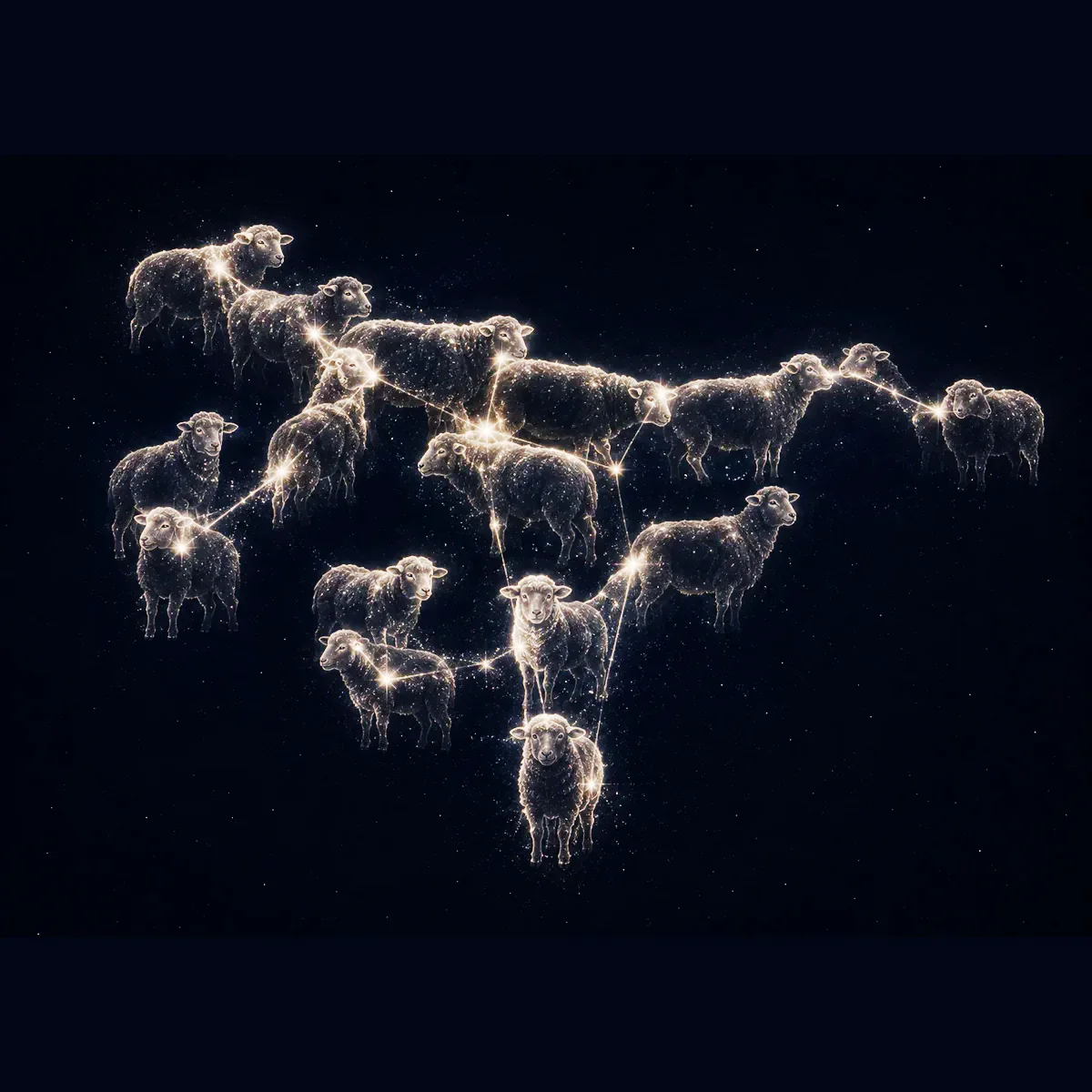
A straight line through Zeta Ursae Majoris (Mizar) and Polaris points to Cassiopeia.

The Church on earth (the great flock) looks to Christ (Polaris) and is drawn toward the marriage throne (Cassiopeia).

Schedar and Caph in Arabic tradition are linked with the “breast/hand of the Pleiades”: the Pleiades are the Bride on earth; Cassiopeia is her future as the Lamb’s wife.

Откровение 19:7

Line from Mizar through Polaris toward Cassiopeia
Mizar → Polaris → Cassiopeia

The camel that brings the bride

Between Ursa Major and Cassiopeia lies Camelopardalis; the older name of the region is the camel.

Plancius linked the figure with the camel that brought Rebekah to Isaac — a type of the Spirit bringing the Bride-Church to Christ.

Cassiopeia even has a star called “the camel’s hump”. The path from the earthly flock to the Wife’s throne passes through this mediator.

Бытие 24:61-67

Camelopardalis the camel between Ursa Major and Cassiopeia
The camel between the flock and the enthroned Bride

From Bride to the Lamb’s wife

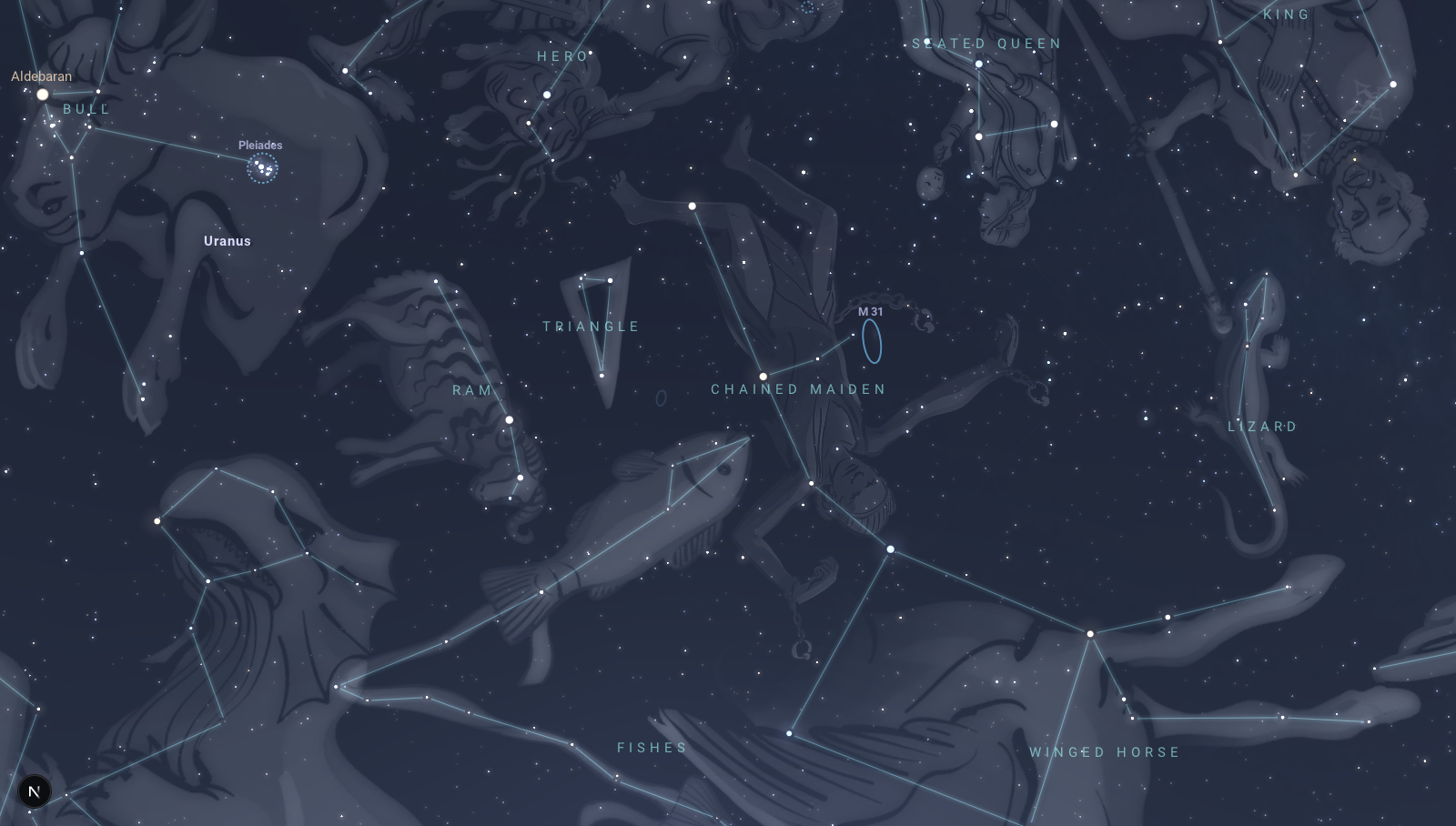
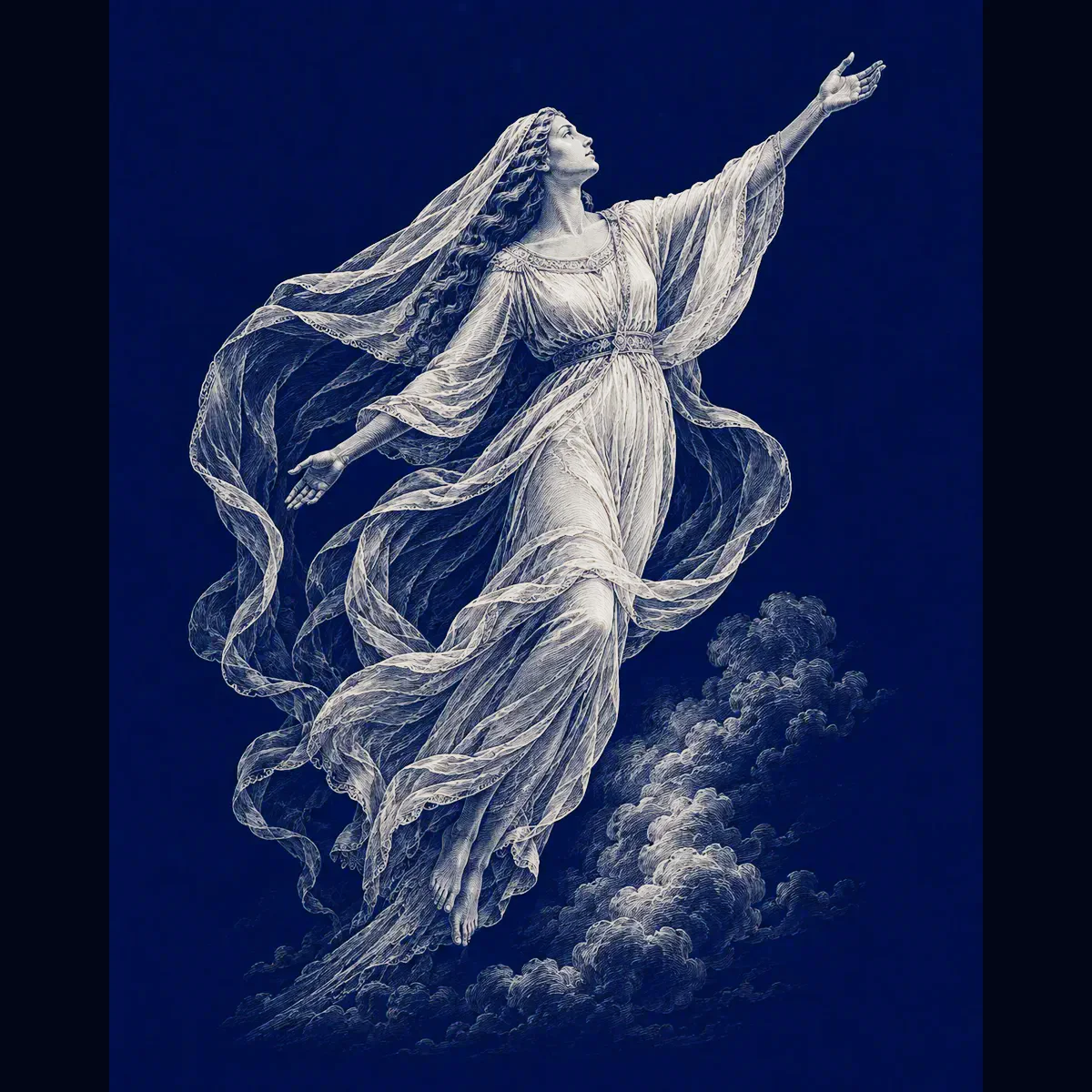
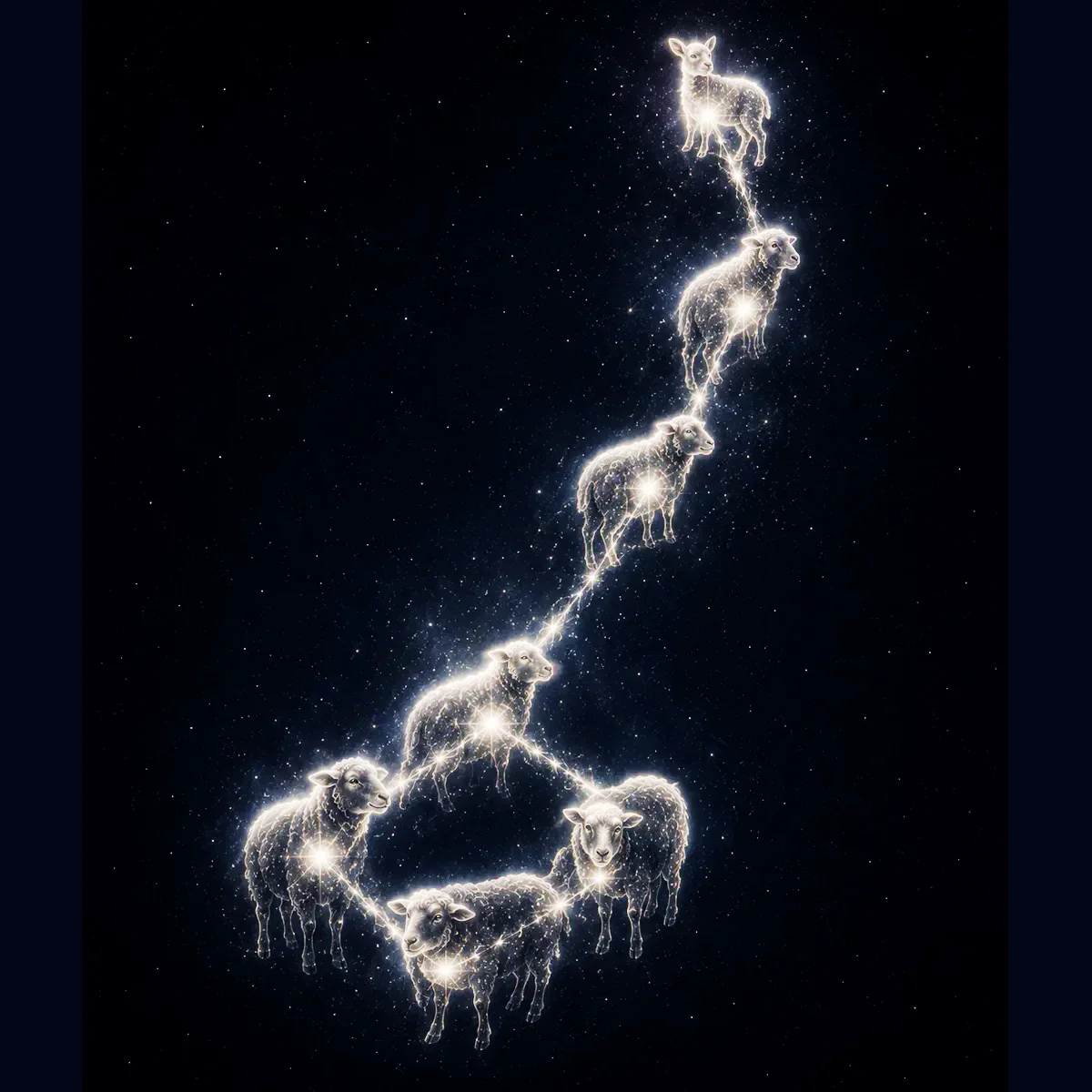
Between one of the Fishes and Cassiopeia stands Andromeda: “the woman who had not seen a husband”.

The Pleiades and Pisces are the Bride-Church on earth. Cassiopeia is the Wife at the marriage supper. Andromeda is read as the rapture passage between those states.

Mirach (“girdle”) echoes Mizar in Ursa Major: one flock walks the path from earth to the throne.

Откровение 19:7-9

Andromeda between Pisces and Cassiopeia
Pisces → Andromeda → Cassiopeia

Звёзды созвездия и древние значения

Историческое значение имени отделено от богословского комментария атласа. Спорные, поздние и пока не обеспеченные библиографическим источником формы отмечены явно.

3
α · Cas

Schedar

Справочная этимология

Историческая формаSchedar (Arabic Al Dhāt al Kursiyy)

Передаваемое значение

Breast of the Pleiades

Редакционная помета

Connection with the Pleiades – the Church-Bride.

β · Cas

Caph

Справочная этимология

Историческая формаCaph (Arabic)

Передаваемое значение

Palm (palm of the Pleiades)

Cas

Al Sanam al Nakah

Справочная этимология

Историческая формаAl Sanam al Nakah (Arabic)

Передаваемое значение

Camel's hump

Редакционная помета

Reminds of the camel that brought Rebekah.

Scripture passages

"The marriage of the Lamb has come, and His Wife has made herself ready... Blessed are those who are invited to the marriage supper of the Lamb."

"To the one who conquers I will grant to sit with Me on My throne."

"If we endure, we will also reign with Him."

Questions about Cassiopeia

How does Cassiopeia differ from the Pleiades in this biblical reading?

If the Pleiades are an image of the Church-Bride on earth, Cassiopeia shows her future: the Wife of the Lamb sharing Christ's reign after the marriage feast. It depicts God's Church already enthroned, not still awaiting the Bridegroom.

What does the constellation Cassiopeia symbolize in this biblical interpretation?

Cassiopeia depicts the Church of God after the marriage feast. If the Pleiades are an image of the Church-Bride on earth, then Cassiopeia shows her future — the Wife of the Lamb, sharing in Christ's reign.

Which Bible passages are connected with the constellation Cassiopeia?

This interpretation considers Revelation 19:6–9, Revelation 3:21, 2 Timothy 2:12. These passages illuminate the theme “Church — Wife of the Lamb”.