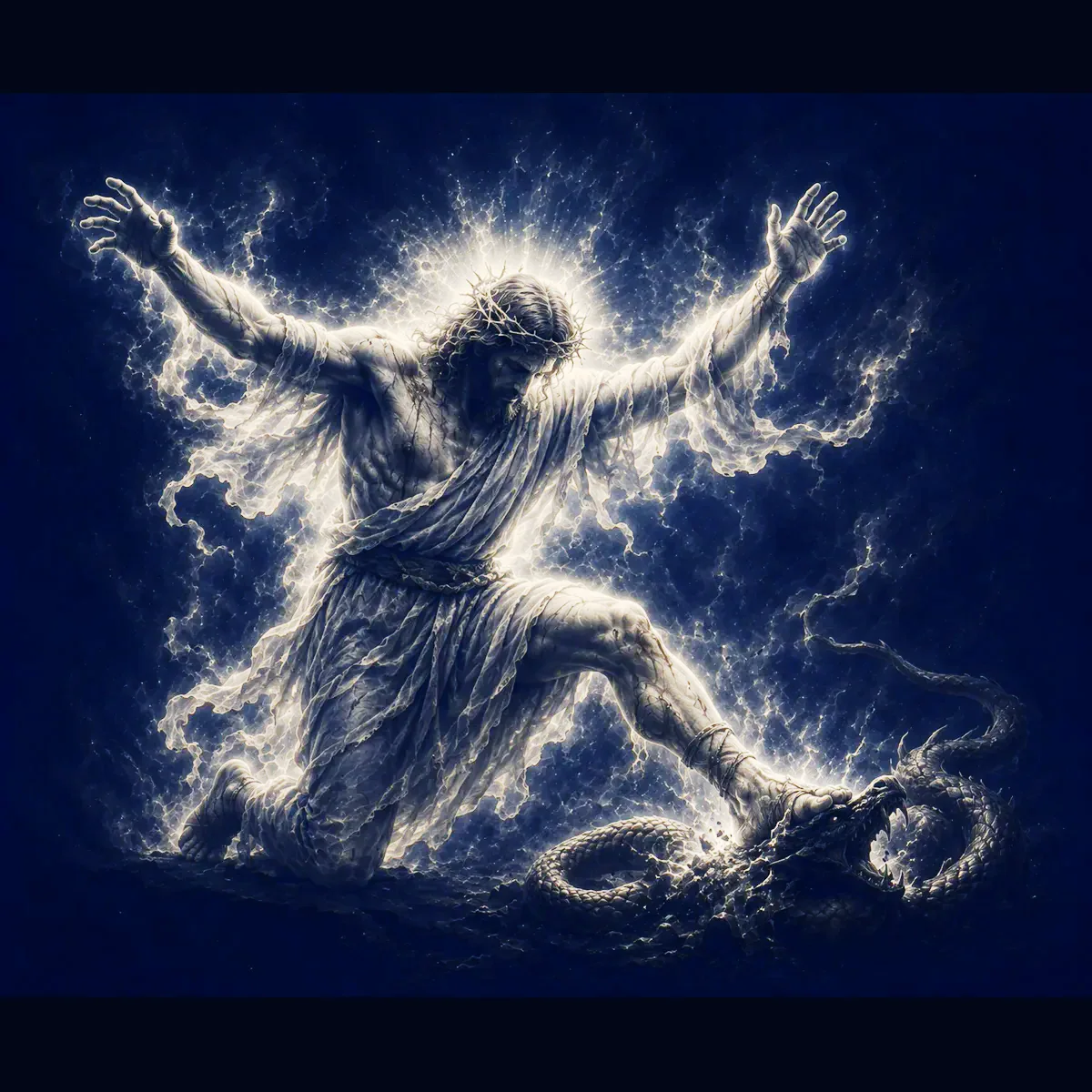
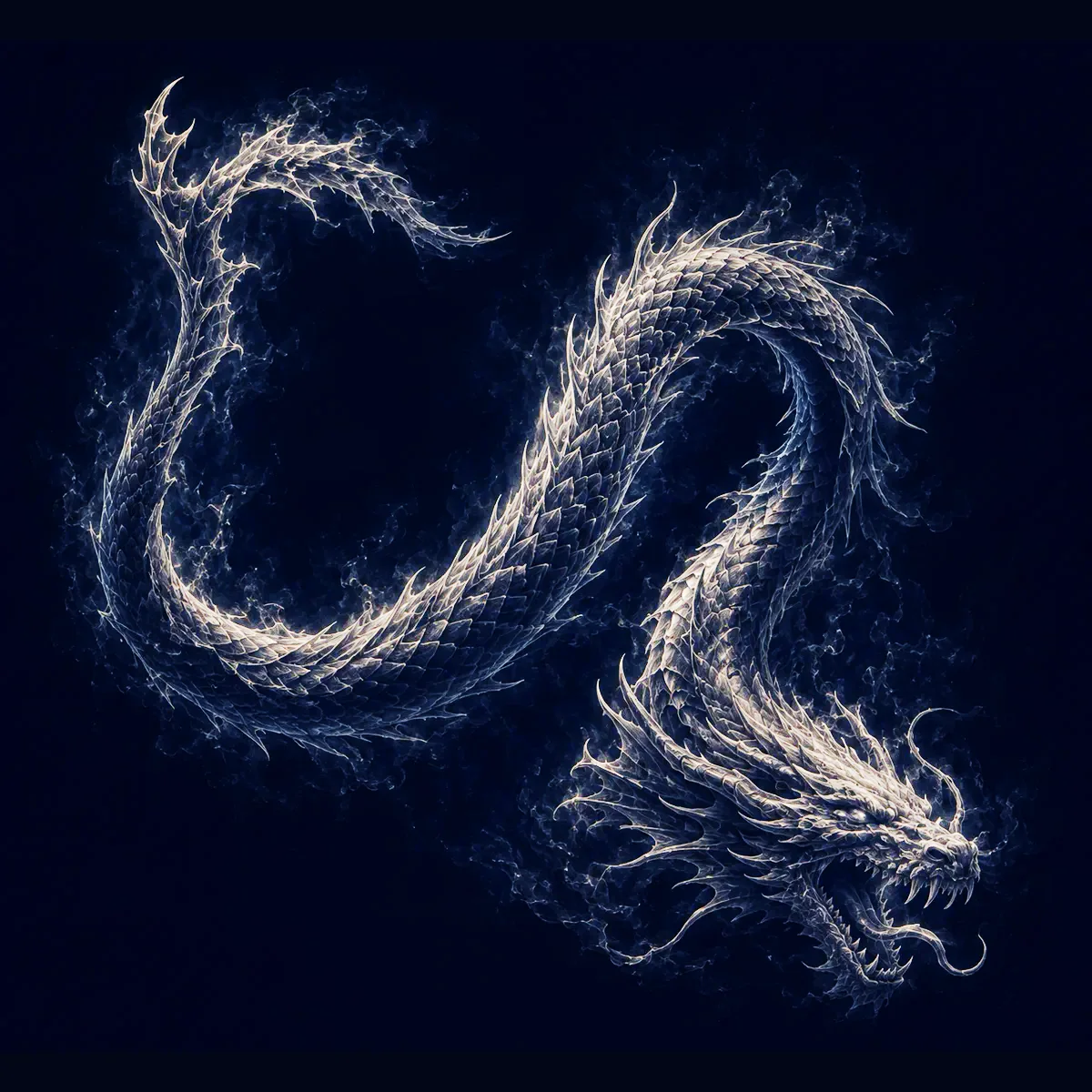
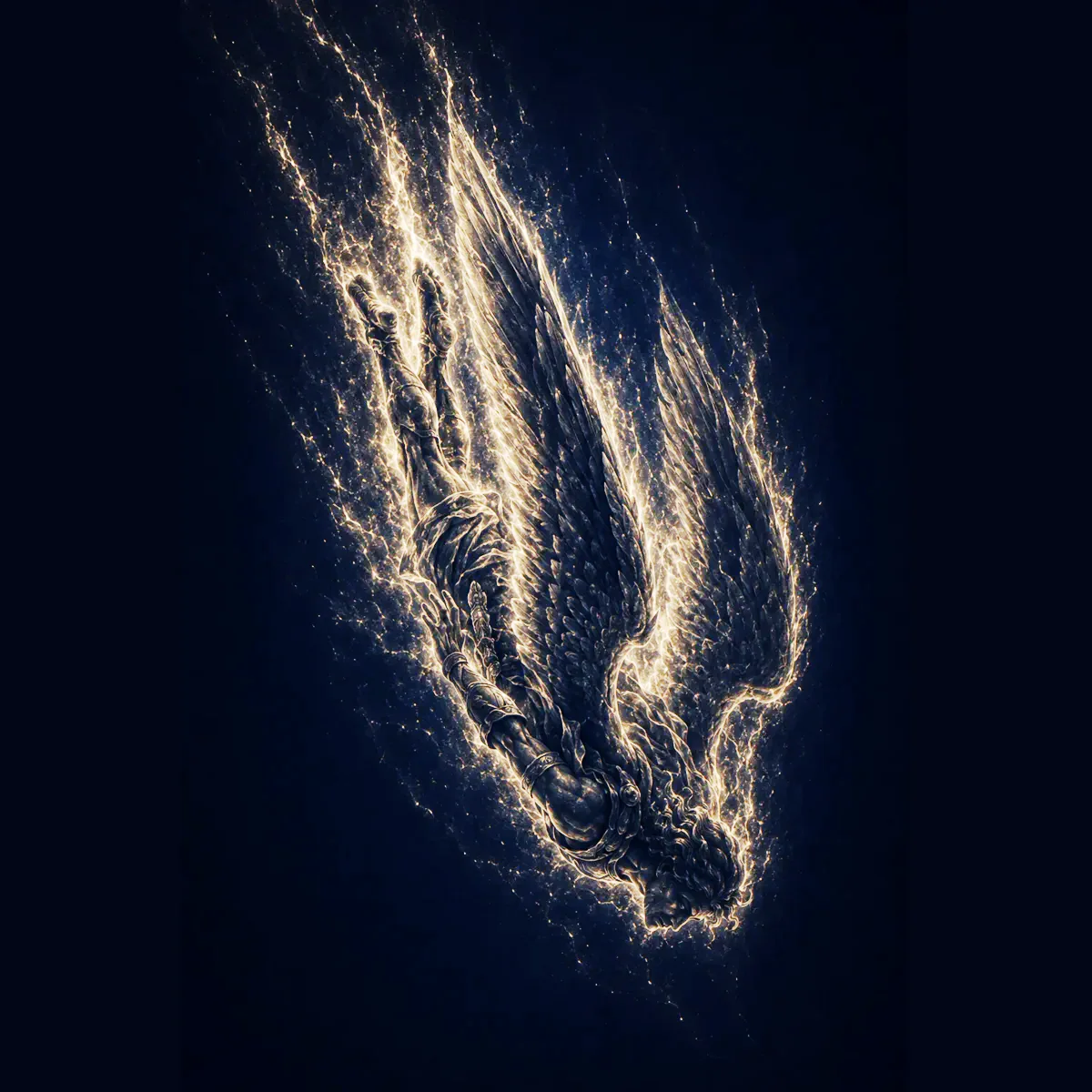

The Kneeler is an image of the Messiah, who through suffering strikes the ancient Serpent and gains victory. The ancient Greeks did not yet call this figure Hercules: Eudoxus and Aratus knew it as the mysterious Man kneeling, with His foot on the head of the Dragon. Beside Him shines the Northern Crown — the Crown, which wonderfully combines in one heavenly picture the most ancient prophecy of Gen. 3:15, the sufferings of the Messiah, and the subsequent victory: the Serpent strikes His heel, but the Seed of the woman crushes the Serpent's head, and after suffering comes the crown of life.
Full interpretation
Verifiable historical, etymological and topographical statements are accompanied by sources. The theological conclusions are the project’s interpretation according to its published methodology.
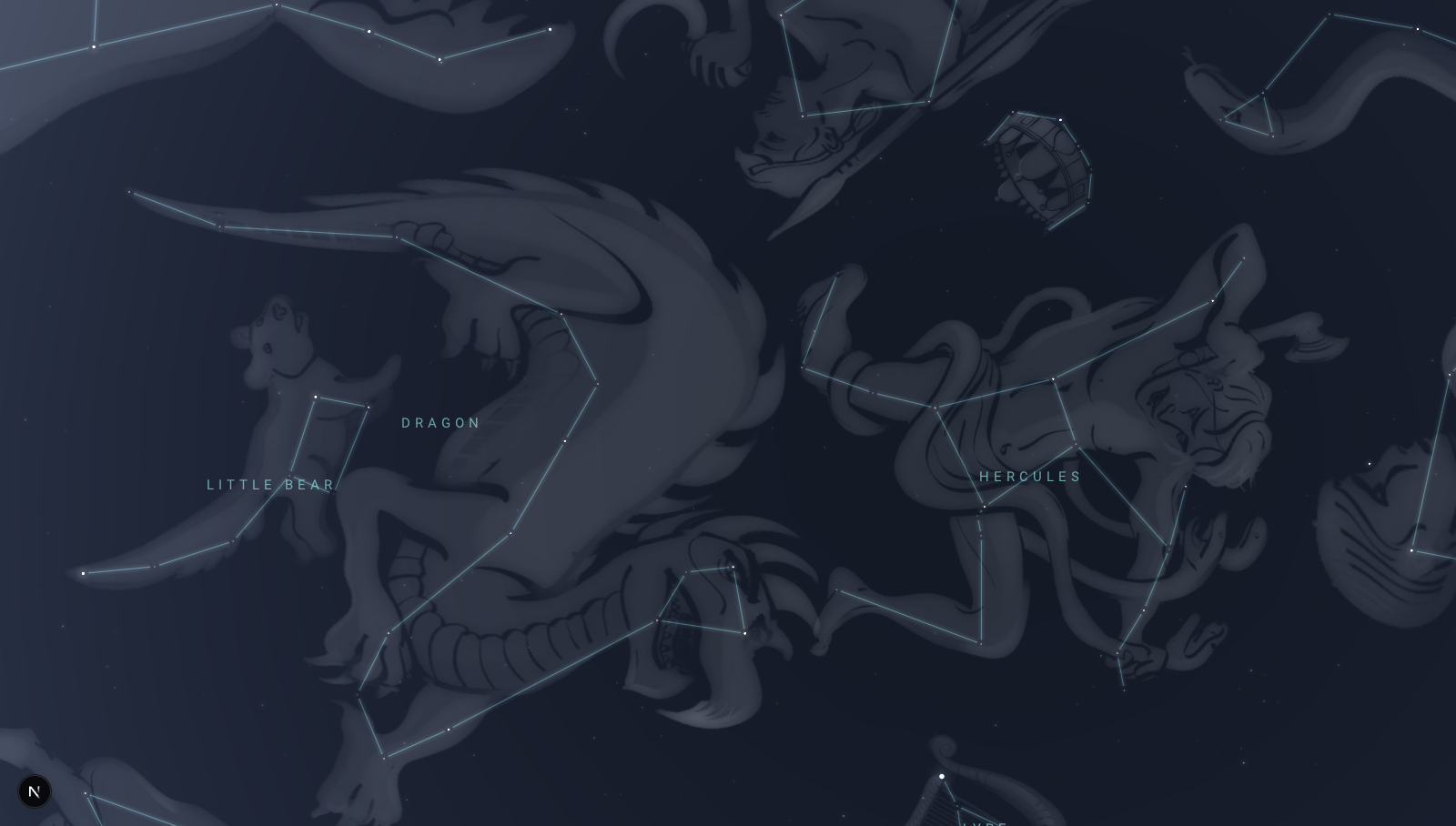
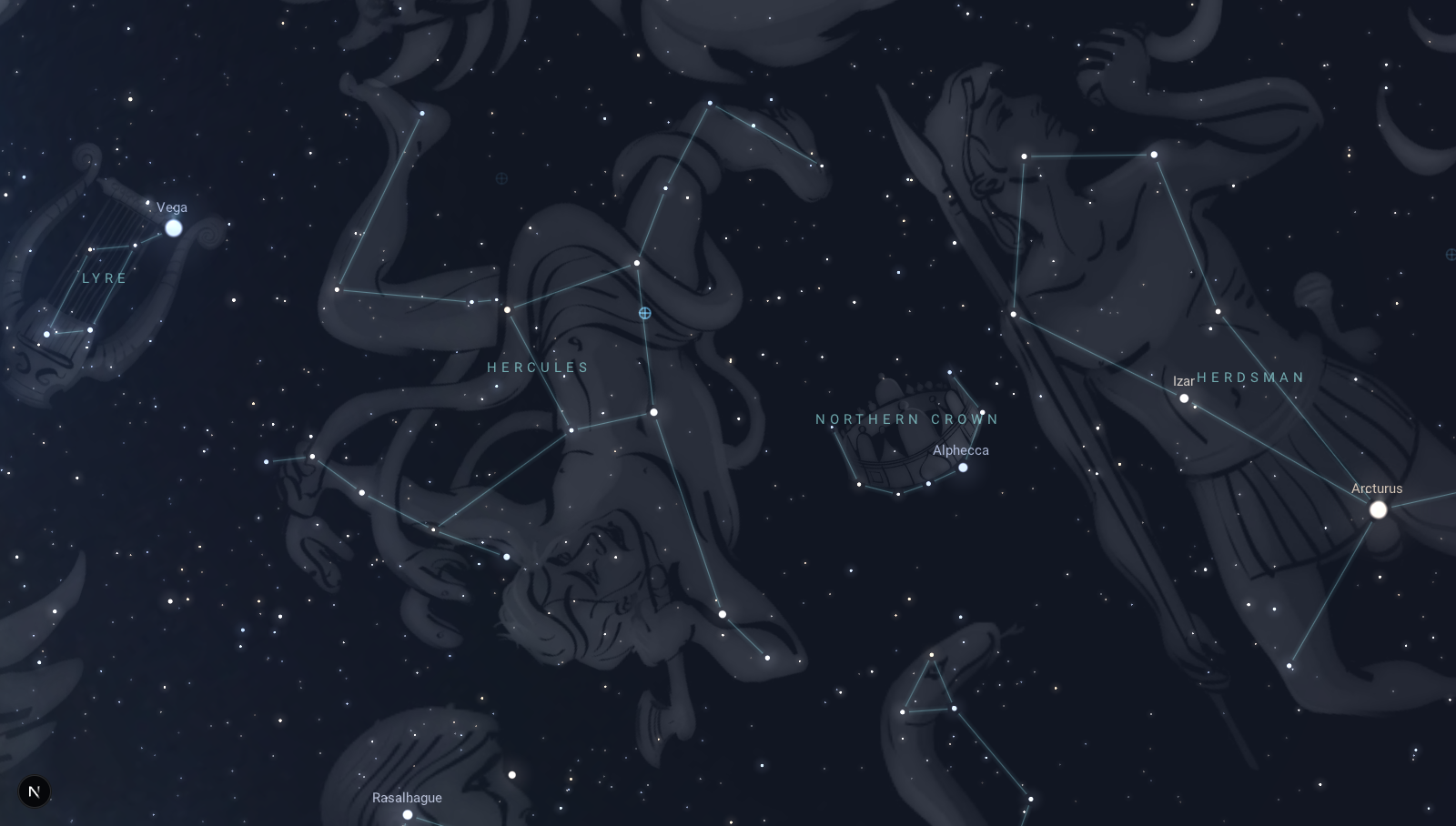
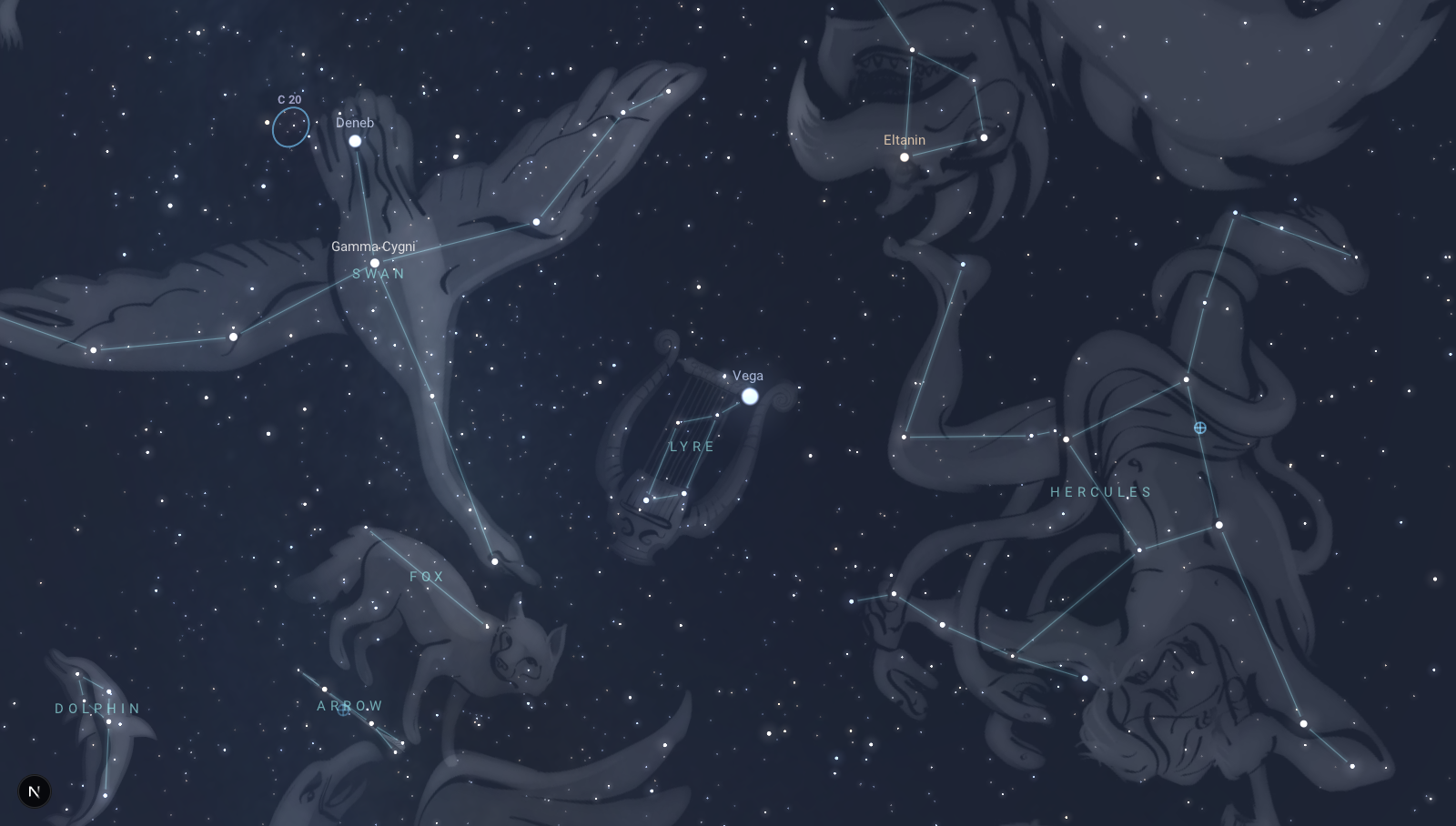
Today this constellation is called Hercules, but the original image was much more mysterious. In Eudoxus and Aratus it is known as Ἐγγόνασιν — 'the Kneeler', 'the one on his knees'. Aratus does not name the hero: before him is simply the mysterious image of a Man, the reason for whose posture was already unclear to the ancients. The later identification with Heracles arose only as an explanation of an originally unnamed figure. Even the earliest description preserves an extremely important detail: the foot of the Kneeler is on the head of the Dragon.[Арат · Явления][Rogers · Origins][Kunitzsch & Smart][IAU · имена звёзд]
This ancient figure is still preserved in the name of one of the main stars of the constellation — Rasalgethi. Its Arabic name ra's al-jāthī literally means 'head of the Kneeler'. Thus, even after the late name 'Hercules' appeared, the star name preserved the memory of the more ancient image — the Man who kneeled.[Kunitzsch & Smart][IAU · имена звёзд]
In the biblical picture, this image remarkably corresponds to the first prophecy about the Messiah. Immediately after the Fall, God promises that one day the Seed of the woman will appear, who will enter into battle with the serpent: the serpent will strike His heel, but He will strike the serpent's head. On the starry sky, the Kneeler is directly above the Dragon, and His foot is on the Dragon's head. This detail is already present in Aratus centuries before the birth of Christ.[Kunitzsch & Smart][IAU · имена звёзд]
Aratus in the 'Phaenomena' (this is the 3rd century BC) does not give the name of the constellation, citing ignorance, and writes Ὀκλάζων ('one who has knelt') and Ἔιδωλον ('image of a man'): Near them is the image of a man, worn out by grievous suffering. The name is unknown to us, nor the cause of his sorrowful suffering. Behold, having risen on his right knee, with a suppliant gesture He has lifted his hands on high, stretching his palms to the gods. With his left foot he tramples the head of the terrible Serpent. The body of the weary man rises steeply.[Арат · Явления][Rogers · Origins][Kunitzsch & Smart][IAU · имена звёзд]
But the Victor is depicted not merely as standing over the enemy. He has knelt. This is the Victor through suffering. This is exactly how Isaiah saw the Messiah: not as an outwardly majestic earthly king, but as a 'Man of sorrows', who takes upon Himself human sin, suffers for the iniquities of others, and through His own wounds brings healing to them. Therefore the posture of the Kneeler wonderfully combines two sides of the messianic prophecy: He is struck — and He also conquers.[Kunitzsch & Smart][IAU · имена звёзд]
Next to the Kneeler lies another very ancient constellation — the Northern Crown, Corona Borealis. Already in Aratus, the Kneeler and the Crown follow each other in the description of the northern sky; the Crown itself belongs to the ancient layer of known constellations. A complete heavenly picture emerges: the suffering Man — the overthrown Dragon — the Crown.[Kunitzsch & Smart][IAU · имена звёзд]
Such is the path of Christ in Scripture. He humbled Himself, accepted suffering and death, but through this He destroyed the power of the enemy and was exalted. And He shares the victory He obtained with those who follow Him: 'Be faithful unto death, and I will give you the crown of life.' Therefore the adjacent Crown becomes an image not only of His triumph, but also of the crown of life promised by Christ to His people.[Kunitzsch & Smart][IAU · имена звёзд]
The Kneeler reveals the most ancient promise of God after the Fall: God's Seed will come into the world, will be struck in suffering, will crush the head of the ancient Serpent, and will open to man the way to eternal life. Suffering will end in victory, and the struggle — in the Crown.[Kunitzsch & Smart][IAU · имена звёзд]