
UMa · Great Bear

Great Bear

Great Flock — the Church

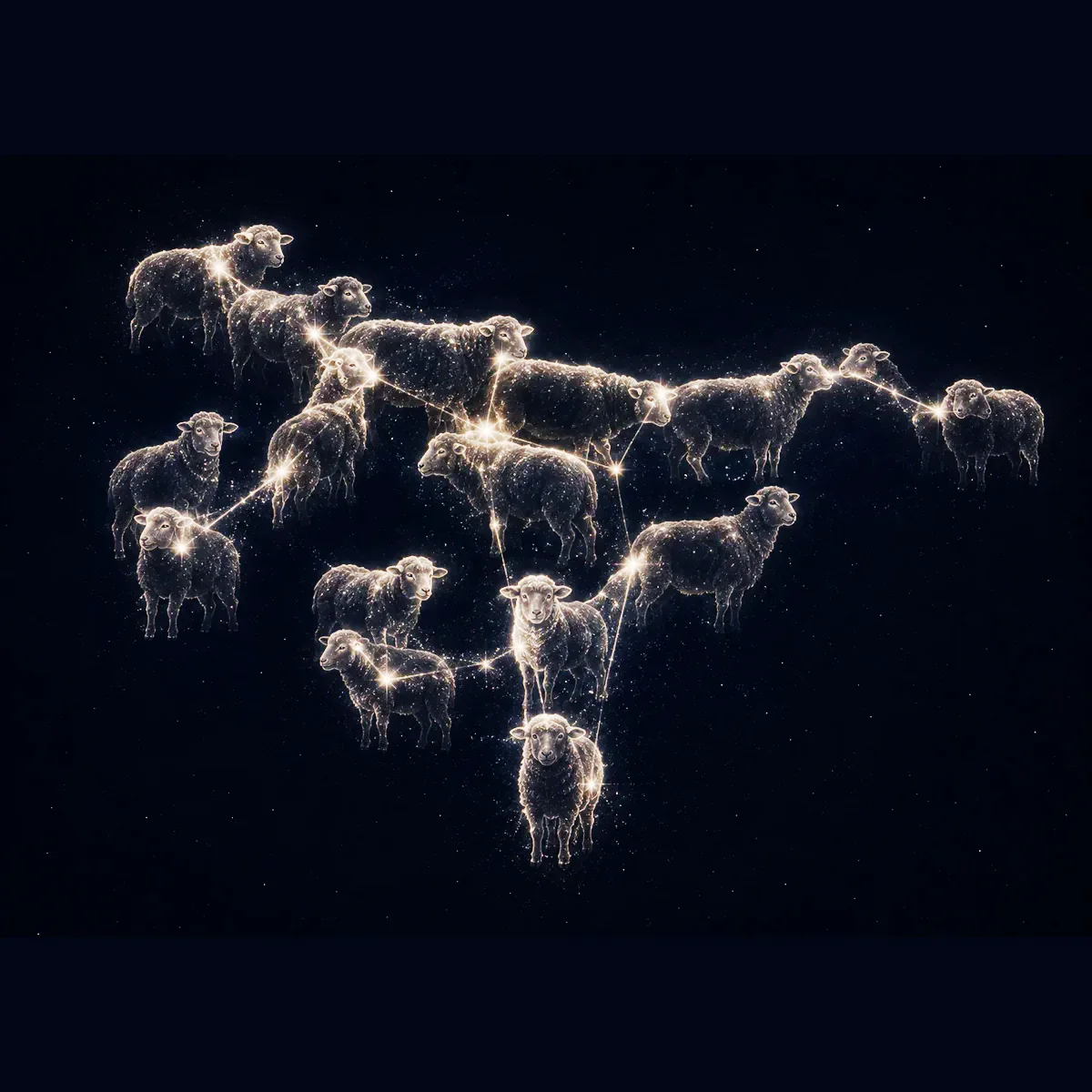
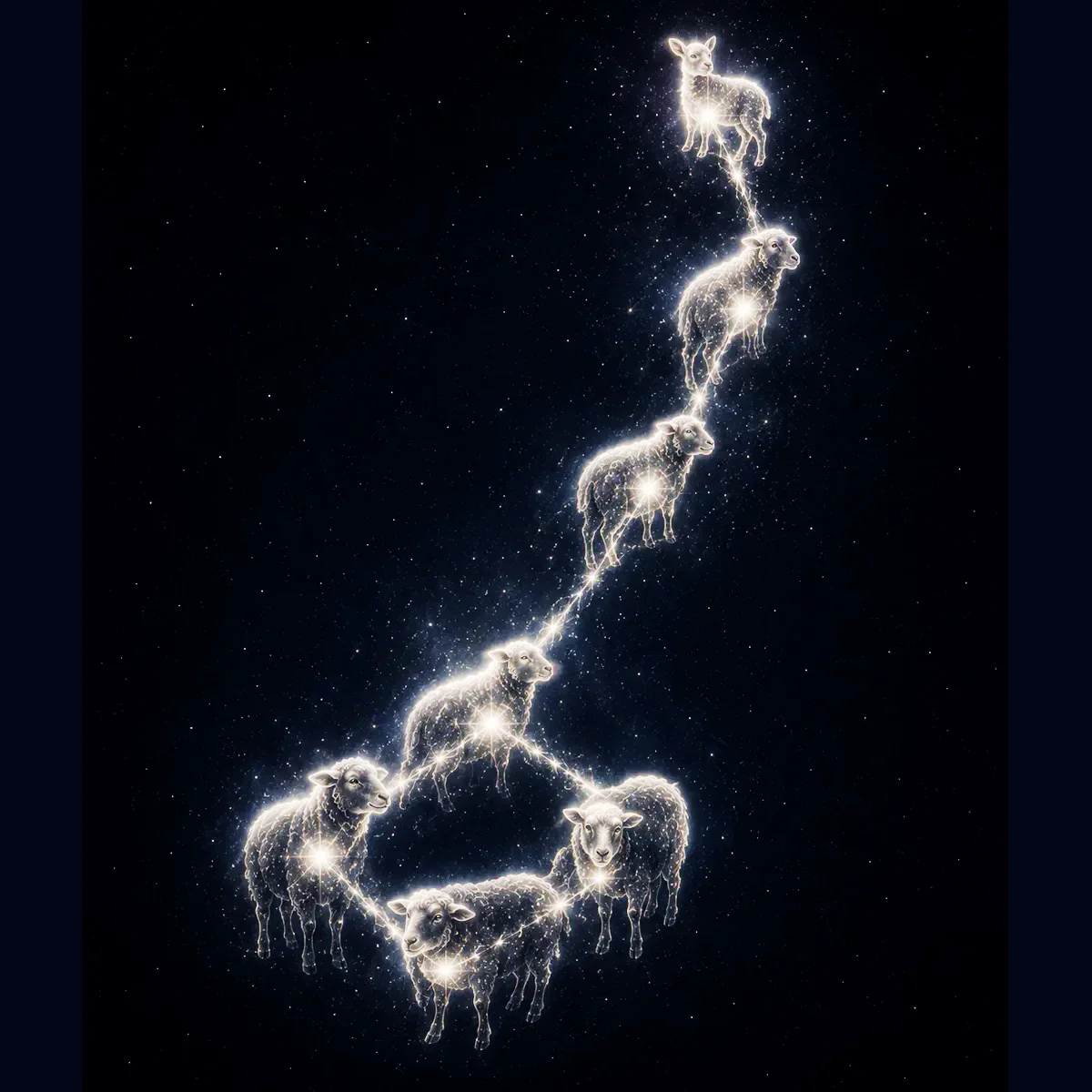
The Great Bear symbolizes God's Church — the great flock gathered by God and led by one Shepherd. The seven main stars of the Dipper remind us of the seven churches of Revelation, constituting one Church.

[Kunitzsch & Smart][IAU · имена звёзд]
Author and editor: Heavens Remember Editorial BoardPublished Updated
Astronomical constellation Great Bear
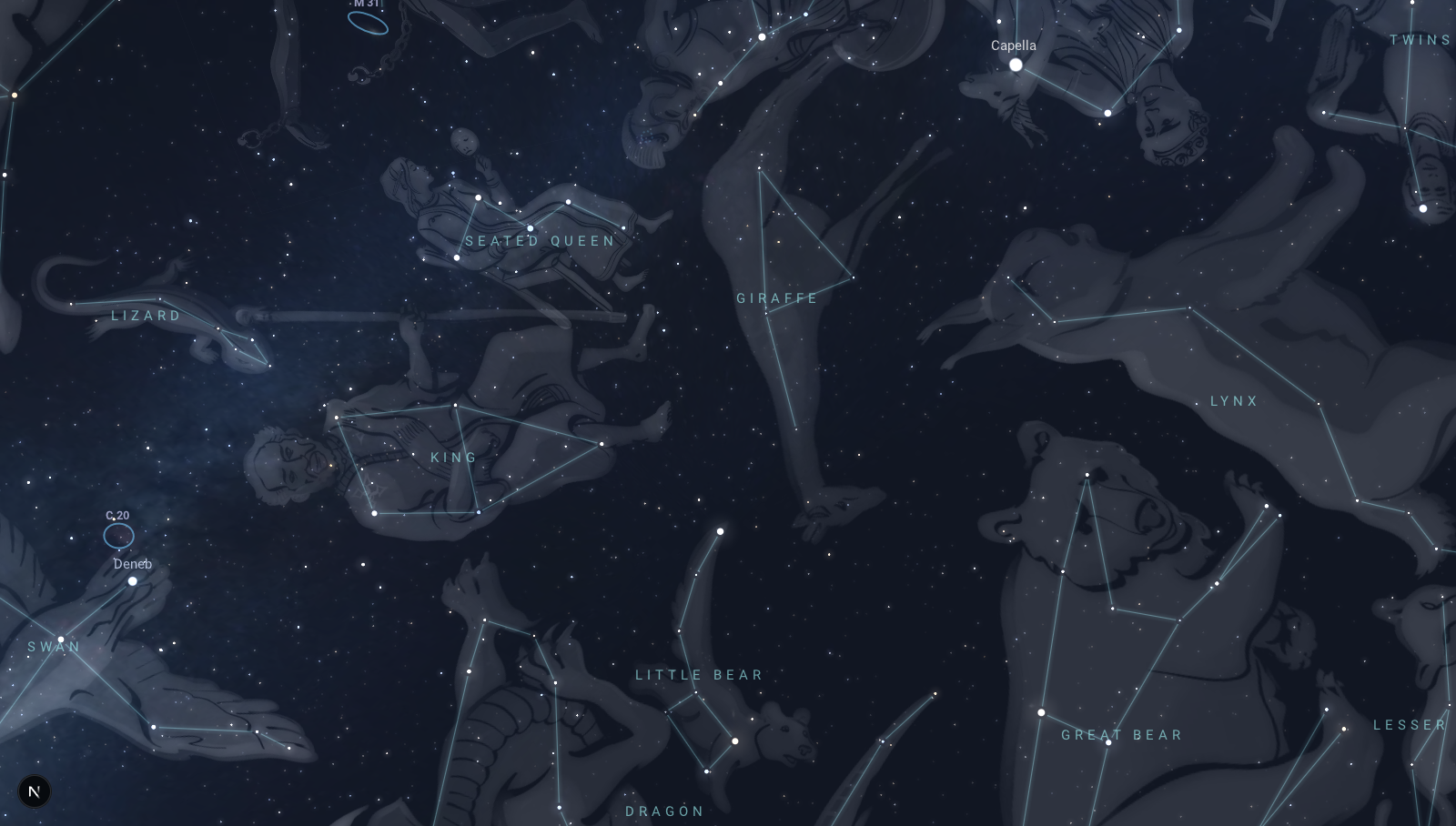
Great Bear · constellation figure diagram
HemisphereNorthern
IAUUMa
J2000 positionα 10.83h · δ +52.8°
Stars in the atlas211

Astronomical data: IAU, HYG 4.1 and Stellarium 26.1.

Constellation line framework

Line figure sources and licenses: Marc van der Sluys · CC BY-SA 4.0 · Stellarium Modern 26.1

Great Bear constellation line geometry
Gold shows the Marc van der Sluys reference figure; the muted extension follows Stellarium Modern. These are conventional asterisms, not official IAU boundaries.

Follow this image through the sky

Move step by step or start automatic playback. The tour shows how this constellation is connected with the other figures in the same narrative.

Loading sky engine…
Summary

The Great Bear symbolizes God's Church — the great flock gathered by God and led by one Shepherd. The seven main stars of the Dipper remind us of the seven churches of Revelation, constituting one Church. In the overall heavenly picture, the Great Bear is connected with the Little Bear as two flocks of God's people — the Church and Israel, and the path to the Great Lion through the Little Lion reflects the biblical principle: one can come to the Father only through the Son.

Full interpretation

Verifiable historical, etymological and topographical statements are accompanied by sources. The theological conclusions are the project’s interpretation according to its published methodology.

In the book of Job, this constellation is called Ash, or Aish, and God speaks of it as a group that He Himself leads: 'to lead Ash with its children'. This image already fits well with God's people — a multitude that does not exist on its own but has One who leads it.[Kunitzsch & Smart][IAU · имена звёзд]

The seven most prominent stars of the Great Dipper form a single whole. This agrees well with the image of the seven churches in the book of Revelation. There are seven churches, but Christ addresses them as one people of God. Therefore the seven stars of the Great Bear can convey the image of many local churches constituting the one Church of Christ.

The ancient astronomical tradition also preserved around this constellation an explicit pastoral symbolism. Especially interesting is the name of the star Alioth, associated with the Arabic designation for the fat tail of a sheep. Around the Great Bear were stars that ancient Arabs associated with gazelles and herd animals. This makes the image of the heavenly flock even more natural.[Kunitzsch & Smart][IAU · имена звёзд]

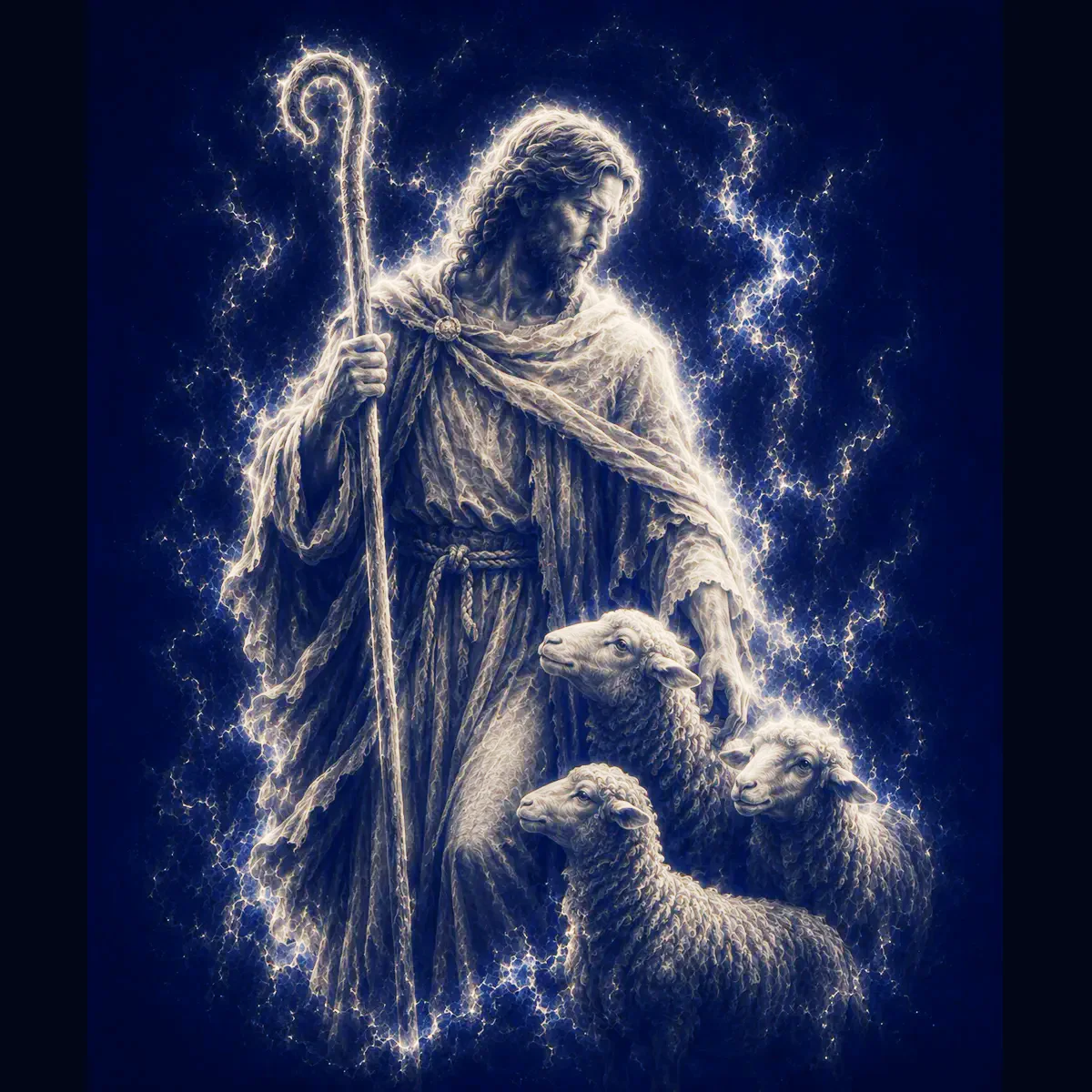
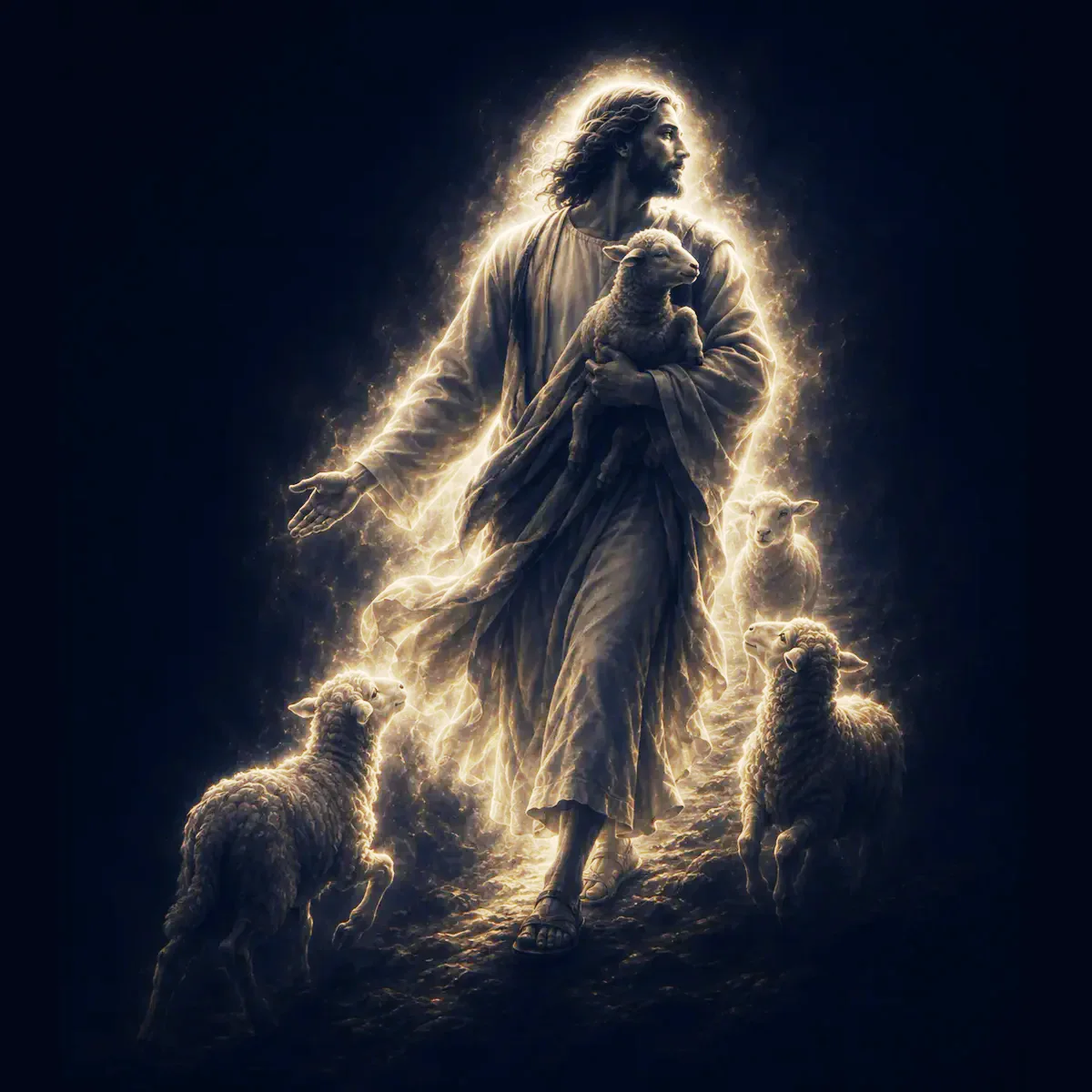
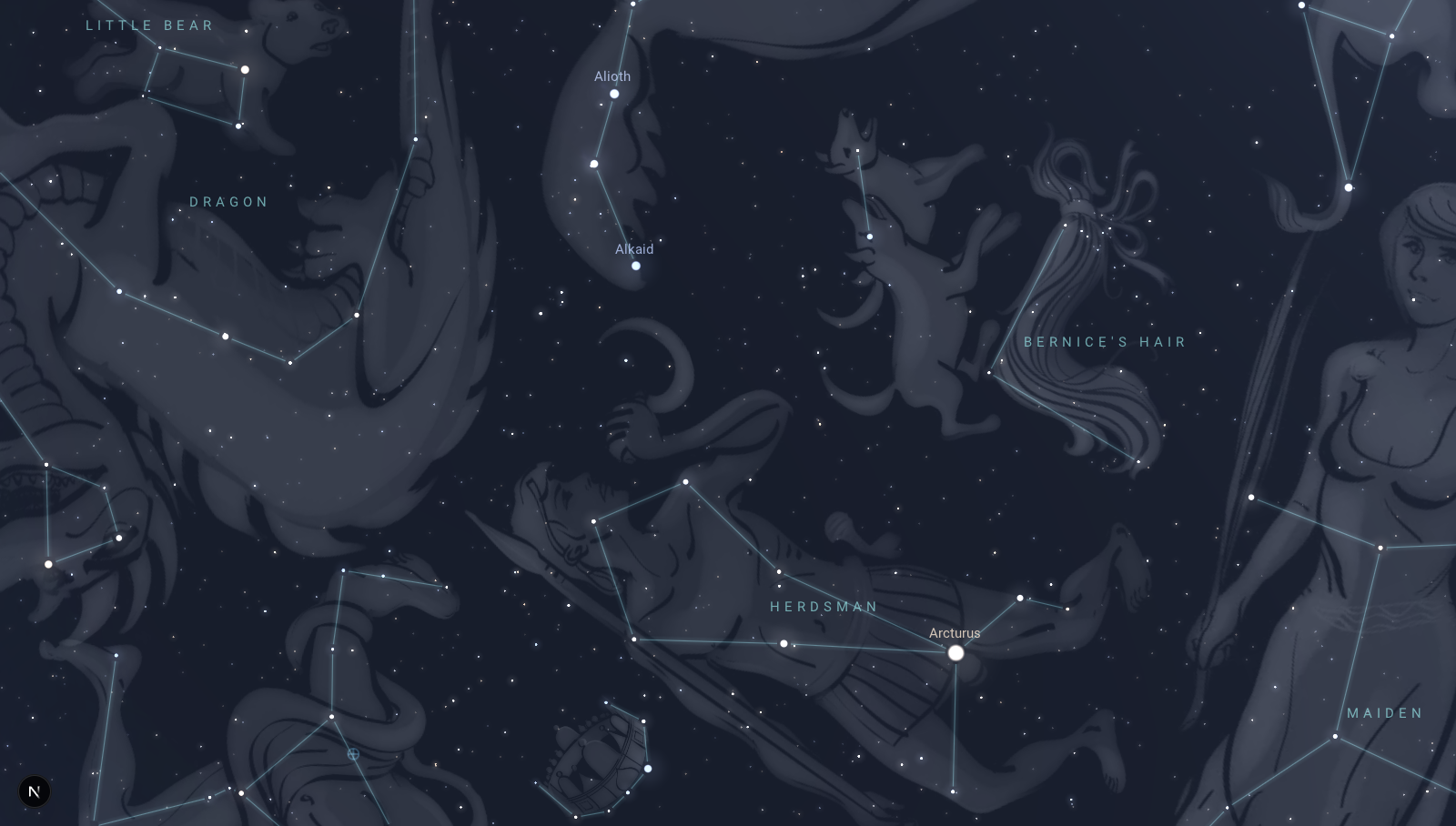
Next to the Great Bear is Boötes — the Shepherd and Guardian. His connection with the Bear reinforces the overall meaning: beside the flock stands the One who leads, guards, and shepherds it. In biblical fulfillment, such a Shepherd is Jesus Christ, who speaks of His sheep and promises that there will be one flock and one Shepherd.[Kunitzsch & Smart][IAU · имена звёзд]

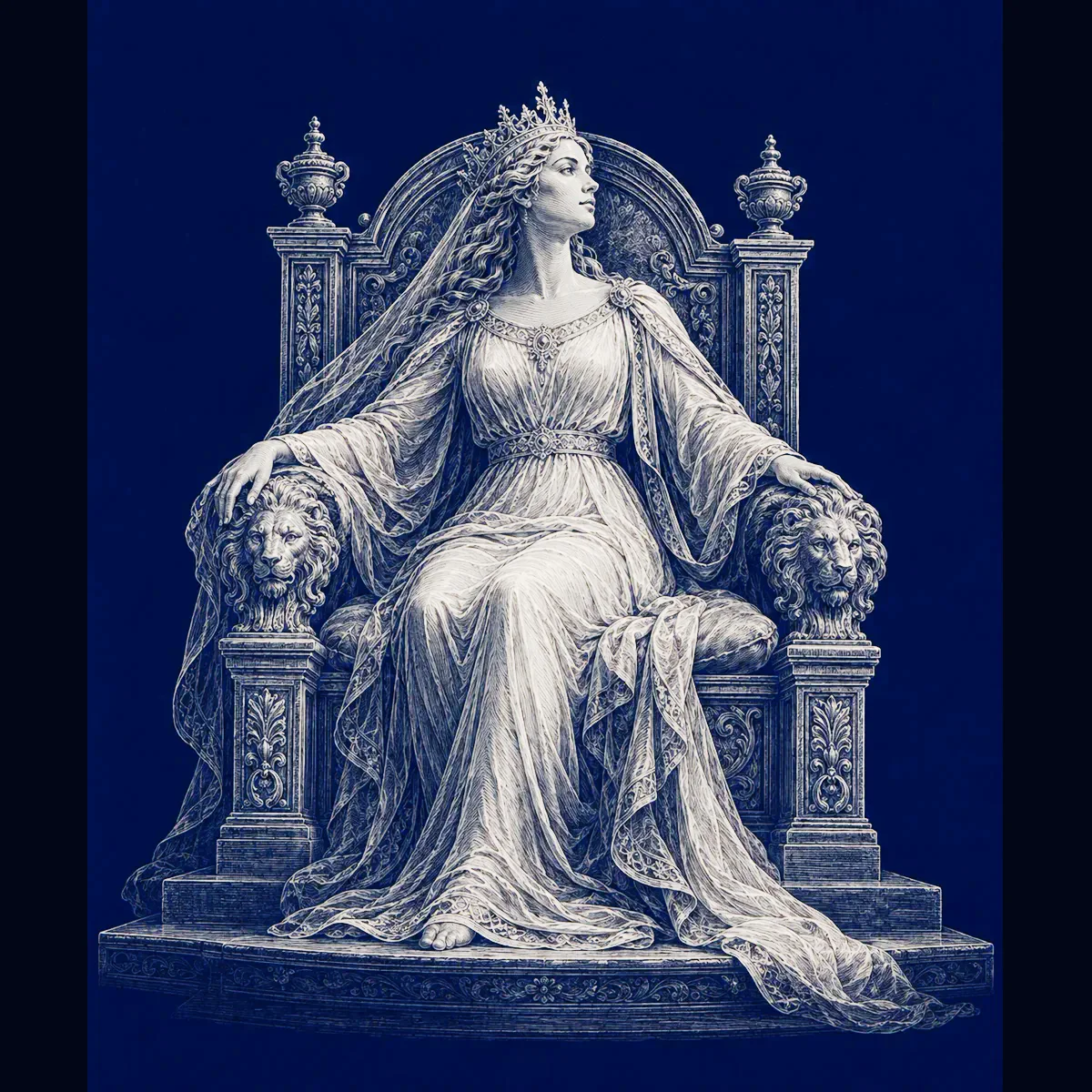
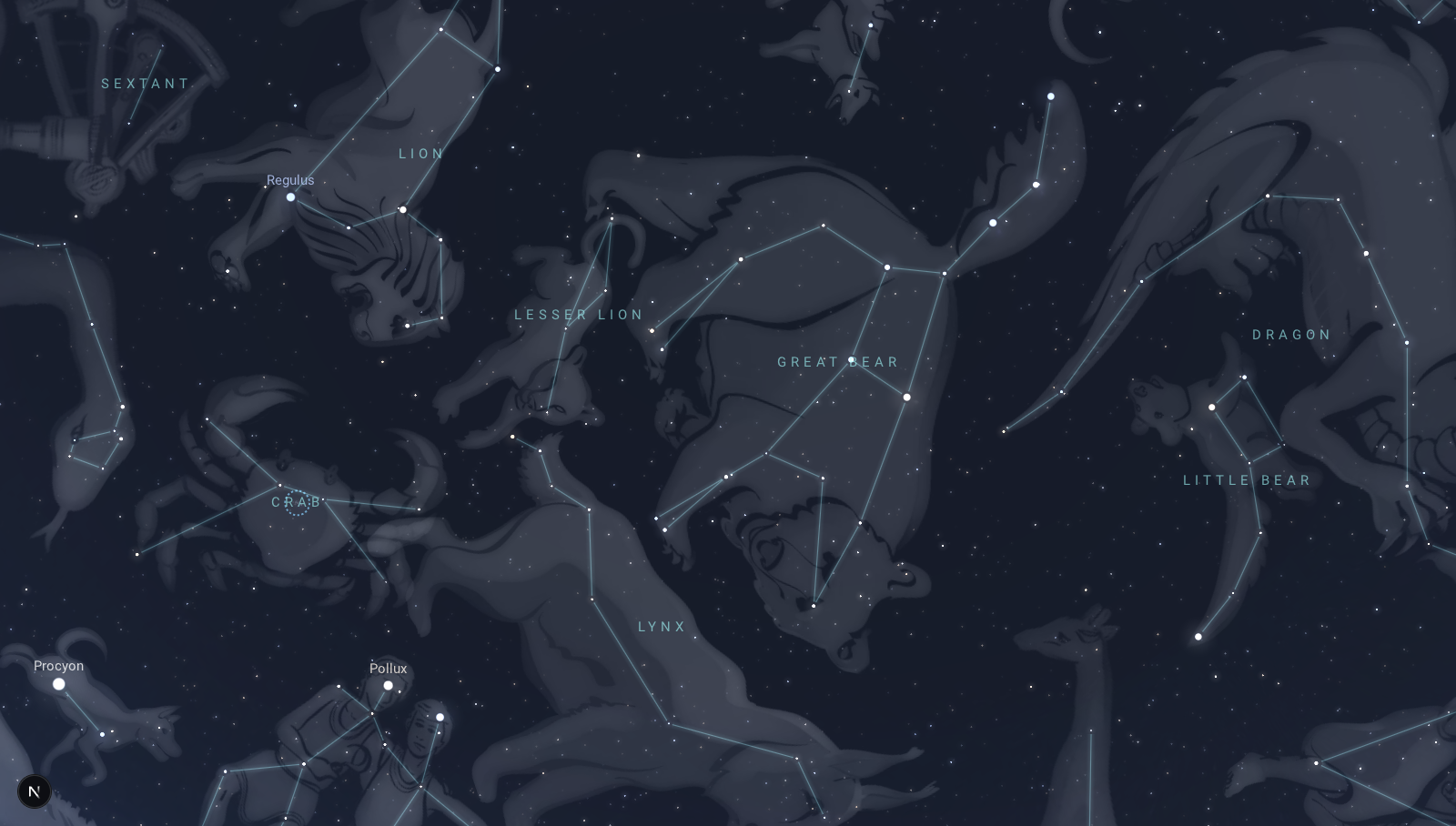
Another important part of the celestial composition is the connection between the Great and Little Bears. In the symbolic system, they represent two flocks of God's people — the Church and Israel. In the region of Cancer, they come together into a single picture of gathering God's people. This corresponds to the numerous biblical prophecies that God gathers the scattered and brings them under the authority of one Shepherd.

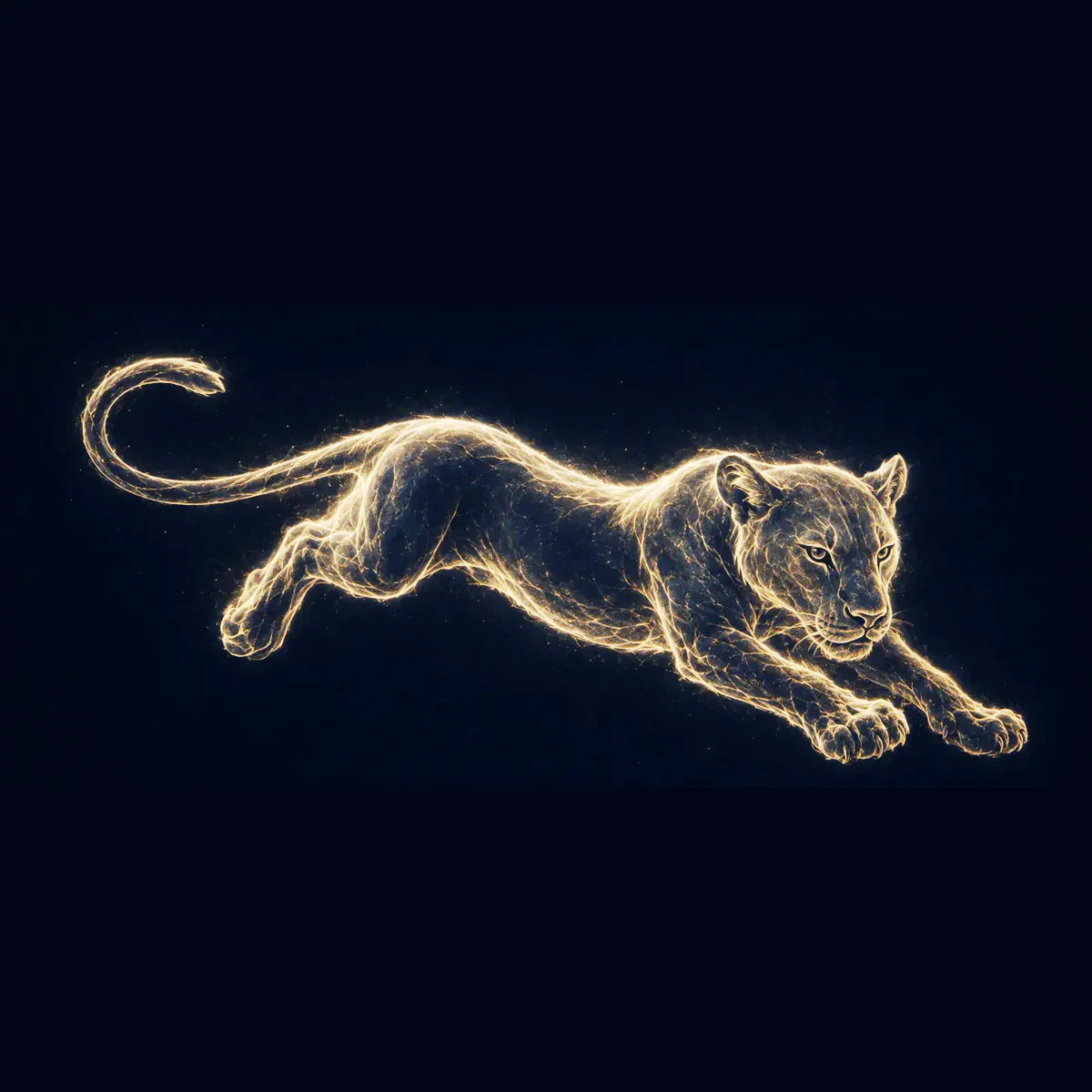
Especially expressive is the direction toward the constellation of the Lion. The Great Bear comes to the Great Lion through the region of the Little Lion. In biblical imagery, this reflects the Church's path to the Father through the Son: 'No one comes to the Father except through Me.' Therefore the heavenly picture of the flock ends not with the flock itself, but with its movement toward the King.[Kunitzsch & Smart][IAU · имена звёзд]

Thus the Great Bear represents not just a multitude of believers, but the gathered flock of God, led by the Shepherd, united with God's people of Israel, and directed through the Son to the Father and King.
Stories of the sky

Scenes formed by neighbouring constellations — read together, not as isolated symbols.

Salvation only through Christ

Cancer is read as the safe passage of the flocks. Beside it stand the two flocks: Ursa Major and Ursa Minor.

Ursa Major reaches Leo through the region of Leo Minor. In the atlas narrative the Church comes to the Father through the Son.

Lynx and the “thorn” remain nearby: the way is opened through Christ’s suffering. The scene leaves no other path to God.

Иоанна 14:6

Cancer leading Ursa Major through the region of Leo Minor
Cancer and the two flocks: the Church led through Leo Minor

Boötes — shepherd of God’s flock

Beside Ursa Major stands Boötes. Arcturus is “the guardian of the Bear” and “the guardian of the heavens”.

The star names of Boötes gather into a shepherd image: the staff (Alkalurops), the girdle (Izar), and labour in the vineyard (Nekkar). Scripture calls the Church God’s vineyard.

The atlas reads the figure as the Holy Spirit who shepherds and guards the Church on earth and keeps Christ before her.

Иоанна 14:26

Boötes beside Ursa Major and Corona Borealis
Boötes beside the great flock — guardian and shepherd

From the flock’s girdle to the bride’s throne

A straight line through Zeta Ursae Majoris (Mizar) and Polaris points to Cassiopeia.

The Church on earth (the great flock) looks to Christ (Polaris) and is drawn toward the marriage throne (Cassiopeia).

Schedar and Caph in Arabic tradition are linked with the “breast/hand of the Pleiades”: the Pleiades are the Bride on earth; Cassiopeia is her future as the Lamb’s wife.

Откровение 19:7

Line from Mizar through Polaris toward Cassiopeia
Mizar → Polaris → Cassiopeia

The camel that brings the bride

Between Ursa Major and Cassiopeia lies Camelopardalis; the older name of the region is the camel.

Plancius linked the figure with the camel that brought Rebekah to Isaac — a type of the Spirit bringing the Bride-Church to Christ.

Cassiopeia even has a star called “the camel’s hump”. The path from the earthly flock to the Wife’s throne passes through this mediator.

Бытие 24:61-67

Camelopardalis the camel between Ursa Major and Cassiopeia
The camel between the flock and the enthroned Bride

Звёзды созвездия и древние значения

Историческое значение имени отделено от богословского комментария атласа. Спорные, поздние и пока не обеспеченные библиографическим источником формы отмечены явно.

1
ε · UMa

Alioth

Справочная этимология

Историческая формаAlioth (Arabic)

Передаваемое значение

Fat tail of a sheep

Редакционная помета

Part of the image of the flock.

Two dippers. One people of God.

The same vessel-like form appears twice in the northern sky. In the reading of this atlas, the Little Bear is Israel — the Little Flock; the Great Bear is the Church — the Great Flock gathered from Israel and the nations.

01 · The root

Little Bear

Israel · the Little Flock
Little Bear — Israel · the Little Flock

The covenant people from whom the Messiah came.

grafted into the root
02 · The fullness

Great Bear

The Church · the Great Flock
Great Bear — The Church · the Great Flock
The root remainsIsrael within the story of the Church

The people of God enlarged as the nations are brought near through Christ.

The form reveals the relationship

The Great Flock grows from the Little Flock.

The Church does not stand apart from Israel’s story. Gentile believers are grafted into its root and become fellow citizens in the household of God. The smaller dipper remains visible within the meaning of the greater: one root, one covenant story, one people gathered by God.

“You, a wild olive shoot, were grafted in among them and now share in the nourishing root of the olive tree… Remember: it is not you who support the root, but the root that supports you.”

Romans 11:17–18

“So then you are no longer strangers and aliens, but fellow citizens with the saints and members of the household of God.”

Ephesians 2:19
The stars continue the story

From the Little Kid to the Leader

The correspondence does not end with the outline of the two dippers. Their terminal stars and their relation to the celestial pole create a second, more precise layer of the image.

α UMi

Polaris

al-Judayy · “the little kid”
Astronomical and linguistic evidence
Alpha Ursae Minoris lies at the end of the Little Dipper’s handle and appears nearly fixed because it is close to the north celestial pole.
Reading of the atlas
The Messiah in humility: the sacrificial Lamb, the fixed covenantal centre from whom the story begins.
✦sacrifice → headship→
η UMa

Alkaid · Benetnasch

al-Qāʾid Banāt Naʿsh · “leader of the daughters of the bier”
Astronomical and linguistic evidence
Eta Ursae Majoris occupies the corresponding end of the Great Dipper’s handle. Unlike five central Dipper stars, it is not a member of the Ursa Major moving group and follows a different motion.
Reading of the atlas
The same Christ revealed as the risen Head: the Leader who gathers and leads the Great Flock.
β + γ UMi

Kochab + Pherkad

The Guardians of the Pole

The Arabic name al-Farqadān means “the two calves”. Around 1100 BC Kochab came within about 7° of the north celestial pole; with Pherkad it served as a conspicuous northern guide, although neither star marked the pole as closely as Polaris does today.

Reading of the atlasThe Little Flock guards the received direction: Torah, covenant and sacrificial worship keep Israel oriented toward God’s promise.
β + α UMa

Merak + Dubhe

The Pointers to Polaris

A line from Merak through Dubhe leads the observer to Polaris. Merak derives from Arabic for the loins or flank; Dubhe from the Arabic word for bear.

Reading of the atlasThe Great Flock turns guardianship into witness: the Church does not become the centre, but points beyond itself to Christ.
Astronomical and linguistic evidence

The root holds the axis. The body goes out.

Polaris only appears motionless; every star has real motion. Alkaid is significant here not because it is “one of the fastest stars”, but because its motion differs from the five-star core of the Great Dipper.

In the image of the atlas, the covenantal centre remains firm while the Church moves through the world, gathering the nations and directing them to the same Messiah.

“You will be my witnesses… to the ends of the earth.”

Acts 1:8

Can you guide ʿAyish with her children?

In Job 38:32 God asks whether a human being can guide ʿAyish with her children — traditionally connected with the Bear. In the reading of the atlas, this is the Great Flock: the Church with her children, brought forth and led by God Himself.

“Can you bind the chains of Kimah, or loose the cords of Kesil?”

Job 38:31

“Can you bring forth Mazzaroth in its season, or guide ʿAyish with her children?”

Job 38:32
Seven churches · one Lord

Seven lights. One divine presence.

The Pleiades are traditionally counted as seven; the Great Dipper is formed by seven bright stars; Revelation names seven churches, seven lampstands and seven stars held in Christ’s hand. The repeated number becomes a visual theology of plurality made one by God.

One light · seven witnesses
CHRISTREV · 1:12–20
  1. 1Ephesus
  2. 2Smyrna
  3. 3Pergamum
  4. 4Thyatira
  5. 5Sardis
  6. 6Philadelphia
  7. 7Laodicea

The seven lampstands remain distinct. Their unity is Christ walking among them, holding their stars in His hand.

What man cannot bind

God makes one people from what no human power can unite.

Institutions may bring people into the same room, but only Christ can break the dividing wall, reconcile enemies in one body and give many members one Spirit. The unity of the Church is not uniformity and not human control. It is the work of the One who binds Kimah and guides ʿAyish with her children.

“The seven lampstands are the seven churches.”

Revelation 1:20

“He has made both one… that He might reconcile both to God in one body through the cross.”

Ephesians 2:14–16

“In one Spirit we were all baptized into one body — Jews or Greeks.”

1 Corinthians 12:13

“That they may all be one… so that the world may believe.”

John 17:21

The Great Arc of Salvation

The three stars of the Big Dipper’s handle form a curve that leads the observer first to Arcturus in Boötes and then onward to Spica in Virgo. The atlas reads the same line in the opposite, redemptive direction: from the ear of grain in the Virgin’s hand, through the Shepherd, to the Great Flock — the many-fold fruit of one Seed.

The observer’s routeDipper → Arcturus → Spica
The Gospel routeSpica → Shepherd → Great Flock
AliothMizarAlkaidARCTURUSguardian of the BearSPICAthe ear of grainBIG DIPPER HANDLEAlioth · Mizar · AlkaidBOÖTES · THE SHEPHERDVIRGO · THE VIRGINThe observer’s route →← The Gospel route
01 · THE SEEDSpica in Virgo

The promised Seed becomes an ear of grain.

Spica means the Virgin’s ‘ear of grain’ in Latin tradition. In the atlas, the grain held by Virgo becomes the visible sign of the promised Seed. The biblical title Branch — צֶמַח, Tsemach — belongs to the same field of promised life and growth.

“Behold, the Man whose name is the Branch.”

Zechariah 6:12
Open this figure →
02 · THE SHEPHERDArcturus in Boötes

The Shepherd raises and guards the fruit.

The arc reaches Arcturus, traditionally understood as the ‘guardian of the Bear’. Boötes stands as the Herdsman: the grain does not remain abandoned in the earth. The Good Shepherd gives His life, rises, gathers and guards His flock.

“I am the good shepherd. The good shepherd gives His life for the sheep.”

John 10:11
Open this figure →
03 · THE MANY FRUITThe Great Dipper

One Seed becomes the Great Flock.

At the other end of the theological reading stands the Great Bear — the Great Flock, the Church gathered from Israel and the nations. What entered the earth as one grain returns as a multitude. The Dipper itself becomes an image of a vessel filled with the harvest.

“If it dies, it produces much grain.”

John 12:24
Open this figure →

“Unless a grain of wheat falls into the ground and dies, it remains alone; but if it dies, it produces much grain.”

John 12:24

The Seed of the Virgin → the Shepherd’s death and life → the many fruit of the Church

The arc to Arcturus is a standard observational guide; continuing the curve reaches Spica. The redemptive direction and its theological meaning are the atlas’s synthesis. ‘Spica’ is the IAU-approved proper name and comes from the Latin image of an ear of grain; Tsemach is used here as a biblical resonance, not asserted as an official ancient Hebrew star name.

Where the line truly arrives

Only alignments that survive a great-circle check against J2000 star positions are shown here. The measurement is astronomical; the redemptive meaning is the interpretive synthesis of this atlas.

01 · Measured near-hit · ≈ 1.5°

The Polar Bridge

Megrez → Polaris → Caph
MEGREZBig DipperPOLARIScelestial axisCAPHCassiopeia
Megrez → Polaris → Caph
Geometry of the sky

The great-circle extension from Megrez through Polaris passes about 1.5° from Caph, the outer star of Cassiopeia’s familiar W. The Megrez–Polaris and Polaris–Caph spans are also nearly mirror lengths.

Reading of the atlas

The Big Dipper is read as the Church on earth, Cassiopeia as the enthroned Bride, and Polaris as Christ joining them. They are not two churches, but one people on either side of the celestial axis: militant and triumphant.

“Even when we were dead in trespasses, [God] made us alive together with Christ… and made us sit together in the heavenly places in Christ Jesus.”

Ephesians 2:5–6

Positions: HYG 4.1 · J2000. Angular deviation is measured from the extended great circle to the named target star.

HYG 4.1 →

Babylonian / MUL.APIN name

Historical names from Mesopotamian star catalogues — fact, not theology. They show how ancient this region of the sky was long before the Greek layer.

MUL.MAR.GÍD.DA
Translation
The Wagon (the Great Dipper)

ContextThe classic Mesopotamian asterism; in the Bible ʿAyish (Job 9:9; 38:32) — the Bear/flock figure.

Stellarium MUL.APIN figure

Figure definitions from Stellarium’s historical Babylonian sky culture (lines, English label, cuneiform, pronunciation).

MAR.GID2.DA (Ereqqu)𒄑𒈥𒁍𒁕
English
Wagon
Pronunciation
MAR.GID2.DA (Ereqqu)

Scripture passages

'And there will be one flock, one Shepherd.'

'Can you... lead Ash with its children?'

'The seven lampstands... are the seven churches.'

'No one comes to the Father except through Me.'

'I will assemble them together like sheep... like a flock.'

Questions about Great Bear

Why is the Great Bear the Church and not just the Dipper?

The Great Bear symbolizes God's Church—the great flock gathered by God and led by one Shepherd. The seven main stars of the Dipper recall the seven churches of Revelation constituting one Church. It is connected with the Little Bear as two flocks of God's people—the Church and Israel.

What does the constellation Great Bear symbolize in this biblical interpretation?

The Great Bear symbolizes God's Church — the great flock gathered by God and led by one Shepherd. The seven main stars of the Dipper remind us of the seven churches of Revelation, constituting one Church.

Which Bible passages are connected with the constellation Great Bear?

This interpretation considers John 10:16, Job 38:32, Rev. 1:20, John 14:6, Micah 2:12. These passages illuminate the theme “Great Flock — the Church”.

18

Proper names from the HYG catalogue. Derivations follow the IAU catalogue's own etymological accounts; where Kunitzsch & Smart also has an entry, the meaning carries a page locator and the form was read off an OCR layer, not checked against print.

Derivation established
17
Dictionary entry
13
Take part in chains
6

Source languages: Arabic 13 · Latin 2 · Chinese 1 · Thai 1