Cet · Whale

Whale

Leviathan

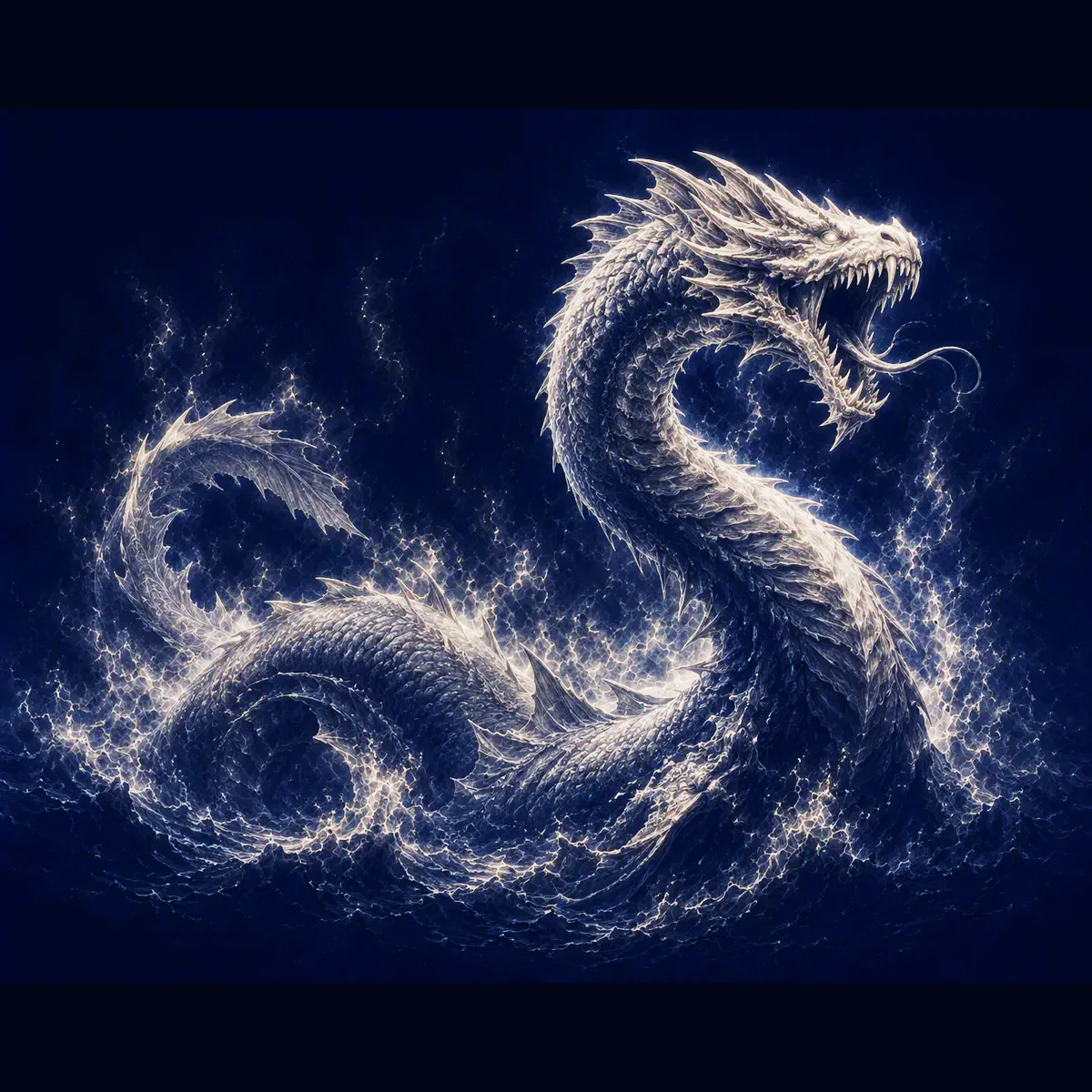
The Whale depicts the ancient sea monster—the image of chaos, death, and forces hostile to God. On the celestial map it seems to hold two Fishes, representing God's people, yet the Lamb stands between them and the monster, liberating those who belong to Him.

[Kunitzsch & Smart][IAU · имена звёзд]
Author and editor: Heavens Remember Editorial BoardPublished Updated
Astronomical constellation Whale
Whale · constellation figure diagram
HemisphereSouthern
IAUCet
J2000 positionα 2.18h · δ -4.1°
Stars in the atlas194

Astronomical data: IAU, HYG 4.1 and Stellarium 26.1.

Constellation line framework

Line figure sources and licenses: Marc van der Sluys · CC BY-SA 4.0 · Stellarium Modern 26.1

Whale constellation line geometry
Gold shows the Marc van der Sluys reference figure; the muted extension follows Stellarium Modern. These are conventional asterisms, not official IAU boundaries.
Summary

The Whale depicts the ancient sea monster—the image of chaos, death, and forces hostile to God. On the celestial map it seems to hold two Fishes, representing God's people, yet the Lamb stands between them and the monster, liberating those who belong to Him.

Full interpretation

Verifiable historical, etymological and topographical statements are accompanied by sources. The theological conclusions are the project’s interpretation according to its published methodology.

The constellation of the Whale — Cetus — is located in the "water" region of the sky next to Pisces, Aquarius, and Eridanus. In ancient traditions, this part of the celestial sphere was associated with the abyss, primordial chaos, and a huge sea monster.[Kunitzsch & Smart][IAU · имена звёзд]

On the celestial map, the Whale seems to hold two Fishes, representing God's people — Israel and the Church. However, between the Whale and the Fishes lies the Lamb, who separates His people from the power of the monster. Thus the image of captivity, death, and liberation takes shape: the enemy strives to hold people, but Christ the Lamb comes to destroy his power.[Kunitzsch & Smart][IAU · имена звёзд]

The names of the stars of the Whale complete this image.[Kunitzsch & Smart][IAU · имена звёзд]

Menkar — Menkar, α Ceti means "nostril" or "nose of the monster." The star is located in the region of its head and emphasizes the image of a huge sea beast.

Kaffaljidhma — Kaffaljidhma, γ Ceti comes from an expression meaning "cut off hand" or "palm." The ancient name preserves the image of a hand stretched out from the abyss, trying to seize and hold.[Kunitzsch & Smart][IAU · имена звёзд]

Baten Kaitos — Baten Kaitos, ζ Ceti means "belly of the Whale." This star lies in the monster's body and strengthens the image of the abyss that seeks to swallow and hold captive. In the book of Job, Leviathan is the creature no human can master; power over him belongs to God alone. So the monster's "belly" is read here as the image of death and captivity from which the Lamb sets His people free.[Kunitzsch & Smart][IAU · имена звёзд]

Deneb Kaitos — Deneb Kaitos, β Ceti means "tail of the Whale" or "tail of the sea monster." Another name for this star is Diphda, "Second Frog."[Kunitzsch & Smart][IAU · имена звёзд]

Diphda al-Aula — Diphda al-Aula, ι Ceti means "First Frog." These names link the region of the Whale with the ancient concept of the watery abyss and its inhabitants.[Kunitzsch & Smart][IAU · имена звёзд]

Mira — Mira, ο Ceti means "Wonderful" or "Amazing." This is a variable star: its brightness changes significantly, so it sometimes becomes noticeable and sometimes almost disappears. In the image of the constellation, it may be perceived as a periodically opening and closing eye of the monster.[Kunitzsch & Smart][IAU · имена звёзд]

In ancient Mesopotamia, this region of the sky was associated with images of a giant water serpent and a monster of chaos. In biblical language, a similar image is unfolded through Leviathan—a mighty sea serpent hostile to God's order. The Whale, Hydra, Dragon, and Scorpius represent different images of one power opposing God.[Hunger & Pingree · MUL.APIN][Rogers · Origins][Вавилонские звёздные каталоги][Stellarium · MUL.APIN][Kunitzsch & Smart][IAU · имена звёзд]

But the power of the monster is not final. The Lord strikes Leviathan, liberates the captives, and destroys the dominion of death. The book of Job shows that no human can master this creature, and Isaiah proclaims the day when the Lord will slay the sea monster with His sword. Through the death and resurrection of Christ—the Lamb who stands between the Whale and the Fishes—liberation is opened for all God's people.[Kunitzsch & Smart][IAU · имена звёзд]

Звёзды созвездия и древние значения

Историческое значение имени отделено от богословского комментария атласа. Спорные, поздние и пока не обеспеченные библиографическим источником формы отмечены явно.

6
α · Cet

Menkar

Справочная этимология

Историческая формаMenkar (Arabic al-manḫar)

Передаваемое значение

Nostril / nose of the monster

γ · Cet

Kaffaljidhma

Справочная этимология

Историческая формаKaffaljidhma (Arabic)

Передаваемое значение

Cut off hand / palm

Редакционная помета

Image of a hand stretched out from the abyss.

ζ · Cet

Baten Kaitos

Справочная этимология

Историческая формаBaten Kaitos (Arabic)

Передаваемое значение

Belly of the Whale

Редакционная помета

Reminds of Jonah's stay in the belly.

β · Cet

Deneb Kaitos

Справочная этимология

Историческая формаDeneb Kaitos (Arabic)

Передаваемое значение

Tail of the Whale (sea monster)

Редакционная помета

Other name – Diphda ('Second Frog').

ι · Cet

Diphda al-Aula

Справочная этимология

Историческая формаDiphda al-Aula (Arabic)

Передаваемое значение

First Frog

ο · Cet

Mira

Справочная этимология

Историческая формаMira (Latin)

Передаваемое значение

Wonderful / Amazing

Редакционная помета

Variable star, image of a periodically opening eye.

Scripture passages

"In that day the Lord with his hard and great and strong sword will punish Leviathan the fleeing serpent, Leviathan the twisting serpent, and he will slay the dragon that is in the sea."

"Can you draw out Leviathan with a fishhook or press down his tongue with a cord? Can you put a rope in his nose or pierce his jaw with a hook?"

"You divided the sea by your might; you broke the heads of the sea monsters on the waters. You crushed the heads of Leviathan."

"...that through death he might destroy the one who has the power of death, that is, the devil."

"And they have conquered him by the blood of the Lamb and by the word of their testimony."

"The earth was without form and void, and darkness was over the face of the deep. And the Spirit of God was hovering over the face of the waters."

Questions about Whale

Is Cetus the Leviathan in biblical star lore?

The Whale depicts the ancient sea monster—an image of chaos, death, and powers hostile to God. On the map it seems to hold two Fishes—God's people—yet the Lamb stands between them and the monster and sets His own free. So the biblical Leviathan of Job and Isaiah is read here as the power of death over which Christ triumphs.

What does the constellation Whale symbolize in this biblical interpretation?

The Whale depicts the ancient sea monster—the image of chaos, death, and forces hostile to God. On the celestial map it seems to hold two Fishes, representing God's people, yet the Lamb stands between them and the monster, liberating those who belong to Him.

Which Bible passages are connected with the constellation Whale?

This interpretation considers Isaiah 27:1, Job 41:1–2, Psalm 74:13–14, Hebrews 2:14, Revelation 12:11, Genesis 1:2. These passages illuminate the theme “Leviathan”.