Fallen angels
The theme “Fallen angels” joins 10 constellations: Eagle, Whale, Dolphin, Dragon, Water Snake, Hare, Lyre, Perseus, Scorpion, Serpent. Each connection is explained on a dedicated constellation page and belongs to the atlas’s authorial biblical interpretation.
10 related constellationsWhich constellations are connected with the theme “Fallen angels”?
The theme “Fallen angels” joins 10 constellations: Eagle, Whale, Dolphin, Dragon, Water Snake, Hare, Lyre, Perseus, Scorpion, Serpent. Each connection is explained on a dedicated constellation page and belongs to the atlas’s authorial biblical interpretation.
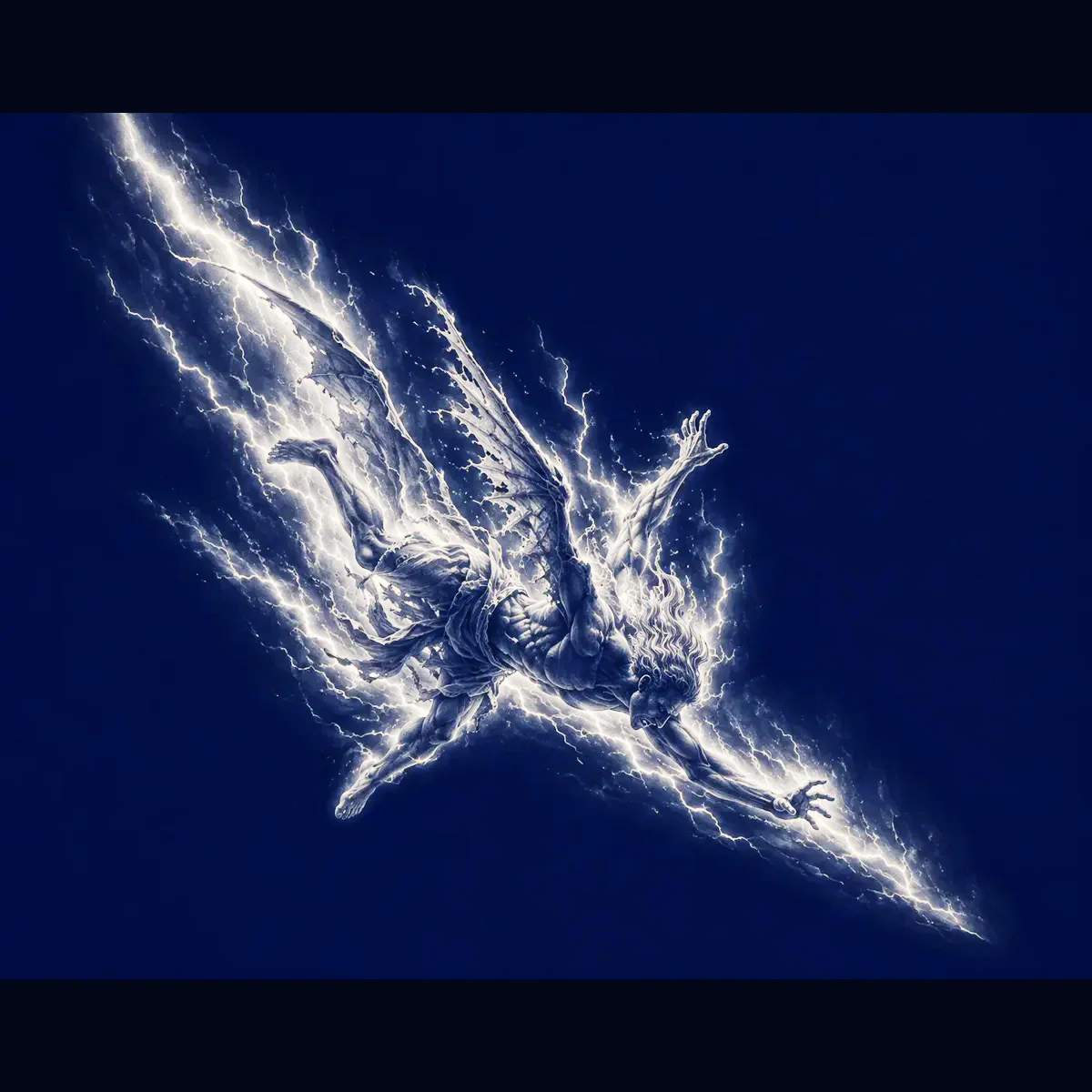
Eagle
Cast down like lightningThe Eagle, together with Lyra, participates in the heavenly scene of the fall of the rebellious angels. The names of its stars form an image of the one who struck the balance established by God and was cast down from heaven like lightning.
Read interpretation →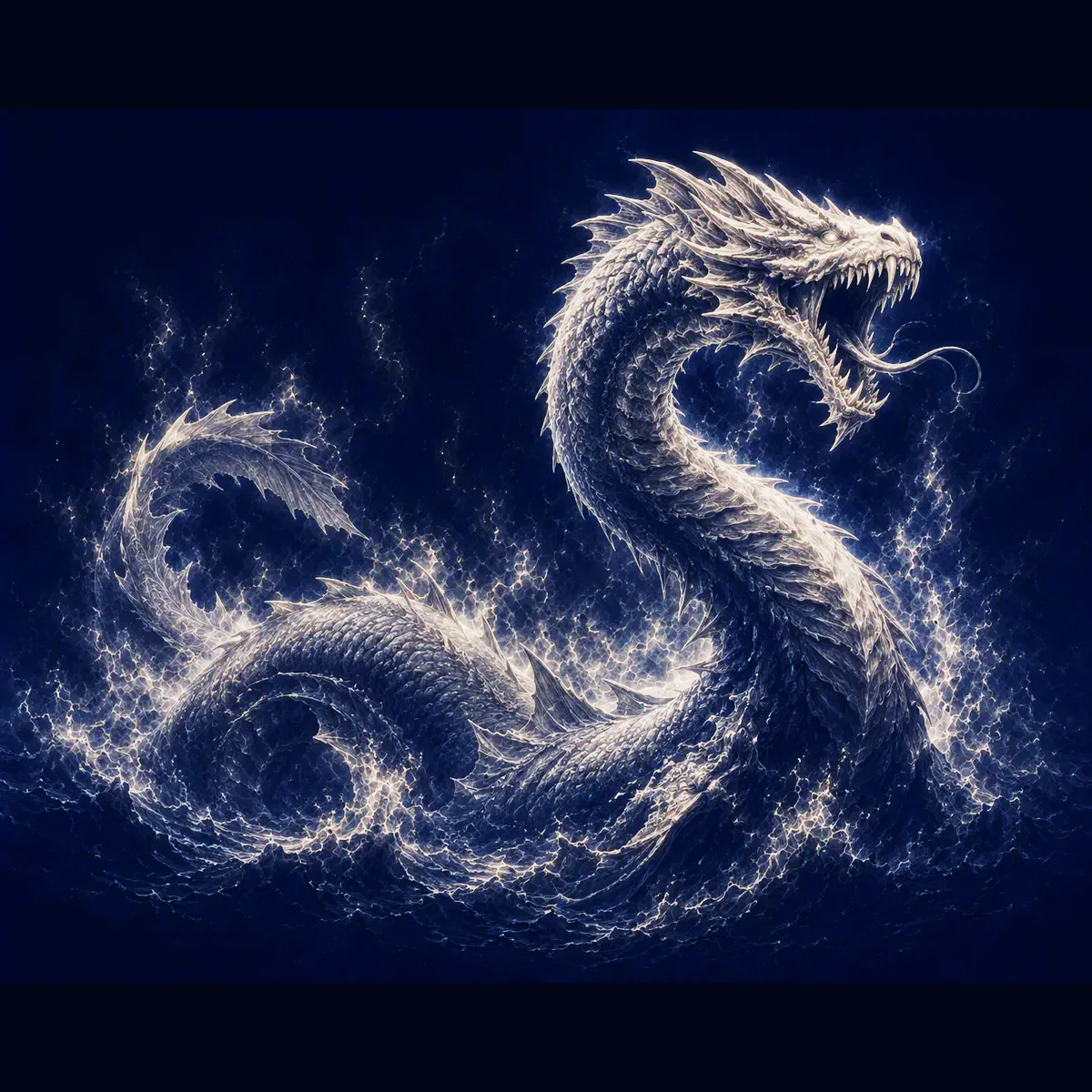
Whale
LeviathanThe Whale depicts the ancient sea monster—the image of chaos, death, and forces hostile to God. On the celestial map it seems to hold two Fishes, representing God's people, yet the Lamb stands between them and the monster, liberating those who belong to Him.
Read interpretation →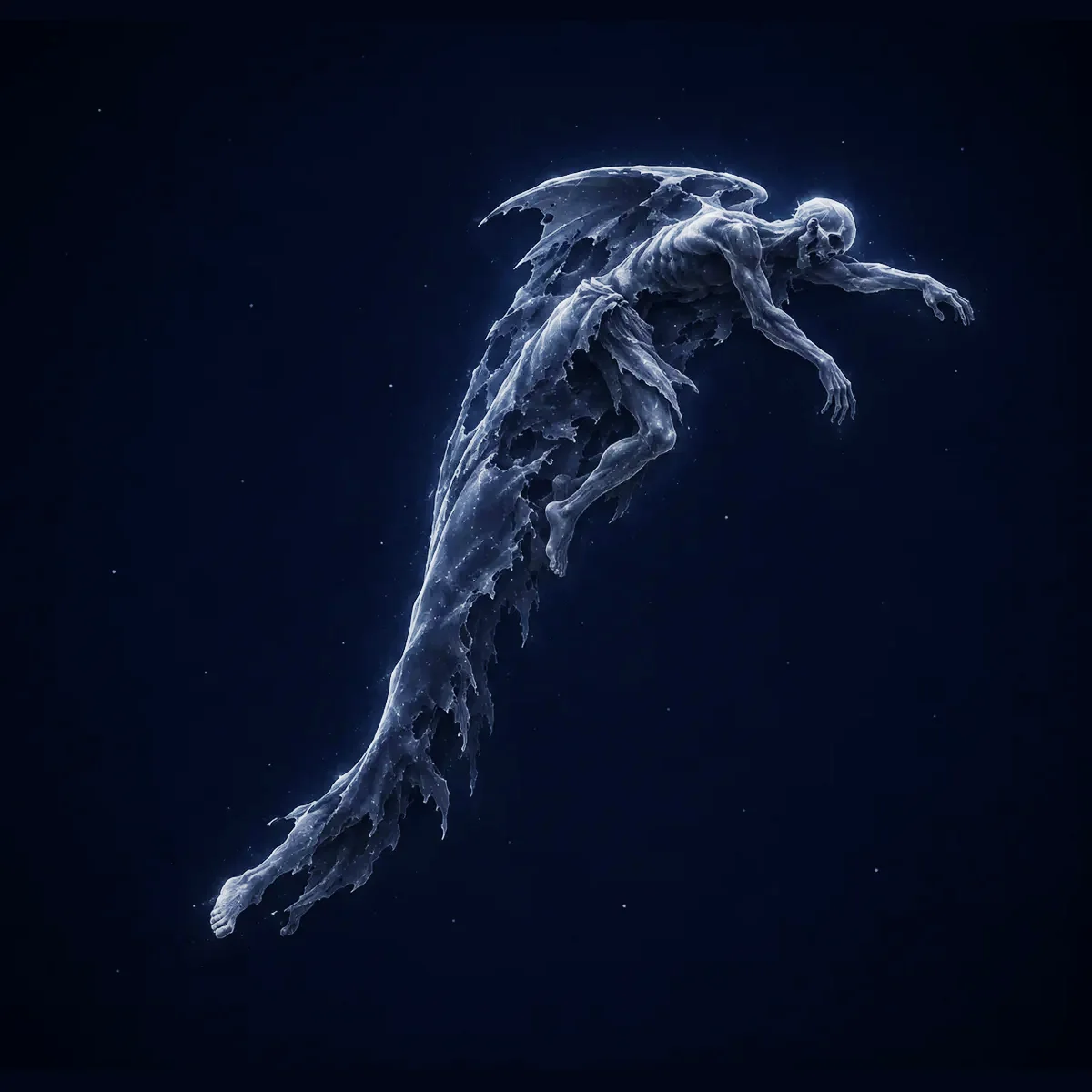
Dolphin
Dead ManOn the pre-Greek Mesopotamian map, next to the Eagle stood the figure of the Dead Man — AD₆ / pagru, “corpse, dead body” — which researchers associate with the region of modern Delphinus. In ancient texts this Dead Man could be understood as the corpse of a hostile demonic being. On our map nearby stand the Eagle — fallen angels — and God’s Arrow: rebellious powers → God’s judgment → the overthrown enemy.
Read interpretation →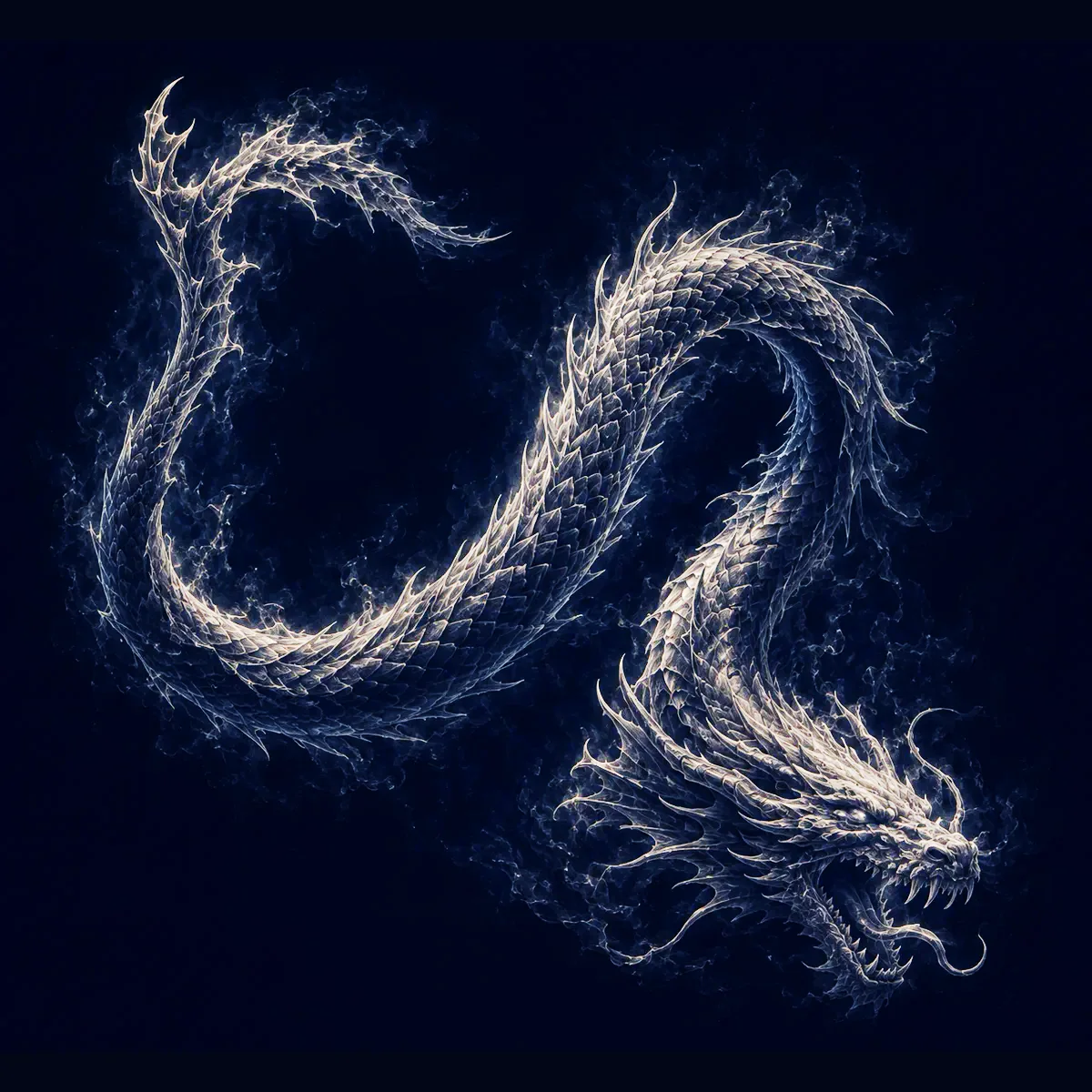
Dragon
Ancient serpent — Satan, devilThe Dragon occupies a vast region of the northern sky and coils around the Little Flock. In the accepted chronology of the atlas, its stars became polar during the era when fallen angels usurped the authority given to Adam. However, nearby stands the Kneeler, striking the Dragon's head and fulfilling the promise of Christ's victory over the ancient serpent.
Read interpretation →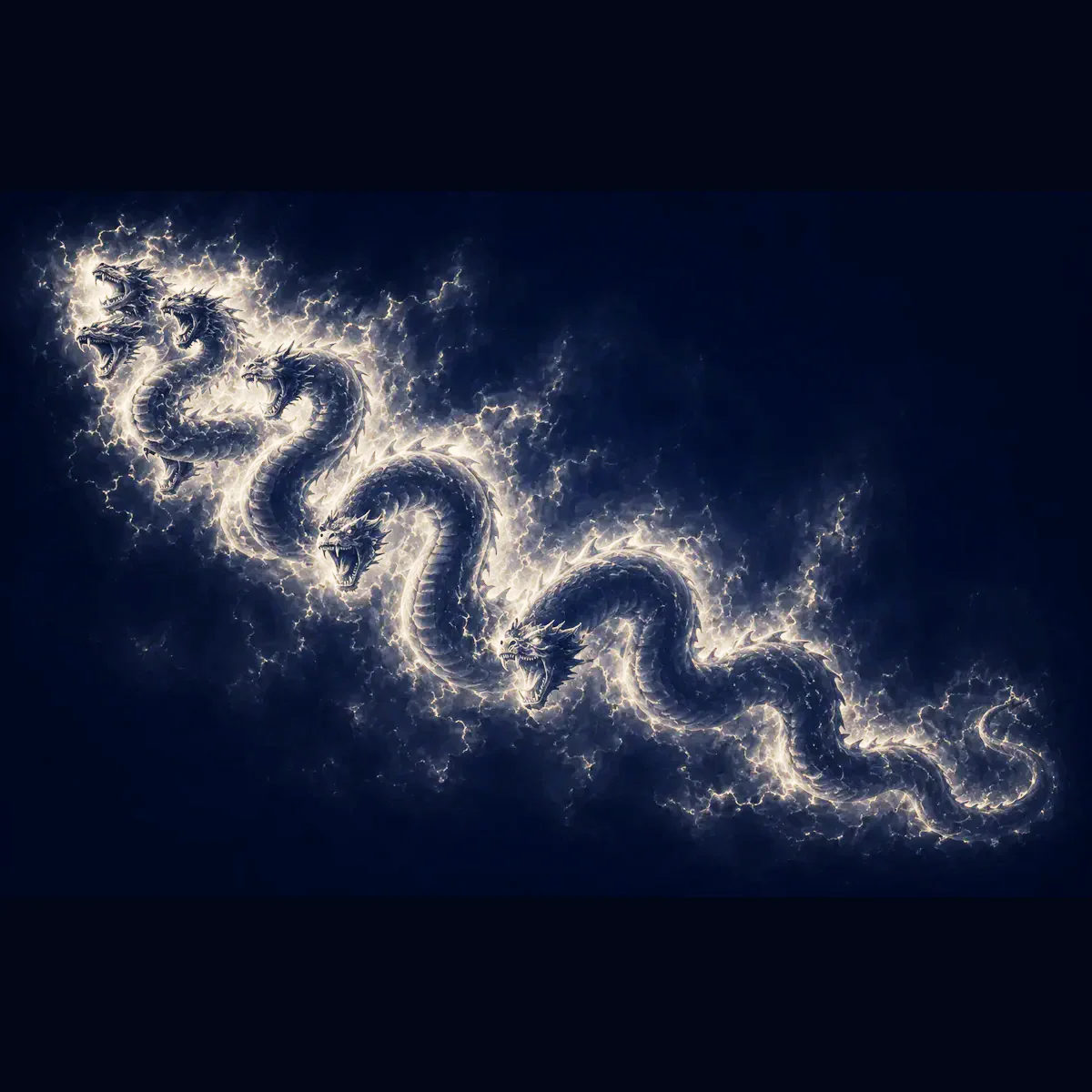
Water Snake
Satan under judgmentHydra is the image of Satan and fallen angels over whom God's judgment is executed. The most ancient Mesopotamian image of this region was MUŠ, a huge serpent-dragon, and already on ancient Babylonian depictions the Lion is above it, trampling the Serpent, while the Crow stands on its tail and pecks at it. In the classical celestial composition, the Cup and the Crow are also directly on Hydra's back, and the Lion is above its head. A unified picture of the enemy's final defeat emerges: the Lion crushes the ancient Serpent, the Cup of God's wrath is over it, and the Crow participates in the destruction of its body.
Read interpretation →
Hare
NephilimThe constellation of the Hare depicts the Nephilim — the earthly fruit of the Watchers' intrusion. It lies directly under Orion-Kesil, the bound fallen angels of the second wave. In ancient Babylonia, the region was DAR.LUGAL — 'Royal Rooster', associated with the legendary hero and king Lugalbanda, while ancient Arabs called the four main stars of this region the 'Throne of Orion'. This fits well with Genesis 6: the Watchers came down to men, and beneath them on earth appeared giants — 'mighty men who were of old, men of renown'.
Read interpretation →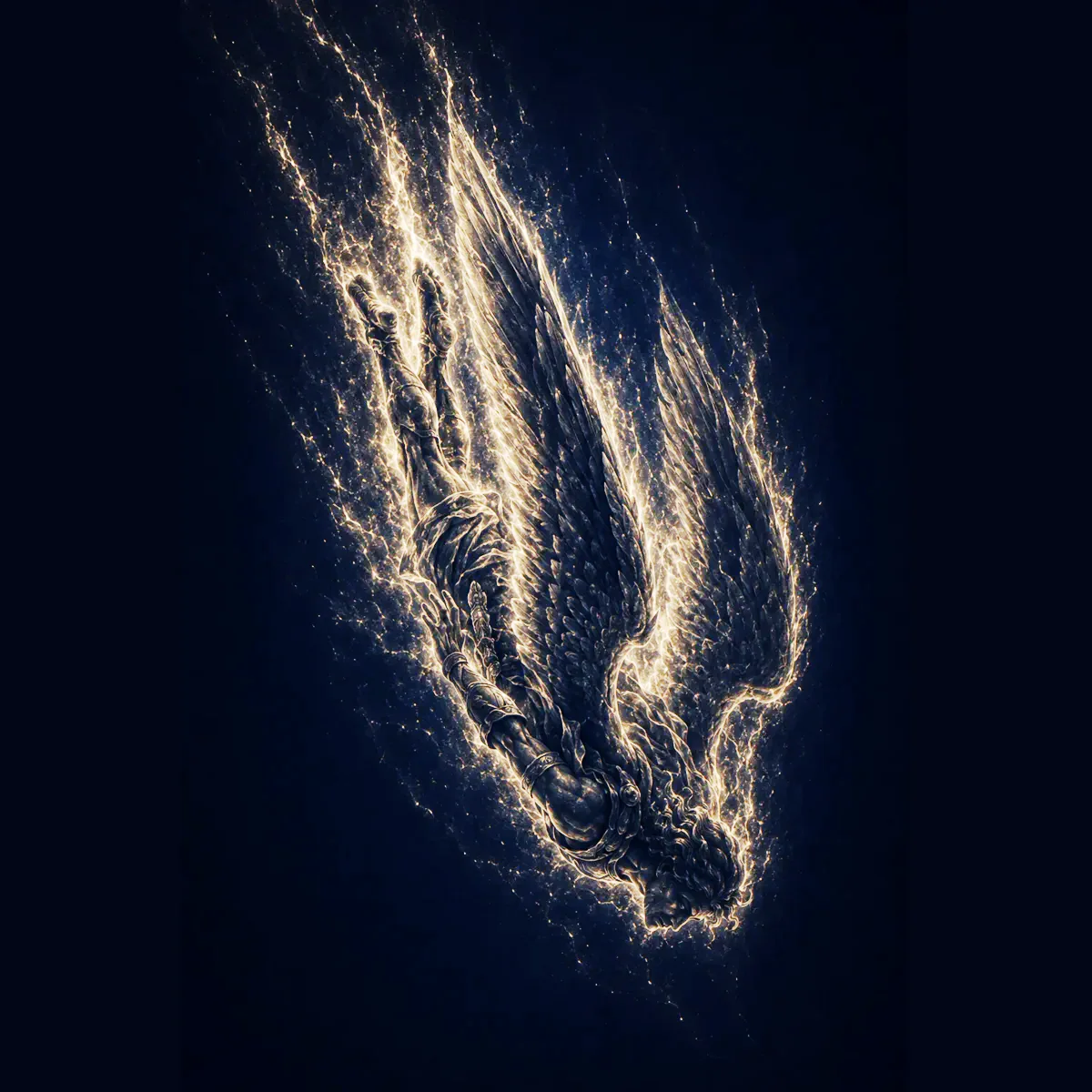
Lyre
Fallen angelsThe constellation Lyra depicts fallen angels, cast down from the spiritual heavens following Satan. The main star of Lyra — Vega — received its name from the Arabic al-nasr al-wāqiʿ, 'the falling' or 'swooping eagle'; ancient Arabs saw in Vega and two neighboring stars a bird with folded wings plunging downward. The position of Lyra is especially important: it lies between the Kneeling Victor, who strikes the Dragon, and the Northern Cross. Thus the heavenly picture shows Christ, who goes to the Cross in order to destroy the works of the devil and finally defeat the fallen spiritual powers.
Read interpretation →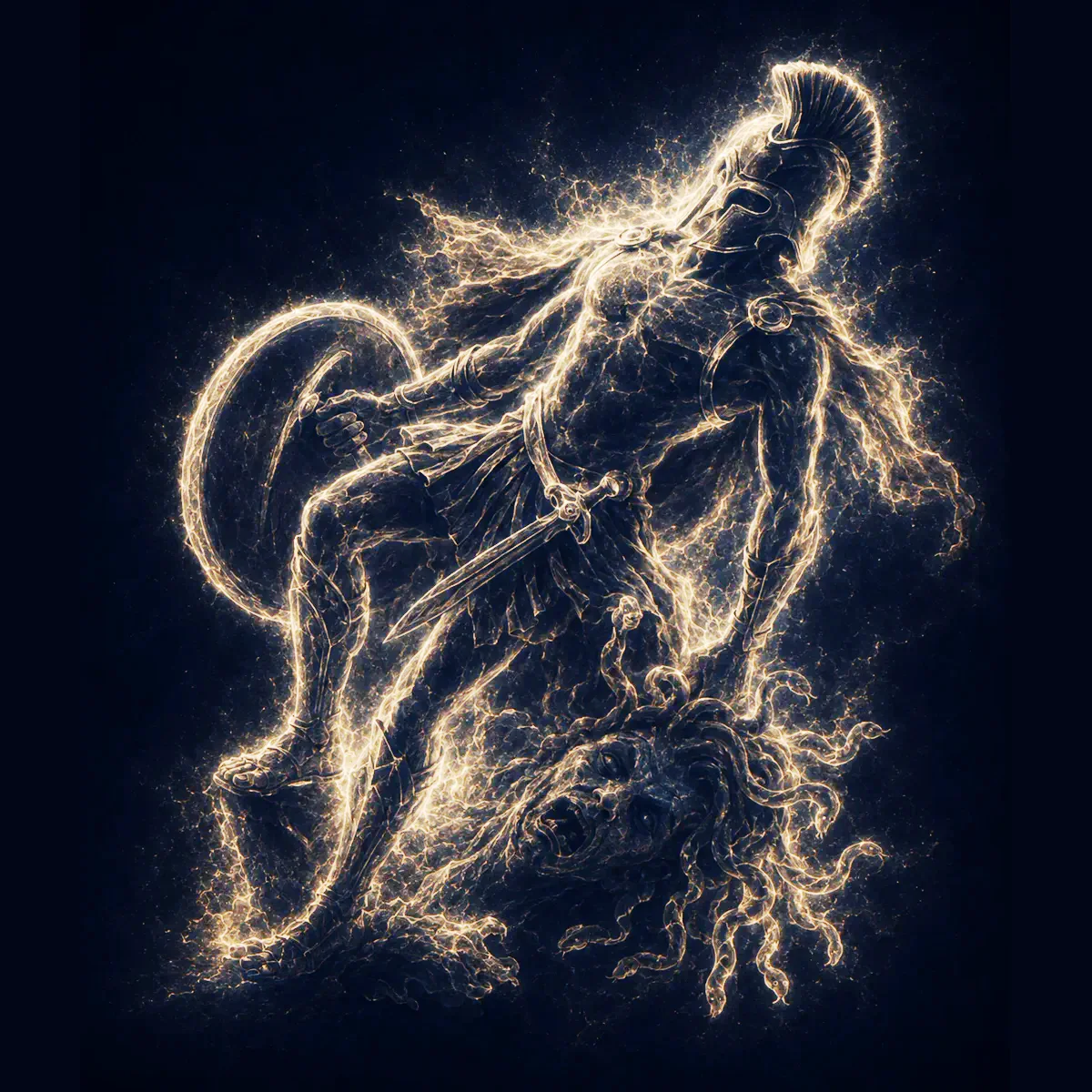
Perseus
First rebellionPerseus symbolizes Satan and the fallen angels of the first wave, who rebelled against God before the Watchers. On the star chart, Perseus and Orion-Kesil surround Taurus from two sides: Perseus approaches it from behind, Orion attacks from the front. These are two waves of angelic rebellion against God's order. The nature of Perseus is especially clearly revealed by the star Algol — its ancient Arabic name Ra's al-Ghūl means 'Head of the Demon'. Perseus also lies between the Pleiades — the Church-Bride — and Cassiopeia — the Church already enthroned as the Wife of the Lamb: Satan opposes God's people and strives to prevent them from reaching the glory intended for them.
Read interpretation →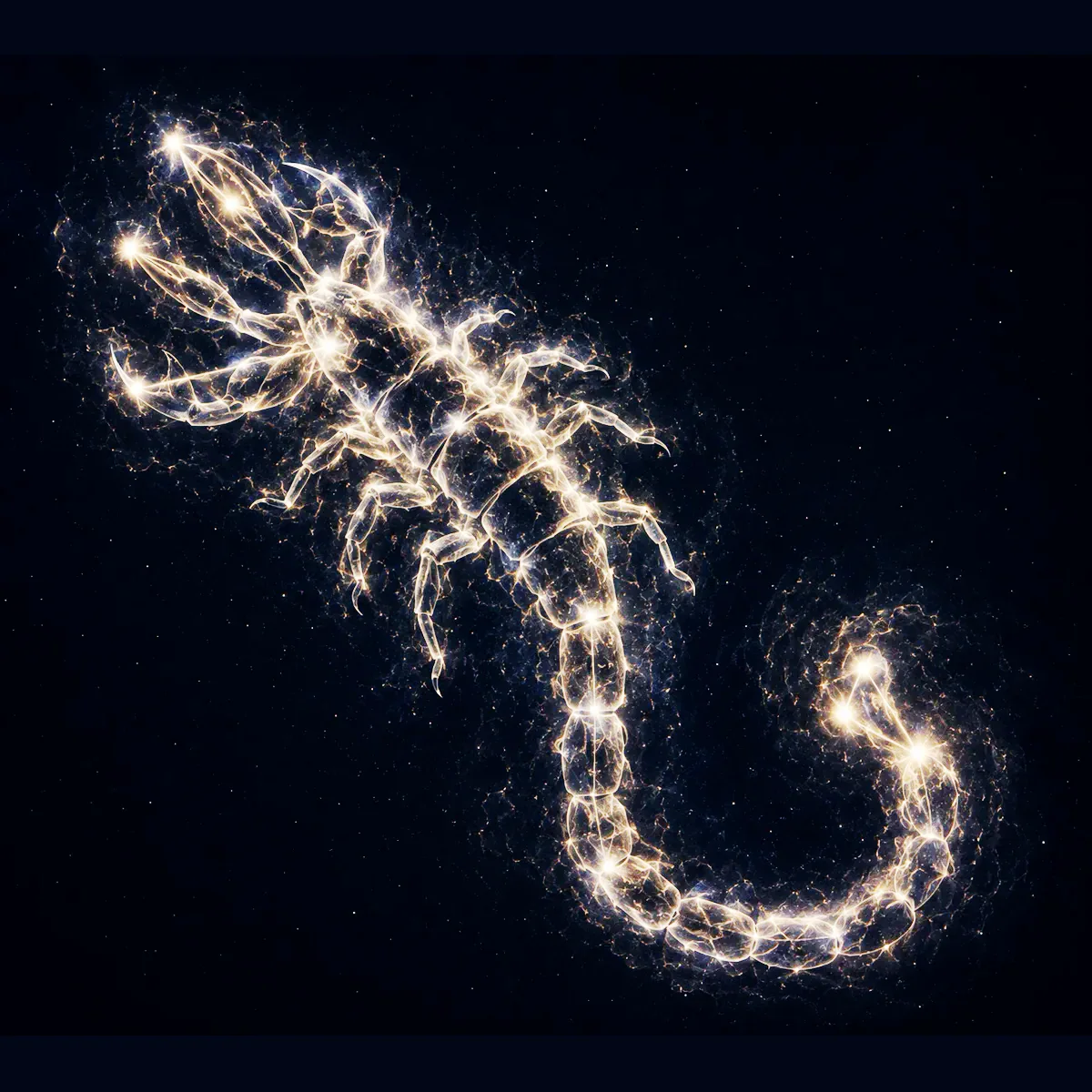
Scorpion
Sting of SinScorpius depicts Satan and fallen spiritual forces as the source of sin and death that struck mankind. This is one of the most ancient constellations: already in Mesopotamia it was called GÍR.TAB — Scorpion. Its raised tail ends in two stars of the ancient 'sting'; the name Shaula directly means 'sting of the Scorpion'. Thus the heavenly picture corresponds to the words of Scripture: 'the sting of death is sin'. Through the ancient serpent, sin entered Eden, and through sin, death. But nearby appears Sagittarius — Christ, who came to strike the power of Scorpius and free man from the enemy's power.
Read interpretation →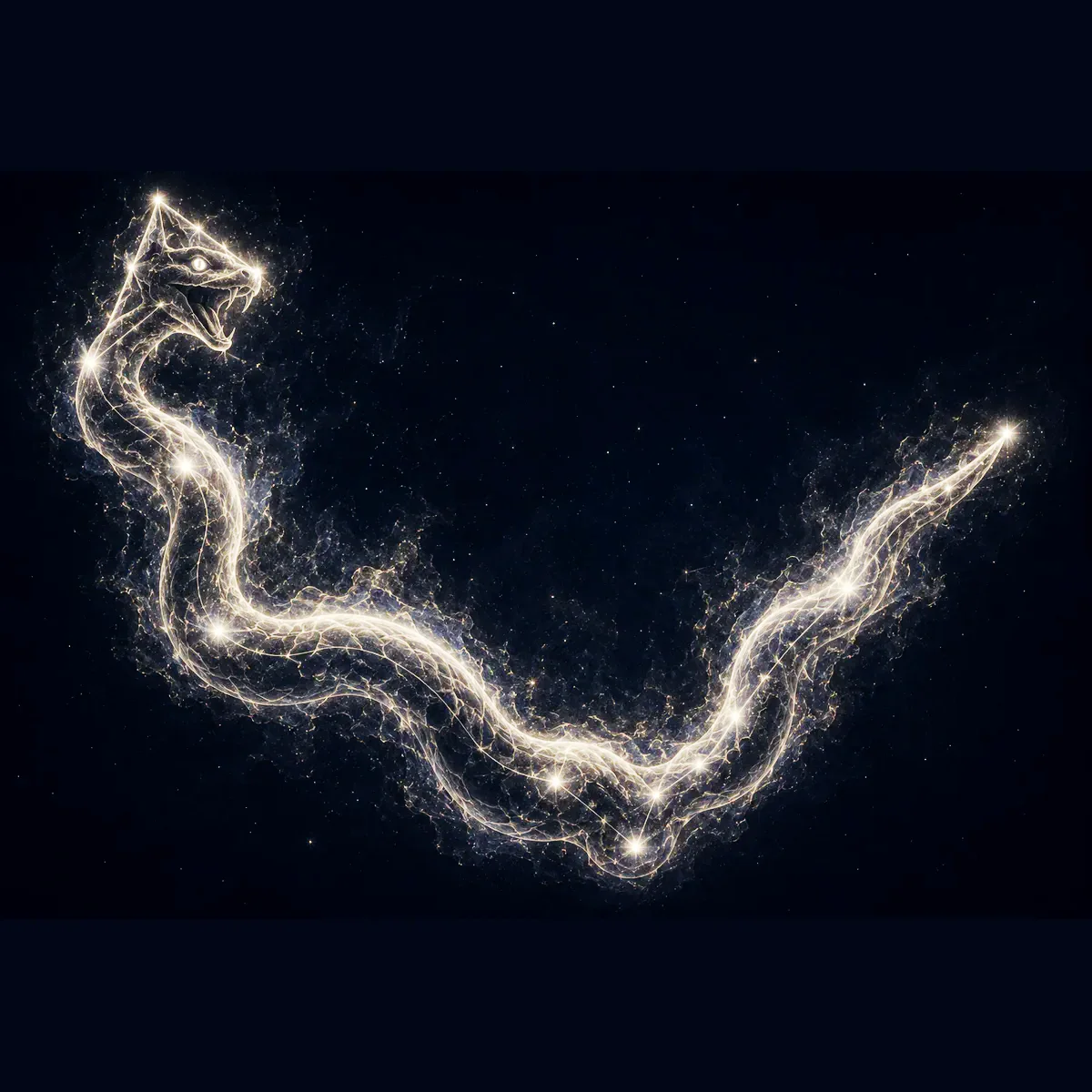
Serpent
Bound SerpentThe constellation Serpens depicts Satan — the ancient serpent, whose power is seized and limited by Christ. The Serpent passes through the figure of Ophiuchus, but Ophiuchus holds it with both hands: one hand grasps the head and front part of the Serpent, the other its tail. At the same time, Ophiuchus himself stands over Scorpius. This forms a unified picture of victory: Christ tramples Scorpius and holds the ancient serpent in His power. The serpent still exists and writhes, but is no longer free: the Son of God came to destroy the works of the devil.
Read interpretation →